Koniugacja equilibrar Czas przeszły niedokonany
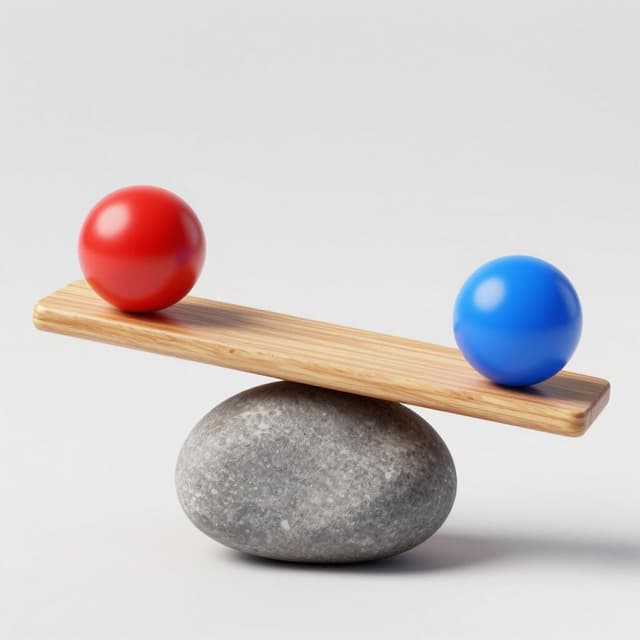
equilibrar — to balance
Use imperfect forms like equilibraba (yo) and equilibraban (ustedes) for ongoing or habitual past actions and descriptions.
Formy equilibrar Czas przeszły niedokonany
Kiedy używać Czas przeszły niedokonany
The imperfect tense describes actions that were happening continuously in the past, habitual actions, or sets the scene. Think of describing a past routine ('Solía equilibrar mi tiempo') or background details ('La balanza equilibraba perfectamente').
Uwagi dotyczące equilibrar w czasie Czas przeszły niedokonany
Equilibrar is regular in the imperfect indicative. It follows the standard -ar imperfect endings.
Przykładowe zdania
Yo equilibraba mi dieta cuando vivía en España.
I used to balance my diet when I lived in Spain.
yo
¿Tú siempre equilibrabas las opiniones?
Did you always balance the opinions?
tú
Ella equilibraba el peso con mucha destreza.
She balanced the weight with great skill.
él/ella/usted
Ellos se esforzaban por equilibrar sus finanzas.
They strove to balance their finances.
ellos/ellas/ustedes
Częste błędy
Błąd: Using the preterite for ongoing past actions, e.g., 'Ayer yo equilibraba la comida.'
Poprawnie: For a specific past action like 'yesterday', use preterite: 'Ayer yo equilibré la comida.' Use imperfect for ongoing or habitual past actions: 'Yo equilibraba la comida todos los días.'
Dlaczego: Preterite is for completed actions, imperfect is for ongoing/habitual ones.
Błąd: Incorrect 'vosotros' ending, e.g., 'Vosotros equilibraba.'
Poprawnie: The 'vosotros' imperfect form is 'equilibrabais'.
Dlaczego: The '-ábais' ending is specific to the 'vosotros' form in the imperfect indicative for -ar verbs.
Opanuj hiszpańskie czasowniki w kontekście
Zapamiętywanie tabel to dopiero początek. Przeczytaj ponad 200 ilustrowanych i udźwiękowionych hiszpańskich historii, aby zobaczyć czasowniki takie jak 'equilibrar' używane naturalnie — w czasach, których się uczysz.
Powiązane czasy
Czas teraźniejszy
yo: equilibro
Use present tense forms like equilibro (yo) and equilibran (ustedes) for current actions, habits, or general truths.
Czas przeszły prosty
yo: equilibré
Use preterite forms like equilibré (yo) and equilibraron (ustedes) for completed actions in the past.
Czas przyszły
yo: equilibraré
Use future forms like equilibraré (yo) and equilibrarán (ustedes) to talk about actions that will happen.
Tryb warunkowy
yo: equilibraría
Use conditional forms like equilibraría (yo) and equilibrarían (ustedes) for hypothetical 'would' actions or polite requests.
Tryb Subj. teraźniejszy
yo: equilibre
Use present subjunctive forms like equilibre (yo/él/ella/usted) and equilibren (ustedes) after expressions of doubt, desire, or emotion.
Tryb Subj. przeszły niedokonany
yo: equilibrara
Use imperfect subjunctive forms like equilibrara or equilibrase for past hypotheticals, wishes, or doubts.
Tryb rozkazujący (twierdzący)
yo: equilibra
Use imperative forms like equilibra (tú) and equilibren (ustedes) for direct commands.
Tryb rozkazujący (przeczący)
yo: no equilibres
Use negative commands with 'no' plus present subjunctive forms like no equilibres (tú) and no equilibren (ustedes).