Koniugacja equilibrar Tryb Subj. przeszły niedokonany
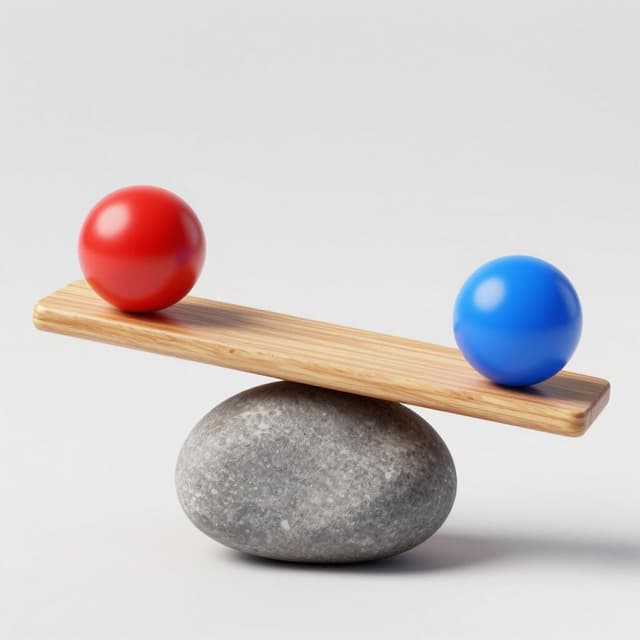
equilibrar — to balance
Use imperfect subjunctive forms like equilibrara or equilibrase for past hypotheticals, wishes, or doubts.
Formy equilibrar Tryb Subj. przeszły niedokonany
Kiedy używać Tryb Subj. przeszły niedokonany
This tense is for hypothetical situations in the past, often in 'if' clauses ('Si yo equilibrara...'), or to express wishes, doubts, or emotions about past events. It's also used after certain conjunctions like 'como si' (as if).
Uwagi dotyczące equilibrar w czasie Tryb Subj. przeszły niedokonany
Equilibrar is regular in the imperfect subjunctive. Both the -ra (equilibrara) and -se (equilibrase) endings are correct and interchangeable.
Przykładowe zdania
Si yo equilibrara mi tiempo mejor, tendría más éxito.
If I balanced my time better, I would have more success.
yo
Me gustaría que tú equilibraras tus gastos.
I would like you to balance your expenses.
tú
Actuaba como si él equilibrara todos los platos.
He acted as if he were balancing all the plates.
él/ella/usted
Ojalá ellos equilibraran sus emociones.
I wish they would balance their emotions.
ellos/ellas/ustedes
Częste błędy
Błąd: Using the preterite instead of imperfect subjunctive, e.g., 'Si equilibré mi tiempo...'
Poprawnie: For past hypotheticals, use imperfect subjunctive: 'Si equilibrara mi tiempo...'
Dlaczego: The imperfect subjunctive is specifically for hypothetical or unreal conditions in the past.
Błąd: Confusing -ra and -se forms, or using incorrect endings.
Poprawnie: Both 'equilibrara' and 'equilibrase' are valid. Ensure the endings match the pronoun (e.g., 'equilibraras' for tú).
Dlaczego: While interchangeable, the endings must be correct for the pronoun and tense.
Opanuj hiszpańskie czasowniki w kontekście
Zapamiętywanie tabel to dopiero początek. Przeczytaj ponad 200 ilustrowanych i udźwiękowionych hiszpańskich historii, aby zobaczyć czasowniki takie jak 'equilibrar' używane naturalnie — w czasach, których się uczysz.
Powiązane czasy
Czas teraźniejszy
yo: equilibro
Use present tense forms like equilibro (yo) and equilibran (ustedes) for current actions, habits, or general truths.
Czas przeszły prosty
yo: equilibré
Use preterite forms like equilibré (yo) and equilibraron (ustedes) for completed actions in the past.
Czas przeszły niedokonany
yo: equilibraba
Use imperfect forms like equilibraba (yo) and equilibraban (ustedes) for ongoing or habitual past actions and descriptions.
Czas przyszły
yo: equilibraré
Use future forms like equilibraré (yo) and equilibrarán (ustedes) to talk about actions that will happen.
Tryb warunkowy
yo: equilibraría
Use conditional forms like equilibraría (yo) and equilibrarían (ustedes) for hypothetical 'would' actions or polite requests.
Tryb Subj. teraźniejszy
yo: equilibre
Use present subjunctive forms like equilibre (yo/él/ella/usted) and equilibren (ustedes) after expressions of doubt, desire, or emotion.
Tryb rozkazujący (twierdzący)
yo: equilibra
Use imperative forms like equilibra (tú) and equilibren (ustedes) for direct commands.
Tryb rozkazujący (przeczący)
yo: no equilibres
Use negative commands with 'no' plus present subjunctive forms like no equilibres (tú) and no equilibren (ustedes).