Koniugacja escabullirse Tryb Subj. przeszły niedokonany
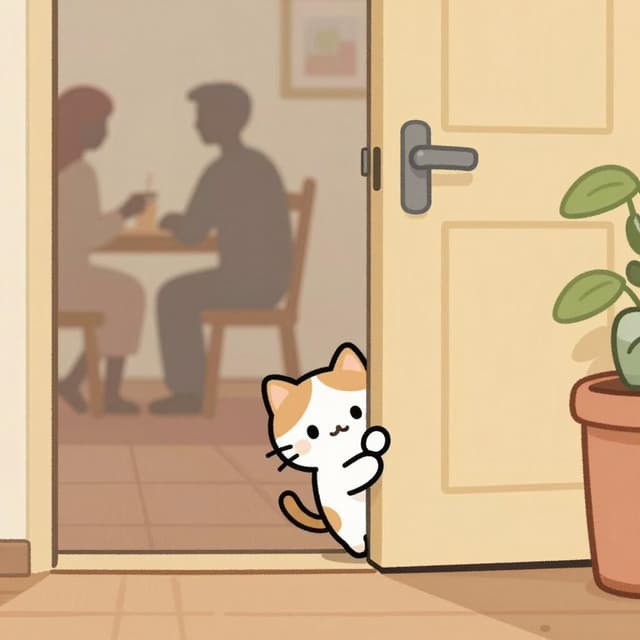
escabullirse — to slip away
Use 'se escabullera' for hypothetical scenarios or past requests about sneaking off.
Formy escabullirse Tryb Subj. przeszły niedokonany
Kiedy używać Tryb Subj. przeszły niedokonany
This tense is perfect for 'if' clauses or when you wanted someone to slip away in the past. It conveys a sense of unreality or politeness in past contexts.
Uwagi dotyczące escabullirse w czasie Tryb Subj. przeszły niedokonany
Escabullirse is regular in the imperfect subjunctive, using the -ra endings attached to the preterite stem 'escabulli-'.
Przykładowe zdania
Si me escabullera ahora, nadie se daría cuenta.
If I slipped away now, nobody would notice.
yo
El profesor no quería que los alumnos se escabulleran.
The teacher didn't want the students to sneak out.
ellos/ellas/ustedes
Me gustaría que te escabulleras conmigo.
I would like it if you snuck away with me.
tú
Częste błędy
Błąd: Using 'se escabulliera' with an extra 'i'.
Poprawnie: The correct form is 'se escabullera'.
Dlaczego: Because the stem ends in 'll', the 'i' of the ending -iera is traditionally absorbed/dropped in pronunciation and spelling.
Opanuj hiszpańskie czasowniki w kontekście
Zapamiętywanie tabel to dopiero początek. Przeczytaj ponad 200 ilustrowanych i udźwiękowionych hiszpańskich historii, aby zobaczyć czasowniki takie jak 'escabullirse' używane naturalnie — w czasach, których się uczysz.
Powiązane czasy
Czas teraźniejszy
yo: me escabullo
The present tense 'se escabulle' describes someone who habitually or currently slips away.
Czas przeszły prosty
yo: me escabullí
The preterite marks a specific instance of someone slipping away: 'me escabullí', 'se escabulló'.
Czas przeszły niedokonany
yo: me escabullía
The imperfect 'se escabullía' describes a habit of sneaking off or an ongoing escape in the past.
Czas przyszły
yo: me escabulliré
The future tense 'se escabullirá' predicts that someone will sneak off later.
Tryb warunkowy
yo: me escabulliría
The conditional 'se escabulliría' expresses what someone 'would' do under certain circumstances.
Tryb Subj. teraźniejszy
yo: me escabulla
Use 'me escabulla', 'te escabullas' to express wishes, doubts, or requests about someone slipping away.
Tryb rozkazujący (twierdzący)
yo: escabúllete
Use 'escabúllete' to tell someone to sneak away right now.
Tryb rozkazujący (przeczący)
yo: no te escabullas
Use 'no te escabullas' to tell someone NOT to sneak off.