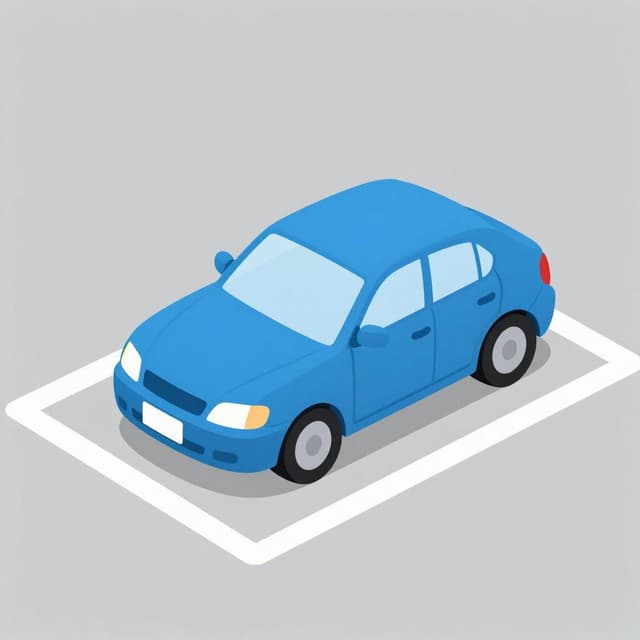
Koniugacja estacionar Tryb rozkazujący (twierdzący)
estacionar — to park
Use the imperative 'estaciona' (tú) and 'estacione' (usted) for direct commands to park.
Formy estacionar Tryb rozkazujący (twierdzący)
Kiedy używać Tryb rozkazujący (twierdzący)
The imperative is for direct commands. You'd use 'estaciona' to tell a friend to park, or 'estacione' to politely tell someone you don't know to park their car.
Uwagi dotyczące estacionar w czasie Tryb rozkazujący (twierdzący)
Estacionar is regular in the affirmative imperative. The vosotros form is 'estacionad'.
Przykładowe zdania
¡Estaciona aquí, por favor!
Park here, please!
tú
Estacione en el segundo piso.
Park on the second floor.
usted
Estacionemos en el garaje.
Let's park in the garage.
nosotros
Estacionen sus coches afuera.
Park your cars outside.
Częste błędy
Błąd: Using the present indicative 'estacionas' instead of the imperative 'estaciona' for 'tú'.
Poprawnie: Use 'estaciona' for a direct command to tú.
Dlaczego: The present indicative describes what someone does; the imperative tells them to do it.
Błąd: Forgetting the 'd' in the vosotros form 'estacionad'.
Poprawnie: The command for vosotros is 'estacionad'.
Dlaczego: This is a specific ending for the affirmative imperative for 'vosotros'.
Opanuj hiszpańskie czasowniki w kontekście
Zapamiętywanie tabel to dopiero początek. Przeczytaj ponad 200 ilustrowanych i udźwiękowionych hiszpańskich historii, aby zobaczyć czasowniki takie jak 'estacionar' używane naturalnie — w czasach, których się uczysz.
Powiązane czasy
Czas teraźniejszy
yo: estaciono
Use 'estaciono' (yo), 'estacionas' (tú), 'estaciona' (él/ella/usted) for current or habitual parking actions.
Czas przeszły prosty
yo: estacioné
Use 'estacioné' (yo), 'estacionaste' (tú), 'estacionó' (él/ella/usted) for completed past parking actions.
Czas przeszły niedokonany
yo: estacionaba
Use 'estacionaba' (yo/él/ella/usted) and 'estacionabas' (tú) for ongoing or habitual past parking.
Czas przyszły
yo: estacionaré
Use 'estacionaré' (yo), 'estacionarás' (tú), 'estacionará' (él/ella/usted) for future parking actions.
Tryb warunkowy
yo: estacionaría
Use 'estacionaría' (yo/él/ella/usted) and 'estacionarías' (tú) for hypothetical or polite parking scenarios.
Tryb Subj. teraźniejszy
yo: estacione
Use 'estacione' (yo/usted) and 'estaciones' (tú) for wishes, doubts, or emotions about parking.
Tryb Subj. przeszły niedokonany
yo: estacionara
Use 'estacionara' or 'estacionase' for past hypothetical or uncertain situations about parking.
Tryb rozkazujący (przeczący)
yo: no estaciones
Use 'no estaciones' (tú) and 'no estacione' (usted) for negative commands not to park.