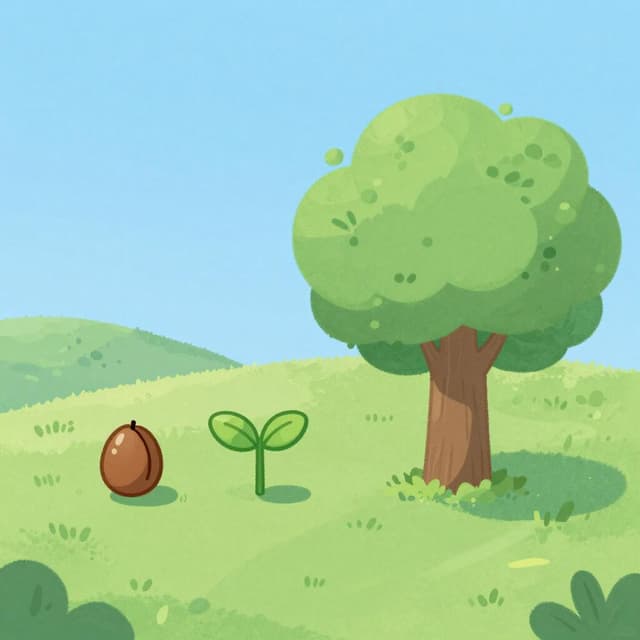
Koniugacja evolucionar Tryb Subj. przeszły niedokonany
evolucionar — to evolve
The imperfect subjunctive of evolucionar is regular: evolucionara/evolucionase (yo/él/ella/usted), evolucionaras/evolucionases (tú), evolucionáramos/evolucionásemos (nosotros), evolucionarais/evolucionaseis (vosotros), evolucionaran/evolucinasen (ellos/ellas/ustedes).
Formy evolucionar Tryb Subj. przeszły niedokonany
Kiedy używać Tryb Subj. przeszły niedokonany
The imperfect subjunctive is used for hypothetical situations, wishes, doubts, or polite requests in the past. For 'evolucionar', it might describe how something *would have* evolved or how you wished it *would* evolve.
Uwagi dotyczące evolucionar w czasie Tryb Subj. przeszły niedokonany
Evolucionar is regular in the imperfect subjunctive. Both the -ra and -se endings are correct, though -ra is more common in many regions.
Przykładowe zdania
Ojalá evolucionara más rápido.
I wish it would evolve faster.
él/ella/usted
Si evolucionaras de esa forma, serías invencible.
If you evolved that way, you would be invincible.
tú
Nos sorprendió que evolucionáramos tan pronto.
It surprised us that we evolved so soon.
nosotros
Si ellos evolucionaran, la especie sobreviviría.
If they evolved, the species would survive.
ellos/ellas/ustedes
Częste błędy
Błąd: Using the preterite instead of the imperfect subjunctive.
Poprawnie: Use forms like 'evolucionara' or 'evolucionase' for hypothetical or past wishes.
Dlaczego: The preterite describes completed actions, while the imperfect subjunctive deals with unreal or past subjunctive conditions.
Błąd: Forgetting the accent on -ra forms.
Poprawnie: Ensure the accent is on the 'a' for -ra forms, e.g., 'evolucionara', 'evolucionáramos'.
Dlaczego: The accent indicates the stressed syllable and distinguishes these forms.
Opanuj hiszpańskie czasowniki w kontekście
Zapamiętywanie tabel to dopiero początek. Przeczytaj ponad 200 ilustrowanych i udźwiękowionych hiszpańskich historii, aby zobaczyć czasowniki takie jak 'evolucionar' używane naturalnie — w czasach, których się uczysz.
Powiązane czasy
Czas teraźniejszy
yo: evoluciono
The present indicative of evolucionar is regular: evoluciono, evolucionas, evoluciona, evolucionamos, evolucionáis, evolucionan.
Czas przeszły prosty
yo: evolucioné
The preterite of evolucionar is regular: evolucioné, evolucionaste, evolucionó, evolucionamos, evolucionasteis, evolucionaron.
Czas przeszły niedokonany
yo: evolucionaba
The imperfect of evolucionar is regular: evolucionaba, evolucionabas, evolucionaba, evolucionábamos, evolucionabais, evolucionaban.
Czas przyszły
yo: evolucionaré
The future of evolucionar is regular: evolucionaré, evolucionarás, evolucionará, evolucionaremos, evolucionaréis, evolucionarán.
Tryb warunkowy
yo: evolucionaría
The conditional of evolucionar is regular: evolucionaría, evolucionarías, evolucionaría, evolucionaríamos, evolucionaríais, evolucionarían.
Tryb Subj. teraźniejszy
yo: evolucione
The present subjunctive of evolucionar is regular: evolucione (yo/él/ella/usted), evoluciones (tú), evolucionemos (nosotros), evolucionéis (vosotros), evolucionen (ellos/ellas/ustedes).
Tryb rozkazujący (twierdzący)
yo: evoluciona
The imperative of evolucionar is: evoluciona (tú), evolucione (usted), evolucionemos (nosotros), evolucionad (vosotros), evolucionen (ustedes).
Tryb rozkazujący (przeczący)
yo: no evoluciones
The negative imperative of evolucionar uses the present subjunctive: no evoluciones (tú), no evolucione (usted), no evolucionemos (nosotros), no evolucionéis (vosotros), no evolucionen (ustedes).