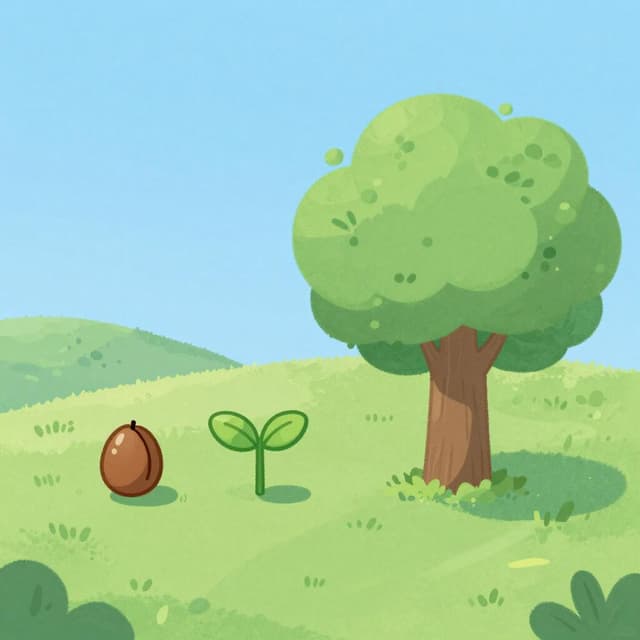
Koniugacja evolucionar Tryb Subj. teraźniejszy
evolucionar — to evolve
The present subjunctive of evolucionar is regular: evolucione (yo/él/ella/usted), evoluciones (tú), evolucionemos (nosotros), evolucionéis (vosotros), evolucionen (ellos/ellas/ustedes).
Formy evolucionar Tryb Subj. teraźniejszy
Kiedy używać Tryb Subj. teraźniejszy
Use the present subjunctive after expressions of doubt, desire, emotion, or uncertainty, and in negative commands. It talks about a potential or desired evolution happening now or in the future.
Uwagi dotyczące evolucionar w czasie Tryb Subj. teraźniejszy
Evolucionar is regular in the present subjunctive. The forms are derived from the 'yo' form of the present indicative ('evoluciono') by changing the '-o' ending to the opposite vowel ending.
Przykładowe zdania
Espero que el proyecto evolucione bien.
I hope the project evolves well.
él/ella/usted
Dudo que tú evoluciones tan rápido.
I doubt you will evolve so fast.
tú
Queremos que evolucionemos juntos.
We want us to evolve together.
nosotros
Es importante que evolucionen sus métodos.
It's important that they evolve their methods.
ellos/ellas/ustedes
Częste błędy
Błąd: Using the present indicative instead of the present subjunctive.
Poprawnie: Use subjunctive forms like 'evolucione', 'evoluciones' after verbs expressing doubt, desire, etc.
Dlaczego: Certain triggers in Spanish require the subjunctive mood, not the indicative.
Błąd: Forgetting the 'no' in negative commands.
Poprawnie: Remember to add 'no' before the present subjunctive form for negative commands, e.g., 'no evoluciones'.
Dlaczego: The negative command is formed using 'no' + present subjunctive.
Opanuj hiszpańskie czasowniki w kontekście
Zapamiętywanie tabel to dopiero początek. Przeczytaj ponad 200 ilustrowanych i udźwiękowionych hiszpańskich historii, aby zobaczyć czasowniki takie jak 'evolucionar' używane naturalnie — w czasach, których się uczysz.
Powiązane czasy
Czas teraźniejszy
yo: evoluciono
The present indicative of evolucionar is regular: evoluciono, evolucionas, evoluciona, evolucionamos, evolucionáis, evolucionan.
Czas przeszły prosty
yo: evolucioné
The preterite of evolucionar is regular: evolucioné, evolucionaste, evolucionó, evolucionamos, evolucionasteis, evolucionaron.
Czas przeszły niedokonany
yo: evolucionaba
The imperfect of evolucionar is regular: evolucionaba, evolucionabas, evolucionaba, evolucionábamos, evolucionabais, evolucionaban.
Czas przyszły
yo: evolucionaré
The future of evolucionar is regular: evolucionaré, evolucionarás, evolucionará, evolucionaremos, evolucionaréis, evolucionarán.
Tryb warunkowy
yo: evolucionaría
The conditional of evolucionar is regular: evolucionaría, evolucionarías, evolucionaría, evolucionaríamos, evolucionaríais, evolucionarían.
Tryb Subj. przeszły niedokonany
yo: evolucionara
The imperfect subjunctive of evolucionar is regular: evolucionara/evolucionase (yo/él/ella/usted), evolucionaras/evolucionases (tú), evolucionáramos/evolucionásemos (nosotros), evolucionarais/evolucionaseis (vosotros), evolucionaran/evolucinasen (ellos/ellas/ustedes).
Tryb rozkazujący (twierdzący)
yo: evoluciona
The imperative of evolucionar is: evoluciona (tú), evolucione (usted), evolucionemos (nosotros), evolucionad (vosotros), evolucionen (ustedes).
Tryb rozkazujący (przeczący)
yo: no evoluciones
The negative imperative of evolucionar uses the present subjunctive: no evoluciones (tú), no evolucione (usted), no evolucionemos (nosotros), no evolucionéis (vosotros), no evolucionen (ustedes).