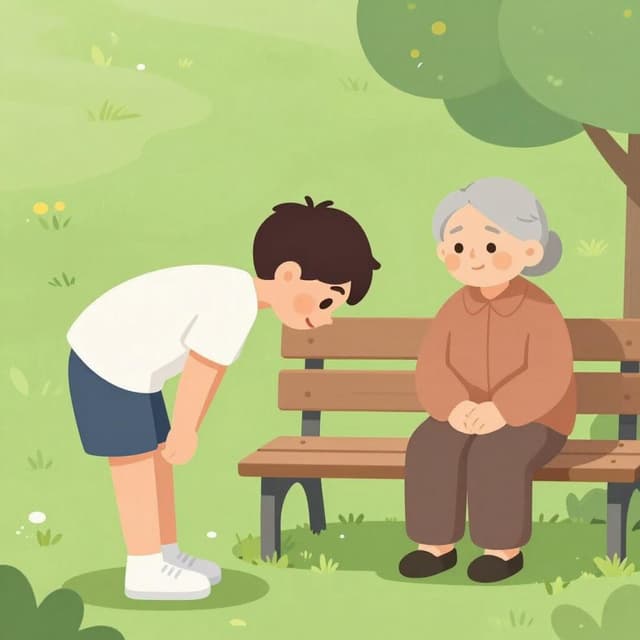
Koniugacja honrar Tryb Subj. przeszły niedokonany
honrar — to honor
The imperfect subjunctive (honrara/honrase) is used for past hypotheticals, wishes, or polite requests in the past.
Formy honrar Tryb Subj. przeszły niedokonany
Kiedy używać Tryb Subj. przeszły niedokonany
Use the imperfect subjunctive for hypothetical situations in the past, expressing wishes or doubts that were relevant in a past context. For 'honrar', it could be used in 'if' clauses like 'If I were to honor him...' or 'I wish I had honored...'.
Uwagi dotyczące honrar w czasie Tryb Subj. przeszły niedokonany
Honrar is regular in the imperfect subjunctive. You can use either the -ra form (honrara, honraras, etc.) or the -se form (honrase, honrases, etc.). The -ra form is more common in many regions.
Przykładowe zdania
Si yo honrara su memoria, pondría flores en su tumba.
If I were to honor his memory, I would put flowers on his grave.
yo
Me pidió que honrara a sus padres.
He asked me to honor his parents.
él/ella/usted
Ojalá hubieras honrado su consejo.
I wish you had honored his advice.
tú
Esperábamos que ellos honraran la promesa.
We hoped they would honor the promise.
ellos/ellas/ustedes
Częste błędy
Błąd: Using the preterite instead of the imperfect subjunctive in hypothetical 'if' clauses, like 'Si honré su memoria...'.
Poprawnie: For hypothetical or contrary-to-fact situations in the past, use the imperfect subjunctive: 'Si honrara su memoria...'.
Dlaczego: The subjunctive mood is required for uncertainty, hypotheticals, and non-factual statements.
Błąd: Confusing the -ra and -se forms, or using the wrong endings.
Poprawnie: Remember the parallel endings: honrara, honraras, honrara, honráramos, honrarais, honraran OR honrase, honrases, honrase, honrásemos, honraseis, honrasen.
Dlaczego: Both sets of endings are correct, but learners often mix them up or apply incorrect personal endings.
Opanuj hiszpańskie czasowniki w kontekście
Zapamiętywanie tabel to dopiero początek. Przeczytaj ponad 200 ilustrowanych i udźwiękowionych hiszpańskich historii, aby zobaczyć czasowniki takie jak 'honrar' używane naturalnie — w czasach, których się uczysz.
Powiązane czasy
Czas teraźniejszy
yo: honro
The present tense (honro, honras, honra, etc.) describes current actions, habits, and general truths about honoring.
Czas przeszły prosty
yo: honré
The preterite of 'honrar' is regular: honré, honraste, honró, honramos, honrasteis, honraron.
Czas przeszły niedokonany
yo: honraba
The imperfect of 'honrar' (honraba, honrabas, etc.) describes ongoing or habitual past actions of honoring.
Czas przyszły
yo: honraré
The future tense (honraré, honrarás, etc.) expresses what will happen or probability.
Tryb warunkowy
yo: honraría
The conditional (honraría, honrarías, etc.) expresses 'would' actions, politeness, or future-in-the-past.
Tryb Subj. teraźniejszy
yo: honre
The present subjunctive (honre, honres, etc.) follows expressions of desire, doubt, emotion, or uncertainty.
Tryb rozkazujący (twierdzący)
yo: honra
Use 'honra' (tú), 'honre' (usted), 'honremos' (nosotros), 'honrad' (vosotros), 'honren' (ustedes) for direct commands.
Tryb rozkazujący (przeczący)
yo: no honres
Negative commands use 'no' + present subjunctive: 'no honres' (tú), 'no honre' (usted), 'no honremos' (nosotros), 'no honréis' (vosotros), 'no honren' (ustedes).