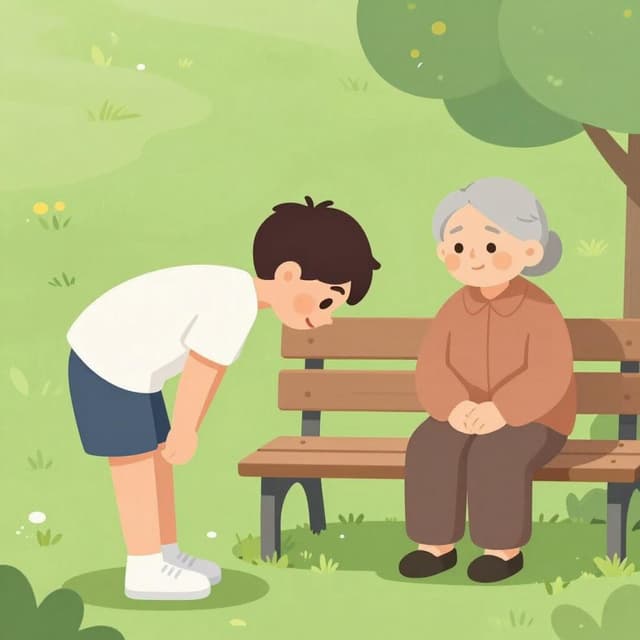
Koniugacja honrar Czas teraźniejszy
honrar — to honor
The present tense (honro, honras, honra, etc.) describes current actions, habits, and general truths about honoring.
Formy honrar Czas teraźniejszy
Kiedy używać Czas teraźniejszy
Use the present tense for actions happening right now, habitual actions related to honoring (like always honoring promises), or general statements about what it means to honor someone or something.
Uwagi dotyczące honrar w czasie Czas teraźniejszy
Honrar is regular in the present indicative tense. It follows the standard conjugation pattern for -ar verbs.
Przykładowe zdania
Yo honro la verdad por encima de todo.
I honor the truth above all else.
yo
¿Tú honras a tus mayores?
Do you honor your elders?
tú
Él siempre honra su palabra.
He always honors his word.
él/ella/usted
Nosotros honramos el legado de nuestros ancestros.
We honor the legacy of our ancestors.
nosotros
Ellos honran la cultura local.
They honor the local culture.
ellos/ellas/ustedes
Częste błędy
Błąd: Using the present tense for actions that just finished, where the preterite is needed.
Poprawnie: For a completed action in the recent past, use the preterite: 'Ayer honré mi promesa' (Yesterday I honored my promise), not 'Ayer honro mi promesa'.
Dlaczego: The present tense is for ongoing or habitual actions, not single completed events.
Błąd: Confusing the vosotros form, writing 'honrais' instead of 'honráis'.
Poprawnie: The vosotros form requires a written accent: honráis.
Dlaczego: The accent indicates the correct stress for this plural form.
Opanuj hiszpańskie czasowniki w kontekście
Zapamiętywanie tabel to dopiero początek. Przeczytaj ponad 200 ilustrowanych i udźwiękowionych hiszpańskich historii, aby zobaczyć czasowniki takie jak 'honrar' używane naturalnie — w czasach, których się uczysz.
Powiązane czasy
Czas przeszły prosty
yo: honré
The preterite of 'honrar' is regular: honré, honraste, honró, honramos, honrasteis, honraron.
Czas przeszły niedokonany
yo: honraba
The imperfect of 'honrar' (honraba, honrabas, etc.) describes ongoing or habitual past actions of honoring.
Czas przyszły
yo: honraré
The future tense (honraré, honrarás, etc.) expresses what will happen or probability.
Tryb warunkowy
yo: honraría
The conditional (honraría, honrarías, etc.) expresses 'would' actions, politeness, or future-in-the-past.
Tryb Subj. teraźniejszy
yo: honre
The present subjunctive (honre, honres, etc.) follows expressions of desire, doubt, emotion, or uncertainty.
Tryb Subj. przeszły niedokonany
yo: honrara
The imperfect subjunctive (honrara/honrase) is used for past hypotheticals, wishes, or polite requests in the past.
Tryb rozkazujący (twierdzący)
yo: honra
Use 'honra' (tú), 'honre' (usted), 'honremos' (nosotros), 'honrad' (vosotros), 'honren' (ustedes) for direct commands.
Tryb rozkazujący (przeczący)
yo: no honres
Negative commands use 'no' + present subjunctive: 'no honres' (tú), 'no honre' (usted), 'no honremos' (nosotros), 'no honréis' (vosotros), 'no honren' (ustedes).