Koniugacja mamar Tryb rozkazujący (twierdzący)
mamar — to suckle
Use imperative forms like 'mama' (tú) and 'mamen' (ustedes) for direct commands with 'mamar'.
Formy mamar Tryb rozkazujący (twierdzący)
Kiedy używać Tryb rozkazujący (twierdzący)
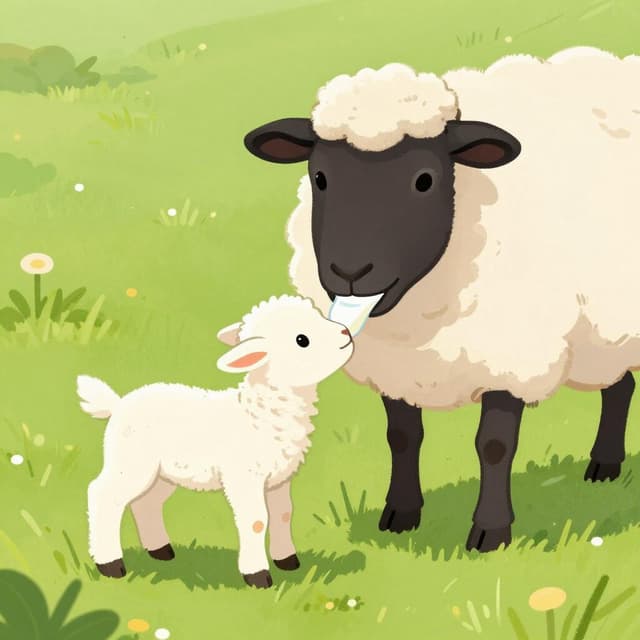
You use the imperative with 'mamar' for direct commands. For instance, you might tell a baby 'mama' (suckle) or tell a group of people to 'mamen' (suckle).
Uwagi dotyczące mamar w czasie Tryb rozkazujący (twierdzący)
The imperative for 'mamar' is regular for all forms.
Przykładowe zdania
¡Bebé, mama!
Baby, suckle!
tú
Mamás, mamen bien para que crezcan fuertes.
Babies, suckle well so you grow strong.
ustedes
Mamemos un poco más antes de dormir.
Let's suckle a bit more before sleeping.
nosotros
Częste błędy
Błąd: Using the present indicative 'mama' when meaning to command 'tú'.
Poprawnie: For a direct command to 'tú', use the imperative 'mama'. The present indicative 'mama' means 'he/she/it suckles'.
Dlaczego: The imperative mood is specifically for commands, while the indicative describes facts or ongoing actions.
Opanuj hiszpańskie czasowniki w kontekście
Zapamiętywanie tabel to dopiero początek. Przeczytaj ponad 200 ilustrowanych i udźwiękowionych hiszpańskich historii, aby zobaczyć czasowniki takie jak 'mamar' używane naturalnie — w czasach, których się uczysz.
Powiązane czasy
Czas teraźniejszy
yo: mamo
The present tense of 'mamar' (mamo, mamas, mama, mamamos, mamáis, maman) describes habitual or ongoing suckling.
Czas przeszły prosty
yo: mamé
The preterite of 'mamar' (mamé, mamaste, mamó, mamamos, mamasteis, mamaron) describes completed actions of suckling.
Czas przeszły niedokonany
yo: mamaba
The imperfect of 'mamar' (mamaba, mamabas, mamaba, mamábamos, mamabais, mamaban) describes ongoing or habitual suckling in the past.
Czas przyszły
yo: mamaré
The future tense of 'mamar' (mamaré, mamarás, mamará, etc.) indicates actions that will happen.
Tryb warunkowy
yo: mamaría
The conditional of 'mamar' (mamaría, mamarías, mamaría, etc.) expresses hypothetical actions ('would suckle') or polite requests.
Tryb Subj. teraźniejszy
yo: mame
The present subjunctive of 'mamar' (e.g., 'mame', 'mames', 'mamen') expresses wishes, doubts, or emotions.
Tryb Subj. przeszły niedokonany
yo: mamara
The imperfect subjunctive of 'mamar' (e.g., 'mamara', 'mamaras') is used for hypothetical past situations or wishes.
Tryb rozkazujący (przeczący)
yo: no mames
Negative commands for 'mamar' use 'no' plus present subjunctive forms, like 'no mames' (tú) or 'no mamen' (ustedes).