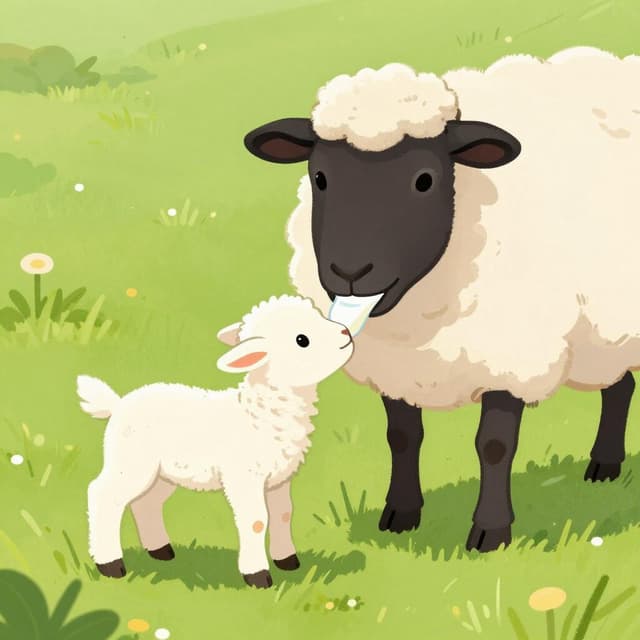
Koniugacja mamar Czas teraźniejszy
mamar — to suckle
The present tense of 'mamar' (mamo, mamas, mama, mamamos, mamáis, maman) describes habitual or ongoing suckling.
Formy mamar Czas teraźniejszy
Kiedy używać Czas teraźniejszy
Use the present tense of 'mamar' for actions happening now, habitual actions, or general truths. For example, 'El bebé mama cada dos horas' (The baby suckles every two hours) describes a routine.
Uwagi dotyczące mamar w czasie Czas teraźniejszy
'Mamar' is a regular -ar verb in the present tense.
Przykładowe zdania
El bebé mama ahora mismo.
The baby is suckling right now.
él/ella/usted
Tú mamas muy fuerte.
You suckle very strongly.
tú
Nosotros mamamos leche de nuestra madre.
We suckle milk from our mother.
nosotros
Ellos maman cuando tienen hambre.
They suckle when they are hungry.
ellos/ellas/ustedes
Częste błędy
Błąd: Using 'mamar' (infinitive) instead of conjugated forms.
Poprawnie: Always conjugate 'mamar' based on who is doing the suckling: 'yo mamo', 'tú mamas', 'él mama', etc.
Dlaczego: The infinitive form is the base verb and cannot be used directly as the main verb in a sentence.
Opanuj hiszpańskie czasowniki w kontekście
Zapamiętywanie tabel to dopiero początek. Przeczytaj ponad 200 ilustrowanych i udźwiękowionych hiszpańskich historii, aby zobaczyć czasowniki takie jak 'mamar' używane naturalnie — w czasach, których się uczysz.
Powiązane czasy
Czas przeszły prosty
yo: mamé
The preterite of 'mamar' (mamé, mamaste, mamó, mamamos, mamasteis, mamaron) describes completed actions of suckling.
Czas przeszły niedokonany
yo: mamaba
The imperfect of 'mamar' (mamaba, mamabas, mamaba, mamábamos, mamabais, mamaban) describes ongoing or habitual suckling in the past.
Czas przyszły
yo: mamaré
The future tense of 'mamar' (mamaré, mamarás, mamará, etc.) indicates actions that will happen.
Tryb warunkowy
yo: mamaría
The conditional of 'mamar' (mamaría, mamarías, mamaría, etc.) expresses hypothetical actions ('would suckle') or polite requests.
Tryb Subj. teraźniejszy
yo: mame
The present subjunctive of 'mamar' (e.g., 'mame', 'mames', 'mamen') expresses wishes, doubts, or emotions.
Tryb Subj. przeszły niedokonany
yo: mamara
The imperfect subjunctive of 'mamar' (e.g., 'mamara', 'mamaras') is used for hypothetical past situations or wishes.
Tryb rozkazujący (twierdzący)
yo: mama
Use imperative forms like 'mama' (tú) and 'mamen' (ustedes) for direct commands with 'mamar'.
Tryb rozkazujący (przeczący)
yo: no mames
Negative commands for 'mamar' use 'no' plus present subjunctive forms, like 'no mames' (tú) or 'no mamen' (ustedes).