Koniugacja mirar Tryb rozkazujący (twierdzący)
mirar — to look at
The imperative of mirar provides commands: mira, mire, miremos, mirad, miren.
Formy mirar Tryb rozkazujący (twierdzący)
Kiedy używać Tryb rozkazujący (twierdzący)
Use this to tell someone to look at something immediately. '¡Mira!' is one of the most common commands in Spanish for drawing attention.
Uwagi dotyczące mirar w czasie Tryb rozkazujący (twierdzący)
Mirar is regular. The 'tú' form is 'mira' (identical to the present él/ella form), and the 'vosotros' form ends in 'd'.
Przykładowe zdania
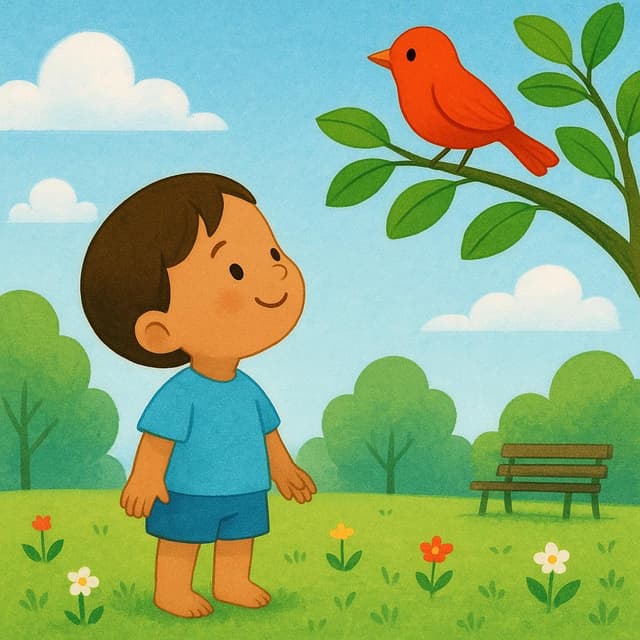
¡Mira ese pájaro tan bonito!
Look at that beautiful bird!
tú
Mire el tablero para ver los resultados.
Look at the board to see the results.
usted
Miren a la cámara y sonrían.
Look at the camera and smile.
ustedes
Częste błędy
Błąd: Using 'mirar' as a command.
Poprawnie: ¡Mira!
Dlaczego: Learners often use the infinitive for commands, but Spanish requires the imperative mood.
Opanuj hiszpańskie czasowniki w kontekście
Zapamiętywanie tabel to dopiero początek. Przeczytaj ponad 200 ilustrowanych i udźwiękowionych hiszpańskich historii, aby zobaczyć czasowniki takie jak 'mirar' używane naturalnie — w czasach, których się uczysz.
Powiązane czasy
Czas teraźniejszy
yo: miro
The present tense of mirar is regular: miro, miras, mira, miramos, miráis, miran.
Czas przeszły prosty
yo: miré
The preterite of mirar is regular: miré, miraste, miró, miramos, mirasteis, miraron.
Czas przeszły niedokonany
yo: miraba
The imperfect of mirar uses the regular -aba endings: miraba, mirabas, miraba, mirábamos, mirabais, miraban.
Czas przyszły
yo: miraré
The future tense of mirar adds endings to the infinitive: miraré, mirarás, mirará, miraremos, miraréis, mirarán.
Tryb warunkowy
yo: miraría
The conditional of mirar is regular: miraría, mirarías, miraría, miraríamos, miraríais, mirarían.
Tryb Subj. teraźniejszy
yo: mire
The present subjunctive of mirar uses -e endings: mire, mires, mire, miremos, miréis, miren.
Tryb Subj. przeszły niedokonany
yo: mirara
The imperfect subjunctive of mirar is formed from the preterite stem: mirara, miraras, mirara, miráramos, mirarais, miraran.
Tryb rozkazujący (przeczący)
yo: no mires
The negative imperative of mirar uses subjunctive forms: no mires, no mire, no miremos, no miréis, no miren.