Koniugacja pintar Czas teraźniejszy
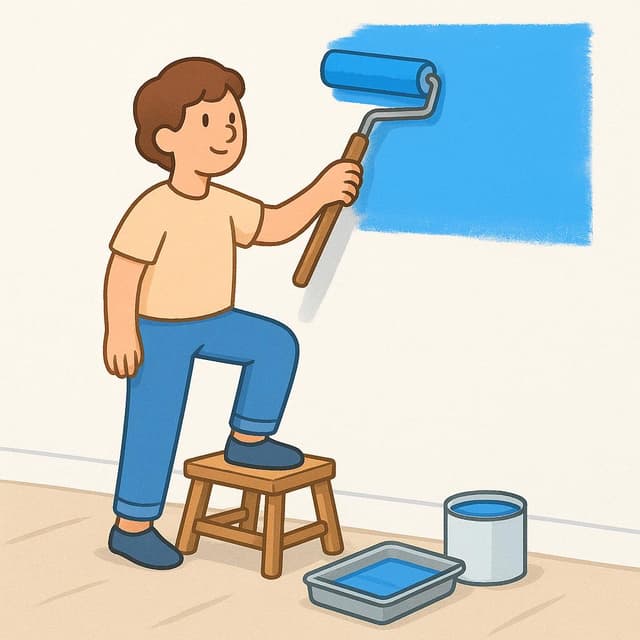
pintar — to paint
Use 'pinto' (yo), 'pintas' (tú), 'pinta' (él/ella/usted), 'pintamos' (nosotros), 'pintáis' (vosotros), 'pintan' (ellos/ellas/ustedes) for actions happening now, habits, or general truths.
Formy pintar Czas teraźniejszy
Kiedy używać Czas teraźniejszy
The present tense is your go-to for describing things happening right now ('I am painting'), habitual actions ('He paints every summer'), or general truths ('The artist paints with passion').
Uwagi dotyczące pintar w czasie Czas teraźniejszy
Pintar is a regular -ar verb in the present indicative. All forms follow the standard conjugation pattern.
Przykładowe zdania
Yo pinto mi casa cada cinco años.
I paint my house every five years.
yo
¿Pintas cuadros en tu tiempo libre?
Do you paint pictures in your free time?
tú
Mi vecino pinta su jardín ahora mismo.
My neighbor is painting his garden right now.
él/ella/usted
Nosotros pintamos la escuela para el festival.
We are painting the school for the festival.
nosotros
Vosotros pintáis muy bien.
You all paint very well.
vosotros
Ellos pintan murales en la ciudad.
They paint murals in the city.
ellos/ellas/ustedes
Częste błędy
Błąd: Using 'estar' + infinitive for habitual actions.
Poprawnie: Use the simple present 'pinto' for habits, not 'estoy pintar'.
Dlaczego: The present tense covers habitual actions, while 'estar' + gerund covers actions in progress.
Błąd: Confusing 'pintamos' (present) with 'pintamos' (preterite).
Poprawnie: Context usually clarifies, but remember they are identical.
Dlaczego: This is a common feature of regular -ar verbs; context is key.
Opanuj hiszpańskie czasowniki w kontekście
Zapamiętywanie tabel to dopiero początek. Przeczytaj ponad 200 ilustrowanych i udźwiękowionych hiszpańskich historii, aby zobaczyć czasowniki takie jak 'pintar' używane naturalnie — w czasach, których się uczysz.
Powiązane czasy
Czas przeszły prosty
yo: pinté
Use 'pinté' (yo), 'pintaste' (tú), 'pintó' (él/ella/usted), 'pintamos' (nosotros), 'pintasteis' (vosotros), 'pintaron' (ellos/ellas/ustedes) for completed past actions.
Czas przeszły niedokonany
yo: pintaba
Use 'pintaba' (yo/él/ella/usted), 'pintabas' (tú), 'pintábamos' (nosotros), 'pintabais' (vosotros), 'pintaban' (ellos/ellas/ustedes) for ongoing or habitual past actions and descriptions.
Czas przyszły
yo: pintaré
Use 'pintaré' (yo), 'pintarás' (tú), 'pintará' (él/ella/usted), 'pintaremos' (nosotros), 'pintaréis' (vosotros), 'pintarán' (ellos/ellas/ustedes) for actions that will happen.
Tryb warunkowy
yo: pintaría
Use 'pintaría' (yo/él/ella/usted), 'pintarías' (tú), 'pintaríamos' (nosotros), 'pintaríais' (vosotros), 'pintarían' (ellos/ellas/ustedes) for hypothetical ('would'), polite requests, or future-in-the-past.
Tryb Subj. teraźniejszy
yo: pinte
Use 'pinte' (yo/él/ella/usted), 'pintes' (tú), 'pintemos' (nosotros), 'pintéis' (vosotros), 'pinten' (ellos/ellas/ustedes) after expressions of doubt, desire, emotion, or uncertainty.
Tryb Subj. przeszły niedokonany
yo: pintara
Use 'pintara' or 'pintase' (yo/él/ella/usted), 'pintaras'/'pintases' (tú), 'pintáramos'/'pintásemos' (nosotros), 'pintarais'/'pintaseis' (vosotros), 'pintaran'/'pintasen' (ellos/ellas/ustedes) for past hypotheticals or wishes.
Tryb rozkazujący (twierdzący)
yo: pinta
Use 'pinta' (tú), 'pinte' (usted), 'pintemos' (nosotros), 'pintad' (vosotros), 'pinten' (ustedes) for direct commands.
Tryb rozkazujący (przeczący)
yo: no pintes
Use 'no pintes' (tú), 'no pinte' (usted), 'no pintemos' (nosotros), 'no pintéis' (vosotros), 'no pinten' (ustedes) for negative commands.