Koniugacja pintar Tryb Subj. teraźniejszy
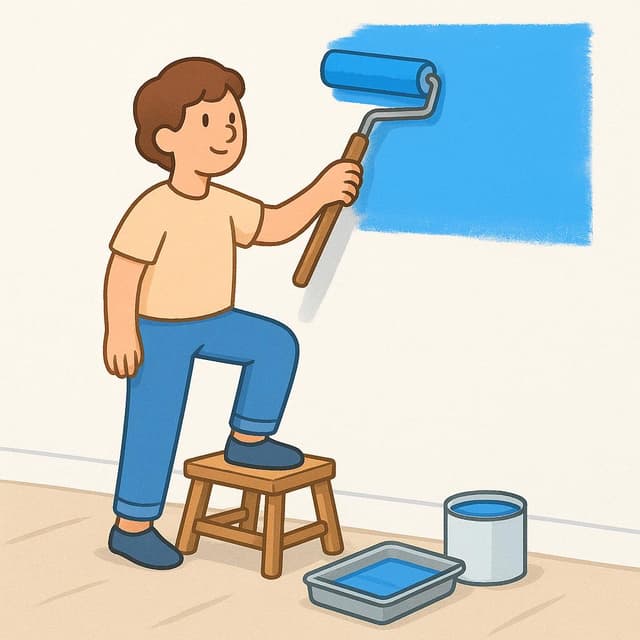
pintar — to paint
Use 'pinte' (yo/él/ella/usted), 'pintes' (tú), 'pintemos' (nosotros), 'pintéis' (vosotros), 'pinten' (ellos/ellas/ustedes) after expressions of doubt, desire, emotion, or uncertainty.
Formy pintar Tryb Subj. teraźniejszy
Kiedy używać Tryb Subj. teraźniejszy
This tense is used when the main clause expresses doubt, desire, emotion, or uncertainty, and the subordinate clause has a different subject. For example, 'I hope you paint well' or 'It's unlikely they will paint the fence'.
Uwagi dotyczące pintar w czasie Tryb Subj. teraźniejszy
Pintar is regular in the present subjunctive, following the standard pattern for -ar verbs.
Przykładowe zdania
Espero que pintes pronto tu habitación.
I hope you paint your room soon.
tú
Dudo que él pinte la casa este fin de semana.
I doubt he will paint the house this weekend.
él/ella/usted
Queremos que pintemos un cuadro abstracto.
We want to paint an abstract picture.
nosotros
No creo que pintéis eso.
I don't think you (plural, informal) will paint that.
vosotros
Me alegro de que pinten la fachada de ese color.
I'm happy that they are painting the facade that color.
ellos/ellas/ustedes
Częste błędy
Błąd: Using the present indicative instead of the present subjunctive.
Poprawnie: After verbs of doubt or desire, use 'pintes', not 'pintas'.
Dlaczego: Expressions of doubt, desire, and emotion trigger the subjunctive mood.
Błąd: Confusing 'pintéis' (vosotros) with 'pinteis' (no accent).
Poprawnie: The correct form is 'pintéis' with the accent.
Dlaczego: The accent is necessary for the vosotros present subjunctive form.
Opanuj hiszpańskie czasowniki w kontekście
Zapamiętywanie tabel to dopiero początek. Przeczytaj ponad 200 ilustrowanych i udźwiękowionych hiszpańskich historii, aby zobaczyć czasowniki takie jak 'pintar' używane naturalnie — w czasach, których się uczysz.
Powiązane czasy
Czas teraźniejszy
yo: pinto
Use 'pinto' (yo), 'pintas' (tú), 'pinta' (él/ella/usted), 'pintamos' (nosotros), 'pintáis' (vosotros), 'pintan' (ellos/ellas/ustedes) for actions happening now, habits, or general truths.
Czas przeszły prosty
yo: pinté
Use 'pinté' (yo), 'pintaste' (tú), 'pintó' (él/ella/usted), 'pintamos' (nosotros), 'pintasteis' (vosotros), 'pintaron' (ellos/ellas/ustedes) for completed past actions.
Czas przeszły niedokonany
yo: pintaba
Use 'pintaba' (yo/él/ella/usted), 'pintabas' (tú), 'pintábamos' (nosotros), 'pintabais' (vosotros), 'pintaban' (ellos/ellas/ustedes) for ongoing or habitual past actions and descriptions.
Czas przyszły
yo: pintaré
Use 'pintaré' (yo), 'pintarás' (tú), 'pintará' (él/ella/usted), 'pintaremos' (nosotros), 'pintaréis' (vosotros), 'pintarán' (ellos/ellas/ustedes) for actions that will happen.
Tryb warunkowy
yo: pintaría
Use 'pintaría' (yo/él/ella/usted), 'pintarías' (tú), 'pintaríamos' (nosotros), 'pintaríais' (vosotros), 'pintarían' (ellos/ellas/ustedes) for hypothetical ('would'), polite requests, or future-in-the-past.
Tryb Subj. przeszły niedokonany
yo: pintara
Use 'pintara' or 'pintase' (yo/él/ella/usted), 'pintaras'/'pintases' (tú), 'pintáramos'/'pintásemos' (nosotros), 'pintarais'/'pintaseis' (vosotros), 'pintaran'/'pintasen' (ellos/ellas/ustedes) for past hypotheticals or wishes.
Tryb rozkazujący (twierdzący)
yo: pinta
Use 'pinta' (tú), 'pinte' (usted), 'pintemos' (nosotros), 'pintad' (vosotros), 'pinten' (ustedes) for direct commands.
Tryb rozkazujący (przeczący)
yo: no pintes
Use 'no pintes' (tú), 'no pinte' (usted), 'no pintemos' (nosotros), 'no pintéis' (vosotros), 'no pinten' (ustedes) for negative commands.