Koniugacja pintar Czas przeszły prosty
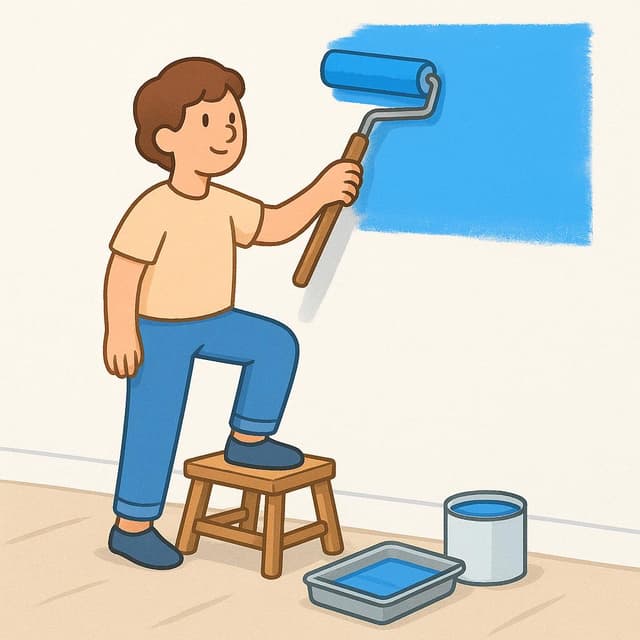
pintar — to paint
Use 'pinté' (yo), 'pintaste' (tú), 'pintó' (él/ella/usted), 'pintamos' (nosotros), 'pintasteis' (vosotros), 'pintaron' (ellos/ellas/ustedes) for completed past actions.
Formy pintar Czas przeszły prosty
Kiedy używać Czas przeszły prosty
The preterite tense is for actions in the past that have a clear beginning and end. Think of it as a snapshot: 'I painted the door yesterday' – the action is finished.
Uwagi dotyczące pintar w czasie Czas przeszły prosty
Pintar is regular in the preterite. All forms follow the standard conjugation pattern for -ar verbs.
Przykładowe zdania
Yo pinté mi bicicleta de color naranja.
I painted my bicycle orange.
yo
¿Tú pintaste el cuadro que está en la sala?
Did you paint the picture that's in the living room?
tú
Él pintó su coche la semana pasada.
He painted his car last week.
él/ella/usted
Nosotros pintamos el logo en la camiseta.
We painted the logo on the t-shirt.
nosotros
Vosotros pintasteis las sillas de blanco.
You all painted the chairs white.
vosotros
Ellos pintaron el mural en la plaza.
They painted the mural in the square.
ellos/ellas/ustedes
Częste błędy
Błąd: Using the imperfect instead of the preterite for a completed action.
Poprawnie: Say 'Pinté la pared ayer' (I painted the wall yesterday), not 'Pintaba la pared ayer'.
Dlaczego: Preterite signifies a finished action, while imperfect suggests an ongoing or habitual one.
Błąd: Confusing 'pintamos' (preterite) with 'pintamos' (present).
Poprawnie: Context is key; both are identical for regular -ar verbs.
Dlaczego: This is a common point of confusion for regular -ar verbs where the present and preterite nosotros forms are the same.
Opanuj hiszpańskie czasowniki w kontekście
Zapamiętywanie tabel to dopiero początek. Przeczytaj ponad 200 ilustrowanych i udźwiękowionych hiszpańskich historii, aby zobaczyć czasowniki takie jak 'pintar' używane naturalnie — w czasach, których się uczysz.
Powiązane czasy
Czas teraźniejszy
yo: pinto
Use 'pinto' (yo), 'pintas' (tú), 'pinta' (él/ella/usted), 'pintamos' (nosotros), 'pintáis' (vosotros), 'pintan' (ellos/ellas/ustedes) for actions happening now, habits, or general truths.
Czas przeszły niedokonany
yo: pintaba
Use 'pintaba' (yo/él/ella/usted), 'pintabas' (tú), 'pintábamos' (nosotros), 'pintabais' (vosotros), 'pintaban' (ellos/ellas/ustedes) for ongoing or habitual past actions and descriptions.
Czas przyszły
yo: pintaré
Use 'pintaré' (yo), 'pintarás' (tú), 'pintará' (él/ella/usted), 'pintaremos' (nosotros), 'pintaréis' (vosotros), 'pintarán' (ellos/ellas/ustedes) for actions that will happen.
Tryb warunkowy
yo: pintaría
Use 'pintaría' (yo/él/ella/usted), 'pintarías' (tú), 'pintaríamos' (nosotros), 'pintaríais' (vosotros), 'pintarían' (ellos/ellas/ustedes) for hypothetical ('would'), polite requests, or future-in-the-past.
Tryb Subj. teraźniejszy
yo: pinte
Use 'pinte' (yo/él/ella/usted), 'pintes' (tú), 'pintemos' (nosotros), 'pintéis' (vosotros), 'pinten' (ellos/ellas/ustedes) after expressions of doubt, desire, emotion, or uncertainty.
Tryb Subj. przeszły niedokonany
yo: pintara
Use 'pintara' or 'pintase' (yo/él/ella/usted), 'pintaras'/'pintases' (tú), 'pintáramos'/'pintásemos' (nosotros), 'pintarais'/'pintaseis' (vosotros), 'pintaran'/'pintasen' (ellos/ellas/ustedes) for past hypotheticals or wishes.
Tryb rozkazujący (twierdzący)
yo: pinta
Use 'pinta' (tú), 'pinte' (usted), 'pintemos' (nosotros), 'pintad' (vosotros), 'pinten' (ustedes) for direct commands.
Tryb rozkazujący (przeczący)
yo: no pintes
Use 'no pintes' (tú), 'no pinte' (usted), 'no pintemos' (nosotros), 'no pintéis' (vosotros), 'no pinten' (ustedes) for negative commands.