Koniugacja pulir Tryb Subj. przeszły niedokonany
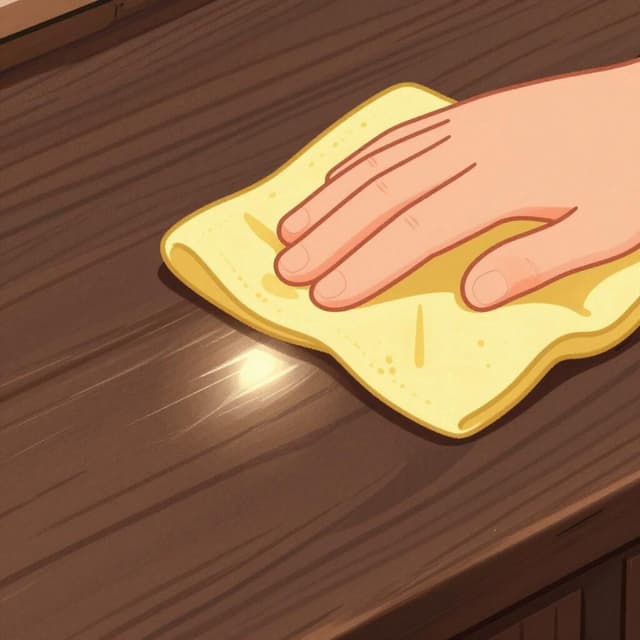
pulir — to polish
Use imperfect subjunctive forms like 'pudiera' (yo/él/ella/usted) and 'pudieran' (ellos/ellas/ustedes) for past hypotheticals or wishes.
Formy pulir Tryb Subj. przeszły niedokonany
Kiedy używać Tryb Subj. przeszły niedokonany
The imperfect subjunctive is used for hypothetical situations in the past, wishes, doubts, or suggestions in a past context. For 'pulir', you might say 'If I polished the silver...' or 'I wish he polished it better...'.
Uwagi dotyczące pulir w czasie Tryb Subj. przeszły niedokonany
'Pulir' is regular in the imperfect subjunctive. Both the -ra and -se forms exist, but the -ra form (pudiera, pudieras, etc.) is more common.
Przykładowe zdania
Si yo puliera mis zapatos más a menudo, estarían mejor.
If I polished my shoes more often, they would be better.
yo
Me gustaría que tú pulieras el coche.
I would like you to polish the car.
tú
Ella pensaba que él puliera la madera.
She thought he would polish the wood.
él/ella/usted
Ojalá ellos pulieran sus medallas.
Hopefully, they polish their medals.
ellos/ellas/ustedes
Si vosotros pulierais más, se vería mejor.
If you all (Spain) polished more, it would look better.
vosotros
Częste błędy
Błąd: Using the preterite or imperfect indicative instead of the imperfect subjunctive.
Poprawnie: In hypothetical 'if' clauses or after expressions of doubt/desire in the past, use 'puliera' or 'puliera', not 'pulió' or 'pulía'.
Dlaczego: The subjunctive mood is required for non-factual or hypothetical situations.
Błąd: Confusing the -ra and -se forms.
Poprawnie: While both are correct, stick to one form (usually -ra) for consistency in a single text.
Dlaczego: Although interchangeable, mixing them can sound awkward.
Opanuj hiszpańskie czasowniki w kontekście
Zapamiętywanie tabel to dopiero początek. Przeczytaj ponad 200 ilustrowanych i udźwiękowionych hiszpańskich historii, aby zobaczyć czasowniki takie jak 'pulir' używane naturalnie — w czasach, których się uczysz.
Powiązane czasy
Czas teraźniejszy
yo: pulo
The present tense of 'pulir' is regular: pulo, pules, pule, pulimos, pulís, pulen.
Czas przeszły prosty
yo: pulí
The preterite of 'pulir' is regular: pulí, puliste, pulió, pulimos, pulisteis, pulieron.
Czas przeszły niedokonany
yo: pulía
The imperfect of 'pulir' is regular: pulía, pulías, pulía, pulíamos, pulíais, pulían.
Czas przyszły
yo: puliré
The future tense of 'pulir' is regular: puliré, pulirás, pulirá, puliremos, puliréis, pulirán.
Tryb warunkowy
yo: puliría
The conditional of 'pulir' is regular: puliría, pulirías, puliría, puliríamos, puliríais, pulirían.
Tryb Subj. teraźniejszy
yo: pula
Use present subjunctive forms like 'pula' (yo/él/ella/usted) and 'pulan' (ellos/ellas/ustedes) after expressions of doubt, desire, or emotion.
Tryb rozkazujący (twierdzący)
yo: pule
Use imperative forms like 'pule' (tú) and 'pulan' (ustedes) for direct commands.
Tryb rozkazujący (przeczący)
yo: no pulas
Negative commands use the present subjunctive with 'no', like 'no pulas' (tú) and 'no pulan' (ustedes).