Koniugacja pulir Czas przeszły prosty
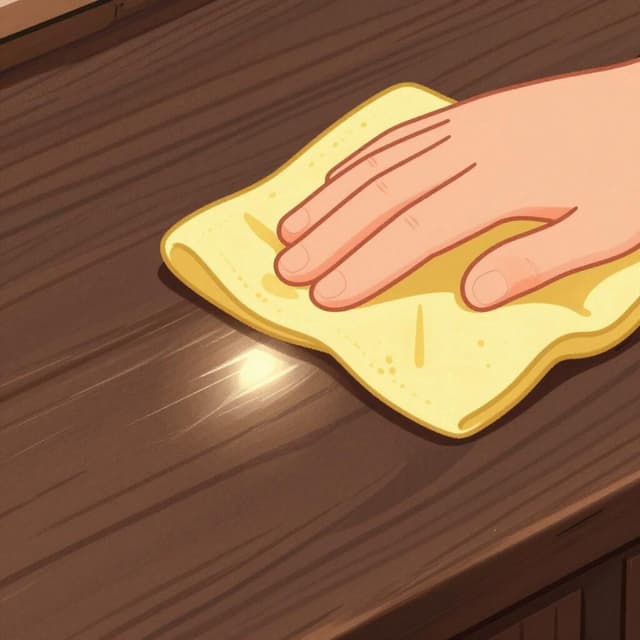
pulir — to polish
The preterite of 'pulir' is regular: pulí, puliste, pulió, pulimos, pulisteis, pulieron.
Formy pulir Czas przeszły prosty
Kiedy używać Czas przeszły prosty
Use the preterite for completed actions in the past that have a clear beginning and end. For 'pulir', this means finishing the act of polishing something at a specific point.
Uwagi dotyczące pulir w czasie Czas przeszły prosty
'Pulir' is a regular -ir verb and follows the standard conjugation pattern in the preterite tense. All forms are regular.
Przykładowe zdania
Ayer pulí mis zapatos por la noche.
Yesterday I polished my shoes at night.
yo
¿Puliste el suelo del baño?
Did you polish the bathroom floor?
tú
Mi abuela pulió esa mesa durante años.
My grandmother polished that table for years.
él/ella/usted
Los niños pulieron sus juguetes.
The children polished their toys.
ellos/ellas/ustedes
Nosotros pulimos la plata para la fiesta.
We polished the silver for the party.
nosotros
Częste błędy
Błąd: Using the imperfect instead of the preterite for a single completed action.
Poprawnie: For a specific instance of polishing, use 'pulí', not 'pulía'.
Dlaczego: The preterite marks a single, finished event, while the imperfect describes an ongoing or habitual past action.
Błąd: Forgetting the accent on the 'yo' form.
Poprawnie: The 'yo' form is 'pulí' with an accent on the 'í'.
Dlaczego: The accent distinguishes the preterite 'yo' form from other similar verb forms and indicates stress.
Opanuj hiszpańskie czasowniki w kontekście
Zapamiętywanie tabel to dopiero początek. Przeczytaj ponad 200 ilustrowanych i udźwiękowionych hiszpańskich historii, aby zobaczyć czasowniki takie jak 'pulir' używane naturalnie — w czasach, których się uczysz.
Powiązane czasy
Czas teraźniejszy
yo: pulo
The present tense of 'pulir' is regular: pulo, pules, pule, pulimos, pulís, pulen.
Czas przeszły niedokonany
yo: pulía
The imperfect of 'pulir' is regular: pulía, pulías, pulía, pulíamos, pulíais, pulían.
Czas przyszły
yo: puliré
The future tense of 'pulir' is regular: puliré, pulirás, pulirá, puliremos, puliréis, pulirán.
Tryb warunkowy
yo: puliría
The conditional of 'pulir' is regular: puliría, pulirías, puliría, puliríamos, puliríais, pulirían.
Tryb Subj. teraźniejszy
yo: pula
Use present subjunctive forms like 'pula' (yo/él/ella/usted) and 'pulan' (ellos/ellas/ustedes) after expressions of doubt, desire, or emotion.
Tryb Subj. przeszły niedokonany
yo: puliera
Use imperfect subjunctive forms like 'pudiera' (yo/él/ella/usted) and 'pudieran' (ellos/ellas/ustedes) for past hypotheticals or wishes.
Tryb rozkazujący (twierdzący)
yo: pule
Use imperative forms like 'pule' (tú) and 'pulan' (ustedes) for direct commands.
Tryb rozkazujący (przeczący)
yo: no pulas
Negative commands use the present subjunctive with 'no', like 'no pulas' (tú) and 'no pulan' (ustedes).