Koniugacja pulir Tryb Subj. teraźniejszy
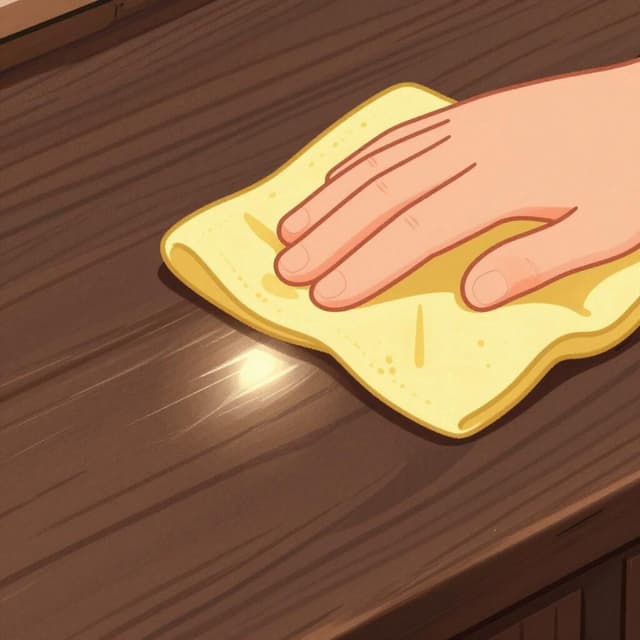
pulir — to polish
Use present subjunctive forms like 'pula' (yo/él/ella/usted) and 'pulan' (ellos/ellas/ustedes) after expressions of doubt, desire, or emotion.
Formy pulir Tryb Subj. teraźniejszy
Kiedy używać Tryb Subj. teraźniejszy
The present subjunctive is for actions or states that are uncertain, desired, doubted, or emotional. It often follows phrases like 'I hope that...', 'I doubt that...', 'It's important that...'. For 'pulir', you might say 'I hope you polish it well'.
Uwagi dotyczące pulir w czasie Tryb Subj. teraźniejszy
'Pulir' is regular in the present subjunctive. The forms are: pula (yo/él/ella/usted), pulas (tú), pulamos (nosotros), puláis (vosotros), pulan (ellos/ellas/ustedes).
Przykładowe zdania
Espero que tú pulas bien la plata.
I hope you polish the silver well.
tú
Quiero que él pula su guitarra.
I want him to polish his guitar.
él/ella/usted
Dudamos que nosotros pulamos esto a tiempo.
We doubt that we will polish this on time.
nosotros
Es necesario que ustedes pulan la sala.
It is necessary that you all polish the living room.
ellos/ellas/ustedes
Espero que vosotros puláis el metal.
I hope you all (Spain) polish the metal.
vosotros
Częste błędy
Błąd: Using the present indicative instead of the present subjunctive.
Poprawnie: After verbs of doubt or desire, use 'pules' (indicative) incorrectly; it should be 'pules' (subjunctive).
Dlaczego: Certain trigger phrases (like 'espero que', 'dudo que') require the subjunctive mood.
Błąd: Forgetting the subjunctive for impersonal expressions.
Poprawnie: Expressions like 'Es importante que...' require the subjunctive: 'Es importante que pulan'.
Dlaczego: Impersonal expressions about necessity, importance, or possibility trigger the subjunctive.
Opanuj hiszpańskie czasowniki w kontekście
Zapamiętywanie tabel to dopiero początek. Przeczytaj ponad 200 ilustrowanych i udźwiękowionych hiszpańskich historii, aby zobaczyć czasowniki takie jak 'pulir' używane naturalnie — w czasach, których się uczysz.
Powiązane czasy
Czas teraźniejszy
yo: pulo
The present tense of 'pulir' is regular: pulo, pules, pule, pulimos, pulís, pulen.
Czas przeszły prosty
yo: pulí
The preterite of 'pulir' is regular: pulí, puliste, pulió, pulimos, pulisteis, pulieron.
Czas przeszły niedokonany
yo: pulía
The imperfect of 'pulir' is regular: pulía, pulías, pulía, pulíamos, pulíais, pulían.
Czas przyszły
yo: puliré
The future tense of 'pulir' is regular: puliré, pulirás, pulirá, puliremos, puliréis, pulirán.
Tryb warunkowy
yo: puliría
The conditional of 'pulir' is regular: puliría, pulirías, puliría, puliríamos, puliríais, pulirían.
Tryb Subj. przeszły niedokonany
yo: puliera
Use imperfect subjunctive forms like 'pudiera' (yo/él/ella/usted) and 'pudieran' (ellos/ellas/ustedes) for past hypotheticals or wishes.
Tryb rozkazujący (twierdzący)
yo: pule
Use imperative forms like 'pule' (tú) and 'pulan' (ustedes) for direct commands.
Tryb rozkazujący (przeczący)
yo: no pulas
Negative commands use the present subjunctive with 'no', like 'no pulas' (tú) and 'no pulan' (ustedes).