Koniugacja rescatar Tryb Subj. przeszły niedokonany
rescatar — to rescue
Use imperfect subjunctive forms like 'rescatara' or 'rescatase' for past hypotheticals or wishes.
Formy rescatar Tryb Subj. przeszły niedokonany
Kiedy używać Tryb Subj. przeszły niedokonany
The imperfect subjunctive is used for hypothetical situations, past wishes, or polite requests that didn't necessarily happen. For 'rescatar,' you might say, 'Ojalá rescatara a más personas' (I wish I could rescue more people) or 'Si rescatara el tesoro, seríamos ricos' (If I rescued the treasure, we would be rich).
Uwagi dotyczące rescatar w czasie Tryb Subj. przeszły niedokonany
Rescatar is regular in the imperfect subjunctive. Both the -ra and -se forms are correct, though -ra is more common in speech.
Przykładowe zdania
Si yo rescatara el tesoro, compraría una isla.
If I rescued the treasure, I would buy an island.
yo
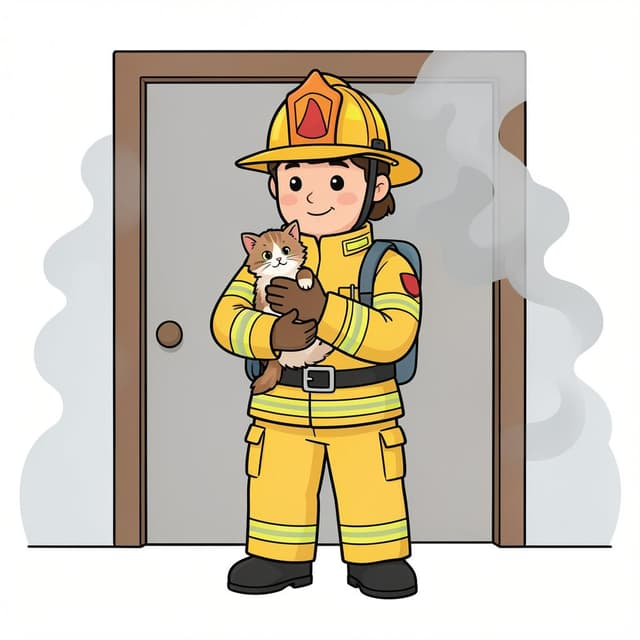
Ella deseaba que tú rescataras a su gato.
She wished that you would rescue her cat.
tú
Ellos actuarían si él rescatara a alguien.
They would act if he rescued someone.
él/ella/usted
Preferiríamos que ustedes rescataran el proyecto.
We would prefer that you all rescue the project.
ellos/ellas/ustedes
Częste błędy
Błąd: Using the preterite instead of imperfect subjunctive for hypotheticals.
Poprawnie: Use 'rescatara' or 'rescatase', not 'rescató'.
Dlaczego: The imperfect subjunctive is required for unreal or hypothetical conditions in the past or present.
Błąd: Confusing the -ra and -se endings.
Poprawnie: Both 'rescatara' and 'rescatase' are correct imperfect subjunctive forms.
Dlaczego: While regional or stylistic preferences exist, both sets of endings are grammatically valid.
Opanuj hiszpańskie czasowniki w kontekście
Zapamiętywanie tabel to dopiero początek. Przeczytaj ponad 200 ilustrowanych i udźwiękowionych hiszpańskich historii, aby zobaczyć czasowniki takie jak 'rescatar' używane naturalnie — w czasach, których się uczysz.
Powiązane czasy
Czas teraźniejszy
yo: rescato
Use present forms like 'rescato' for current actions, habits, or general truths about rescuing.
Czas przeszły prosty
yo: rescaté
Use preterite forms like 'rescató' for completed past actions of rescuing.
Czas przeszły niedokonany
yo: rescataba
Use imperfect forms like 'rescataba' for ongoing or habitual past rescues.
Czas przyszły
yo: rescataré
Use future forms like 'rescataré' for actions that will happen or for probability.
Tryb warunkowy
yo: rescataría
Use conditional forms like 'rescataría' for hypothetical or polite requests about rescuing.
Tryb Subj. teraźniejszy
yo: rescate
Use present subjunctive forms like 'rescate' after expressions of doubt, desire, or emotion.
Tryb rozkazujący (twierdzący)
yo: rescata
Use imperative forms like 'rescatad' and 'rescate' for direct commands.
Tryb rozkazujący (przeczący)
yo: no rescates
Negative commands like 'no rescates' use the present subjunctive.