Koniugacja solar Czas przeszły niedokonany
solar — to sole
The imperfect of solar is regular: solaba, solabas, solaba, solábamos, solabais, solaban.
Formy solar Czas przeszły niedokonany
Kiedy używać Czas przeszły niedokonany
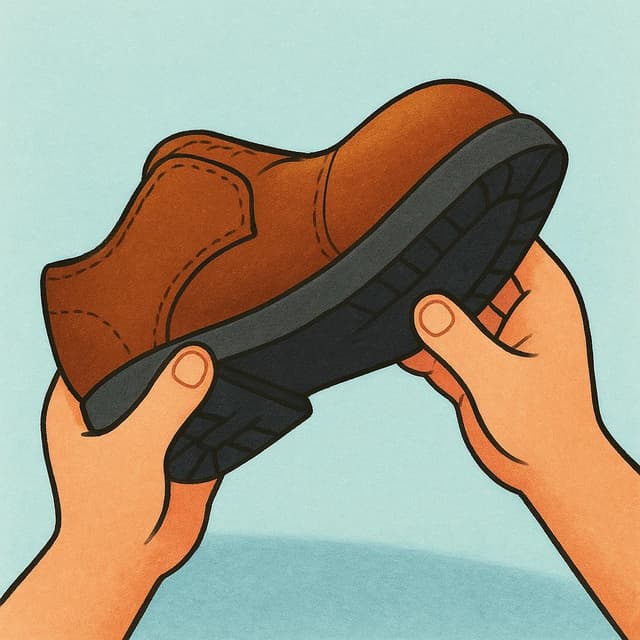
Use the imperfect of solar to describe ongoing or habitual actions in the past, or to set the scene. For example, 'Cuando era joven, solaba las suelas de los zapatos de mi padre' (When I was young, I used to sole my father's shoe soles).
Uwagi dotyczące solar w czasie Czas przeszły niedokonany
Solar is regular in the imperfect tense. It follows the standard pattern for -ar verbs, using the stem 'solab-'.
Przykładowe zdania
Yo solaba las suelas de los zapatos viejos.
I used to sole the soles of old shoes.
yo
¿Tú solabas las suelas de cuero?
Did you usually sole leather soles?
tú
Ella solaba las suelas con mucho cuidado.
She was soling the soles with great care.
él/ella/usted
Antes, nosotros solábamos las suelas de las botas de trabajo.
Before, we used to sole the soles of work boots.
nosotros
Ellos solaban las suelas de los zapatos de baile.
They were soling the soles of dancing shoes.
ellos/ellas/ustedes
Częste błędy
Błąd: Confusing imperfect and preterite for past habits.
Poprawnie: Use the imperfect ('solaba', 'solabas') for ongoing or repeated past actions ('used to sole'), not the preterite.
Dlaczego: The imperfect describes background and duration, while the preterite describes completed events.
Błąd: Incorrect endings, like using '-ía' endings.
Poprawnie: The imperfect endings for -ar verbs are -aba, -abas, -aba, -ábamos, -abais, -aban.
Dlaczego: Learners might confuse -ar verb endings with -er/-ir verb endings.
Opanuj hiszpańskie czasowniki w kontekście
Zapamiętywanie tabel to dopiero początek. Przeczytaj ponad 200 ilustrowanych i udźwiękowionych hiszpańskich historii, aby zobaczyć czasowniki takie jak 'solar' używane naturalnie — w czasach, których się uczysz.
Powiązane czasy
Czas teraźniejszy
yo: solo
The present indicative of solar is regular: solo, solas, sola, solamos, soláis, solan.
Czas przeszły prosty
yo: solé
The preterite of solar is regular: solé, solaste, soló, solamos, solasteis, solaron.
Czas przyszły
yo: solaré
The future of solar is regular: solaré, solarás, solará, solaremos, solaréis, solarán.
Tryb warunkowy
yo: solaría
The conditional of solar is regular: solaría, solarías, solaría, solaríamos, solaríais, solarían.
Tryb Subj. teraźniejszy
yo: sole
The present subjunctive of solar is: sole (yo/usted), soles (tú), solemos (nosotros), soléis (vosotros), solen (ellos/ustedes).
Tryb Subj. przeszły niedokonany
yo: solara
The imperfect subjunctive of solar has -ra and -se forms, e.g., solara, solaras, solara, soláramos, solarais, solaran.
Tryb rozkazujący (twierdzący)
yo: sola
The imperative of solar is mostly regular: sola (tú), sole (usted), solad (vosotros), solen (ustedes).
Tryb rozkazujący (przeczący)
yo: no soles
Negative commands for solar use the present subjunctive: no soles (tú), no sole (usted), no soléis (vosotros), no solen (ustedes).