Inklingo

acercó

/ah-ser-KOH/

approached

A young boy walking along a path towards a large red apple resting on the ground, clearly showing the action of moving closer.

The boy is moving closer to the apple, illustrating the definition 'approached' or 'moved closer'.

acercó(verb)

A2regular (pronominal/reflexive) ar

approached

?

He/She/It/You (formal) moved closer

Also:

drew near

?

past action

📝 In Action

Ella se acercó al niño para darle un abrazo.

A2

She approached the child to give him a hug.

Usted se acercó demasiado al borde del acantilado.

B1

You (formal) got too close to the edge of the cliff.

El perro se acercó a la mesa esperando comida.

A2

The dog approached the table hoping for food.

Word Connections

Synonyms

  • se aproximó (approached)
  • se arrimó (got close (informal))

Antonyms

  • se alejó (moved away)

Common Collocations

  • se acercó lentamentehe/she slowly approached

💡 Grammar Points

Reflexive Action

When used with 'se' (se acercó), the subject (he/she) is performing the action to himself/herself—they are moving their own body closer.

Preterite Tense

The '-ó' ending tells you the action was a single, completed event in the past, like turning off a switch: 'He approached the door and knocked.'

❌ Common Pitfalls

Forgetting 'se'

Mistake: "Él acercó a la mesa."

Correction: Él se acercó a la mesa. (You need the 'se' when the person is moving themselves.)

⭐ Usage Tips

Using 'a'

Always use the preposition 'a' (to/toward) right after the verb to indicate the destination: 'Se acercó a la luz.'

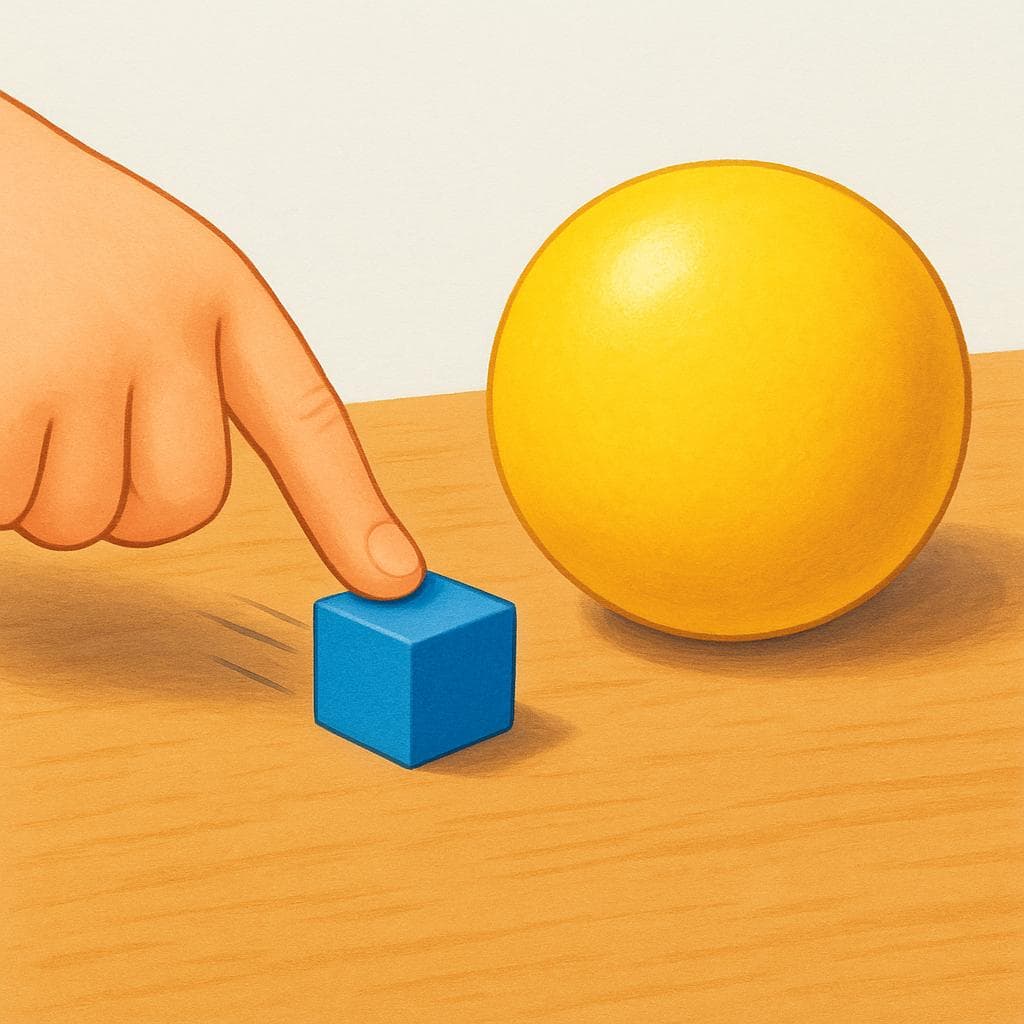
A human hand gently sliding a small blue cube across a wooden table, reducing the distance between the cube and a large yellow ball.

The hand is moving the cube nearer to the ball, illustrating the definition 'brought closer'.

acercó(verb)

B1regular (transitive) ar

brought closer

?

He/She/It/You (formal) moved an object nearer

Also:

moved nearer

?

applied to an object

📝 In Action

El camarero acercó la carta a la señora.

B1

The waiter brought the menu closer to the lady.

Ella acercó su rostro al micrófono para hablar.

B2

She brought her face closer to the microphone to speak.

La crisis acercó a los dos países en busca de una solución.

C1

The crisis brought the two countries closer together in search of a solution.

Word Connections

Synonyms

  • aproximó (approximated/brought closer)

Antonyms

  • alejó (moved away)

Common Collocations

  • acercó el platohe/she brought the plate closer

💡 Grammar Points

Transitive Action

When used without 'se' (acercó), the action moves something else. The subject (e.g., 'El camarero') moves the direct object (e.g., 'la carta').

Physical or Abstract

This meaning can be used for physical objects ('acercó la silla') or abstract ideas ('acercó posturas' - brought positions closer/compromised).

🔄 Conjugations

indicative

present

él/ella/ustedse acerca
yome acerco
te acercas
ellos/ellas/ustedesse acercan
nosotrosnos acercamos
vosotrosos acercáis

imperfect

él/ella/ustedse acercaba
yome acercaba
te acercabas
ellos/ellas/ustedesse acercaban
nosotrosnos acercábamos
vosotrosos acercabais

preterite

él/ella/ustedse acercó
yome acerqué
te acercaste
ellos/ellas/ustedesse acercaron
nosotrosnos acercamos
vosotrosos acercasteis

subjunctive

present

él/ella/ustedse acerque
yome acerque
te acerques
ellos/ellas/ustedesse acerquen
nosotrosnos acerquemos
vosotrosos acerquéis

imperfect

él/ella/ustedse acercara/acercase
yome acercara/acercase
te acercaras/acercases
ellos/ellas/ustedesse acercaran/acercasen
nosotrosnos acercáramos/acercásemos
vosotrosos acercarais/acercaseis

✏️ Quick Practice

💡 Quick Quiz: acercó

Question 1 of 2

Which sentence uses 'acercó' in its reflexive form (meaning 'approached')?

📚 More Resources

Word Family

cerca(near/close) - adverb

Frequently Asked Questions

Why does the verb sometimes have 'se' and sometimes not?

When it has 'se' (acercarse), the person is moving themselves closer (e.g., 'He approached'). When it doesn't have 'se' (acercar), the person is moving an object closer (e.g., 'He brought the cup closer').

Does 'acercó' require a change in spelling (like c to qu)?

No, not in this form. The spelling change (c to qu) only happens in the 'yo' form of the preterite ('yo me acerqué') and in the subjunctive forms, to keep the hard 'k' sound.