asi
“asi” means “like this / like that” in Spanish. It has 3 different meanings depending on context:



like this / like that, so

📝 In Action
Tienes que hacerlo asi, ¿ves?
A1You have to do it like this, see?
La vida es asi, a veces buena y a veces mala.
A2Life is like that, sometimes good and sometimes bad.
No me mires asi.
A2Don't look at me like that.
Word Connections
so, such a

📝 In Action
Nunca vi un perro asi de grande.
A2I've never seen a dog so big.
¿Por qué estás asi de preocupado?
B1Why are you so worried?
Una persona asi no puede ser presidente.
B1A person like that (such a person) can't be president.
Word Connections
so, therefore
📝 In Action
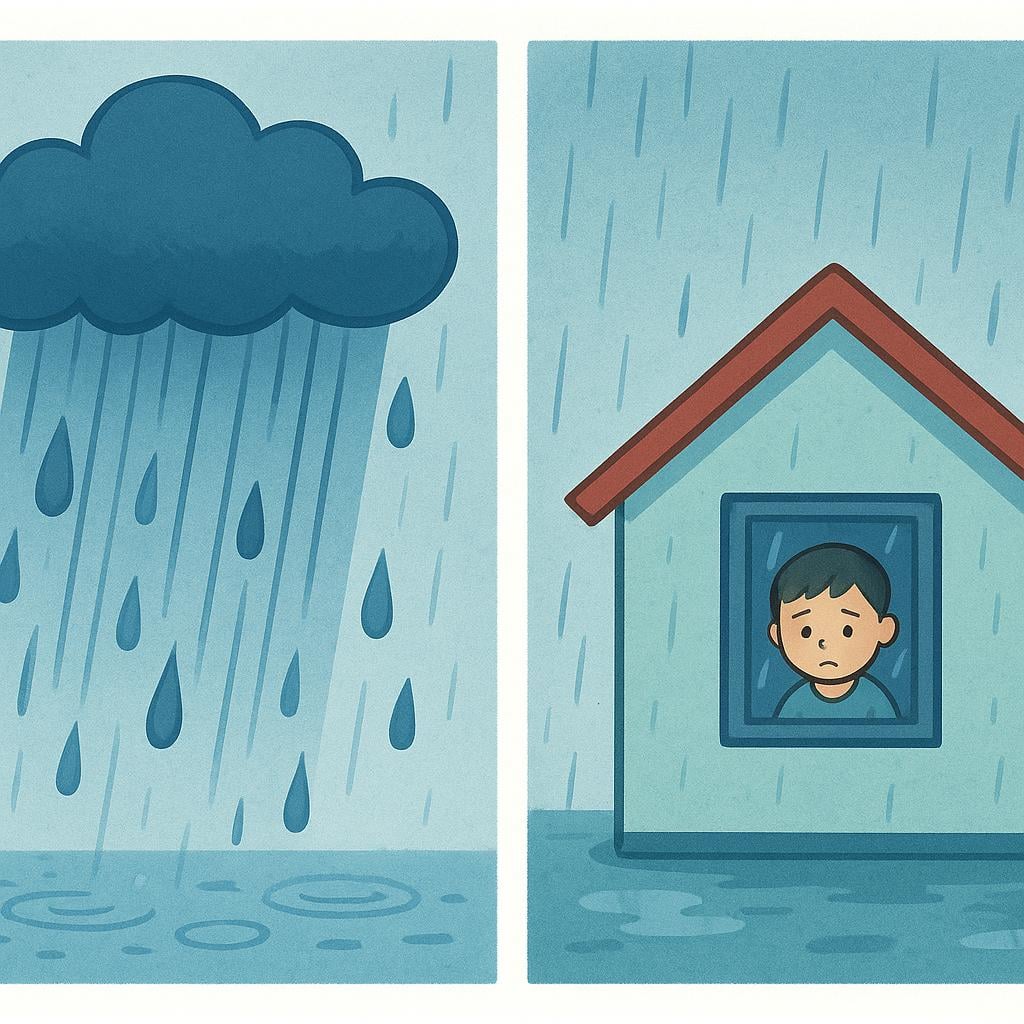
Está lloviendo, asi que no podemos ir al parque.
A2It's raining, so we can't go to the park.
No he dormido bien, asi que estoy muy cansado.
B1I haven't slept well, so I'm very tired.
El vuelo fue cancelado, asi que tendremos que buscar un hotel.
B1The flight was canceled, therefore we'll have to look for a hotel.
Word Connections
Translate to Spanish
✏️ Quick Practice
Quick Quiz: asi
Question 1 of 1
Which sentence uses 'asi' to mean 'like this' or to describe a manner of doing something?
📚 More Resources
👥 Word Family
📚 Etymology
Comes from the Latin phrase 'ad sic', where 'ad' meant 'to' or 'toward' and 'sic' meant 'thus' or 'so'. Over time, they blended together to form the Spanish word for 'in this way'.
First recorded: 10th century
Cognates (Related words)
💡 Master Spanish
Take your Spanish to the next level. Read 200+ illustrated and narrated Spanish stories tailored to your level with the Inklingo app!
Frequently Asked Questions
What's the difference between 'asi' and 'así'?
The correct, modern spelling is 'así' with an accent mark on the 'i'. The accent shows that the stress of the word falls on that last syllable: a-SÍ. While you might see 'asi' without the accent in old texts or very informal messages, you should always learn and use 'así'.
How is 'así que' different from 'por qué'?
'Así que' gives a result ('so', 'therefore'), while 'porque' gives a reason ('because'). Compare: 'It was cold, SO I put on a jacket' (*Hacía frío, así que me puse una chaqueta*). vs. 'I put on a jacket BECAUSE it was cold' (*Me puse una chaqueta porque hacía frío*).
Can I use 'asi' by itself to mean 'so' like in 'I'm so tired'?
Not usually. For 'I'm so tired', you would use 'estoy tan cansado'. You use 'asi' to mean 'so' when it's combined with 'de', as in 'I've never been SO tired' (*Nunca he estado asi de cansado*), where you're emphasizing the degree of tiredness.