bastardos
“bastardos” means “illegitimate sons” in Spanish. It has 2 different meanings depending on context:

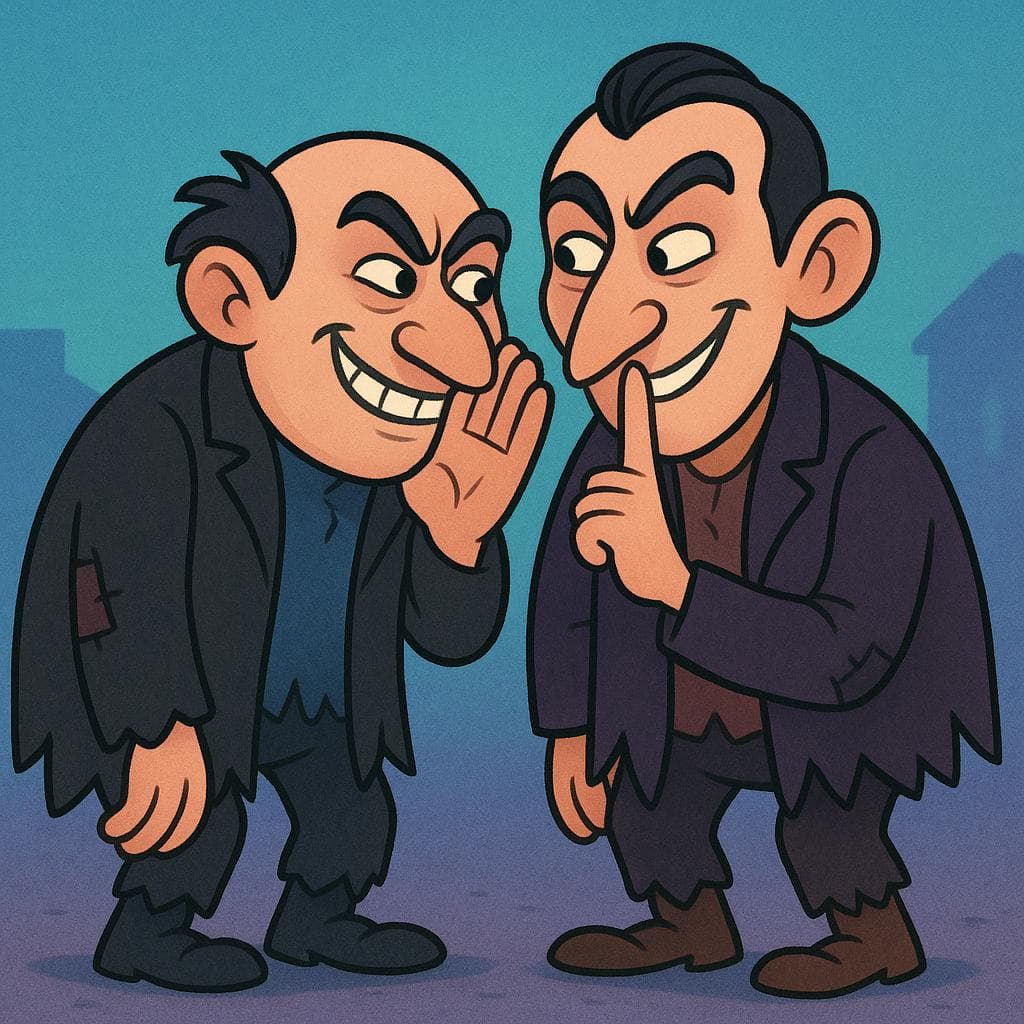
illegitimate sons, bastards
Also: mixed breeds
📝 In Action
En la historia de la realeza, los bastardos a menudo eran una amenaza para el trono.
B1In the history of royalty, the illegitimate sons were often a threat to the throne.
Los documentos mencionan a dos hermanos bastardos que no tenían derecho a heredar.
B2The documents mention two illegitimate brothers who had no right to inherit.
scoundrels, villains, jerks
Also: counterfeit
📝 In Action
¡Esos bastardos nos robaron todo el dinero!
B2Those scoundrels stole all our money!
No confíes en ellos, son unos bastardos que solo buscan problemas.
B2Don't trust them, they are jerks who only look for trouble.
Translate to Spanish
Words that translate to "bastardos" in Spanish:
bastards→counterfeit→illegitimate sons→jerks→mixed breeds→scoundrels→villains→✏️ Quick Practice
Quick Quiz: bastardos
Question 1 of 1
Which sentence uses 'bastardos' in its most common, informal, modern meaning?
📚 More Resources
👥 Word Family▼
🎵 Rhymes▼
📚 Etymology▼
The word comes from Old French 'bastart,' which itself likely originated from the Germanic word 'banst' (meaning 'bond' or 'marriage'), combined with a suffix implying 'of the kind of.' It originally referred specifically to children born out of a non-canonical, but sometimes recognized, union.
First recorded: Around the 13th century in Spanish texts.
Cognates (Related words)
💡 Master Spanish
Take your Spanish to the next level. Read 200+ illustrated and narrated Spanish stories tailored to your level with the Inklingo app!
Frequently Asked Questions
Is 'bastardos' a strong insult?
Yes, in Spanish, similar to English, this word is considered a strong insult. While it can be used jokingly among very close friends in some regions, it is generally offensive and should be avoided in formal or polite conversation.
Does 'bastardos' always mean 'illegitimate children'?
Not usually in daily conversation. While that is its literal and historical meaning, it is far more often used figuratively to mean 'scoundrels' or 'bad people' who have acted maliciously.