brazo
“brazo” means “arm” in Spanish. It has 3 different meanings depending on context:
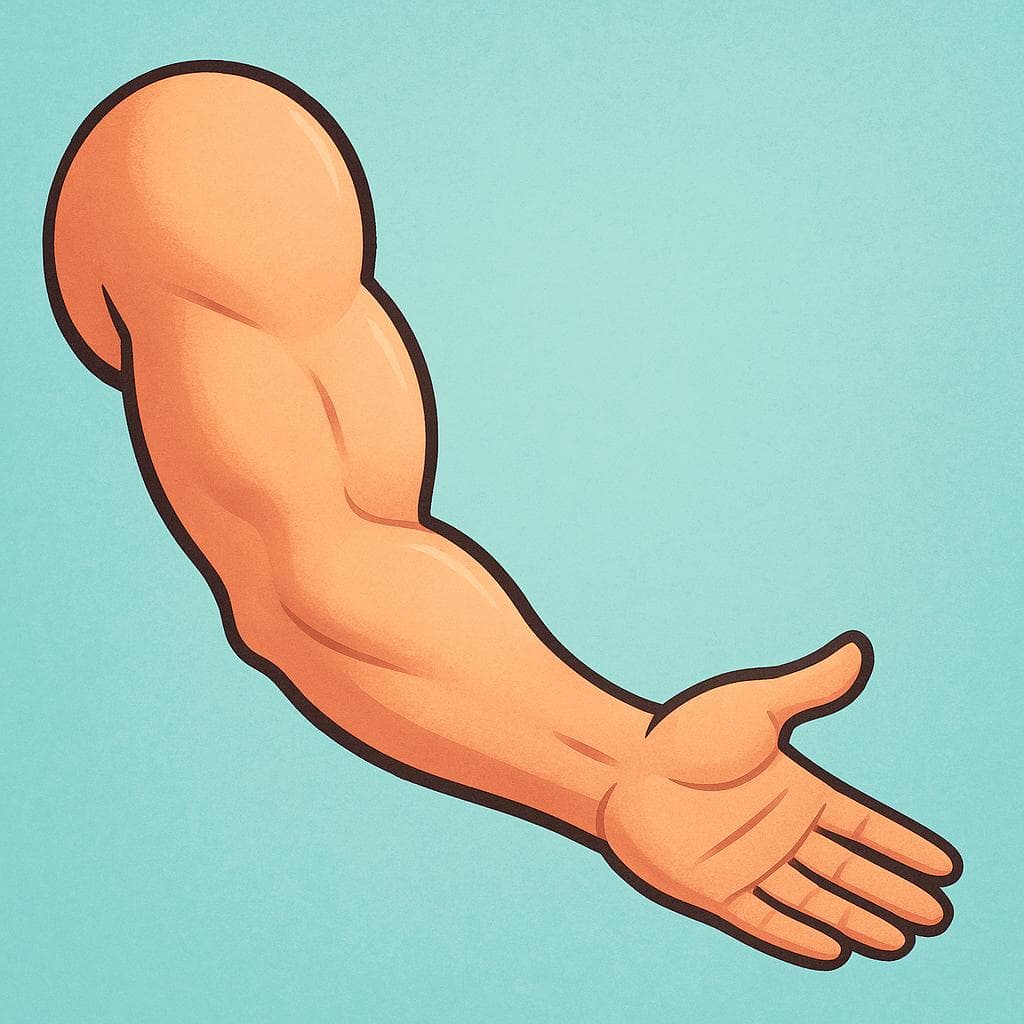


arm
Also: sleeve
📝 In Action
Me duele el brazo después de cargar las cajas.
A1My arm hurts after carrying the boxes.
Ella cruzó los brazos cuando se enojó.
A1She crossed her arms when she got angry.
Mi bebé solo quiere estar en mis brazos.
A2My baby only wants to be in my arms.
branch, arm
Also: section
📝 In Action
Este brazo del río es muy profundo.
B1This branch of the river is very deep.
El robot tiene un brazo mecánico para levantar objetos pesados.
B2The robot has a mechanical arm for lifting heavy objects.
El arquitecto diseñó un nuevo brazo para el edificio principal.
C1The architect designed a new wing (or section) for the main building.
influence, manpower
Also: support
📝 In Action
Necesitamos más brazos para terminar la cosecha antes de la lluvia.
B2We need more hands (manpower) to finish the harvest before the rain.
La policía representa el brazo de la ley en la ciudad.
C1The police represent the arm (power/force) of the law in the city.
Ella es mi brazo derecho en la oficina.
B2She is my right-hand man/woman in the office.
Translate to Spanish
✏️ Quick Practice
Quick Quiz: brazo
Question 1 of 1
Which sentence uses 'brazo' in its figurative meaning of 'power or influence'?
📚 More Resources
👥 Word Family▼
📚 Etymology▼
The word comes from the Latin term *bracchium*, which was the general word for 'arm.' It has been a standard part of Spanish since the early days of the language.
First recorded: 10th century
Cognates (Related words)
💡 Master Spanish
Take your Spanish to the next level. Read 200+ illustrated and narrated Spanish stories tailored to your level with the Inklingo app!
Frequently Asked Questions
If 'brazo' means 'arm,' how is it related to 'abrazar' (to hug)?
'Abrazar' literally means 'to put one's arms around someone.' The root 'brazo' is central to the verb, emphasizing the physical act of using your arms to embrace someone.
How do I know when to use 'brazo' versus 'mano'?
'Brazo' is the full arm, from the shoulder down to the wrist. 'Mano' is only the hand. If you are doing something with your fingers or palm, use 'mano.' If you're talking about carrying or lifting, you often use 'brazo'.