bruja
“bruja” means “witch” in Spanish. It has 3 different meanings depending on context:



witch
Also: sorceress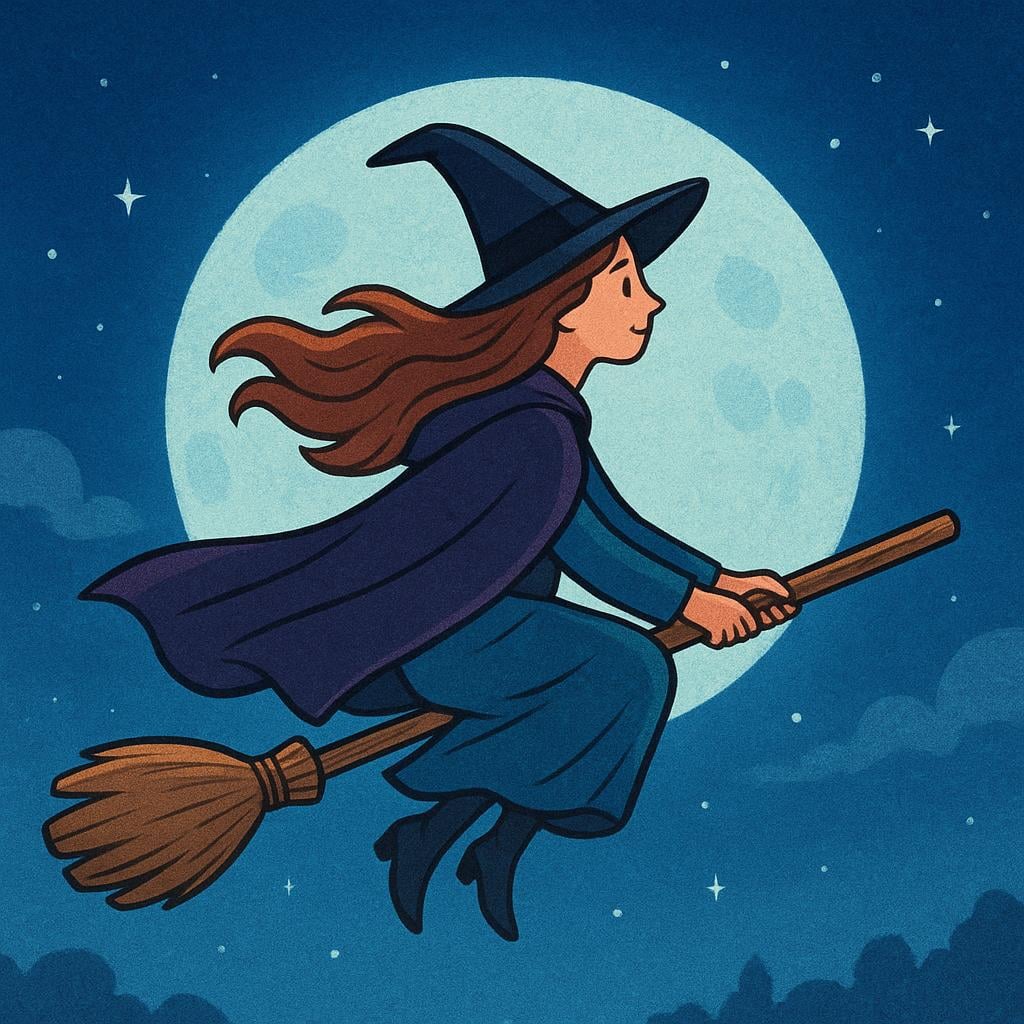
📝 In Action
En el cuento, la bruja convirtió al príncipe en rana.
A2In the story, the witch turned the prince into a frog.
La tienda vendía escobas y sombreros de bruja para la fiesta.
A1The store sold brooms and witch hats for the party.
nasty woman, hag
Also: bitch
📝 In Action
Mi vecina es una bruja, siempre se queja del ruido.
B2My neighbor is a nasty woman; she always complains about the noise.
Trató a los camareros como si fuera una bruja.
B2She treated the waiters as if she were a hag.
sharp cookie
Also: whiz
📝 In Action
Ella es una bruja de la tecnología; arregló mi computadora en cinco minutos.
C1She is a tech whiz; she fixed my computer in five minutes.
Adivinaste lo que iba a pedir, ¡eres una bruja!
B2You guessed what I was going to order, you're a sharp cookie!
Translate to Spanish
✏️ Quick Practice
Quick Quiz: bruja
Question 1 of 2
Which meaning of 'bruja' is used when describing a highly intelligent person?
📚 More Resources
👥 Word Family▼
📚 Etymology▼
The word 'bruja' has roots that are a bit mysterious, but it likely comes from an ancient Iberian root, possibly related to magic or sorcery, distinguishing it from the Latin-derived words for magic.
First recorded: Medieval Spanish texts (13th century)
Cognates (Related words)
💡 Master Spanish
Take your Spanish to the next level. Read 200+ illustrated and narrated Spanish stories tailored to your level with the Inklingo app!
Frequently Asked Questions
Is 'bruja' always an insult?
No. While its main figurative use is a strong insult (meaning 'nasty woman'), it can also be used informally and positively to mean 'whiz' or 'sharp cookie'—someone whose talent is almost magical. Context is everything!
What is the word for a male witch?
The male equivalent is 'brujo'. The word follows the standard Spanish pattern for gendered nouns ending in -o/-a.