camarera
“camarera” means “waitress” in Spanish. It has 2 different meanings depending on context:
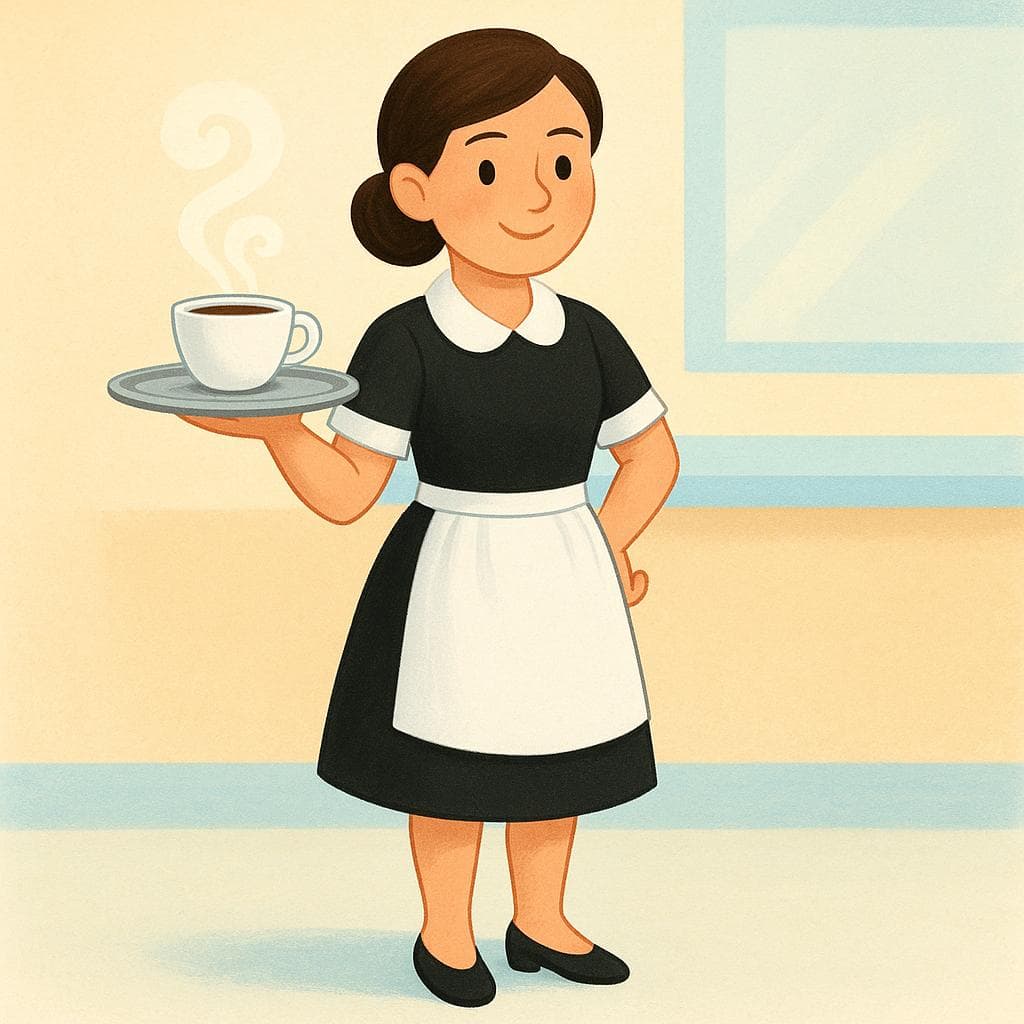
waitress
Also: server
📝 In Action
La camarera nos trajo la cuenta inmediatamente.
A1The waitress brought us the bill immediately.
¿Puedes llamar a la camarera? Necesito más agua.
A1Can you call the server? I need more water.
Mi hermana trabaja de camarera en un bar del centro.
A2My sister works as a waitress in a downtown bar.
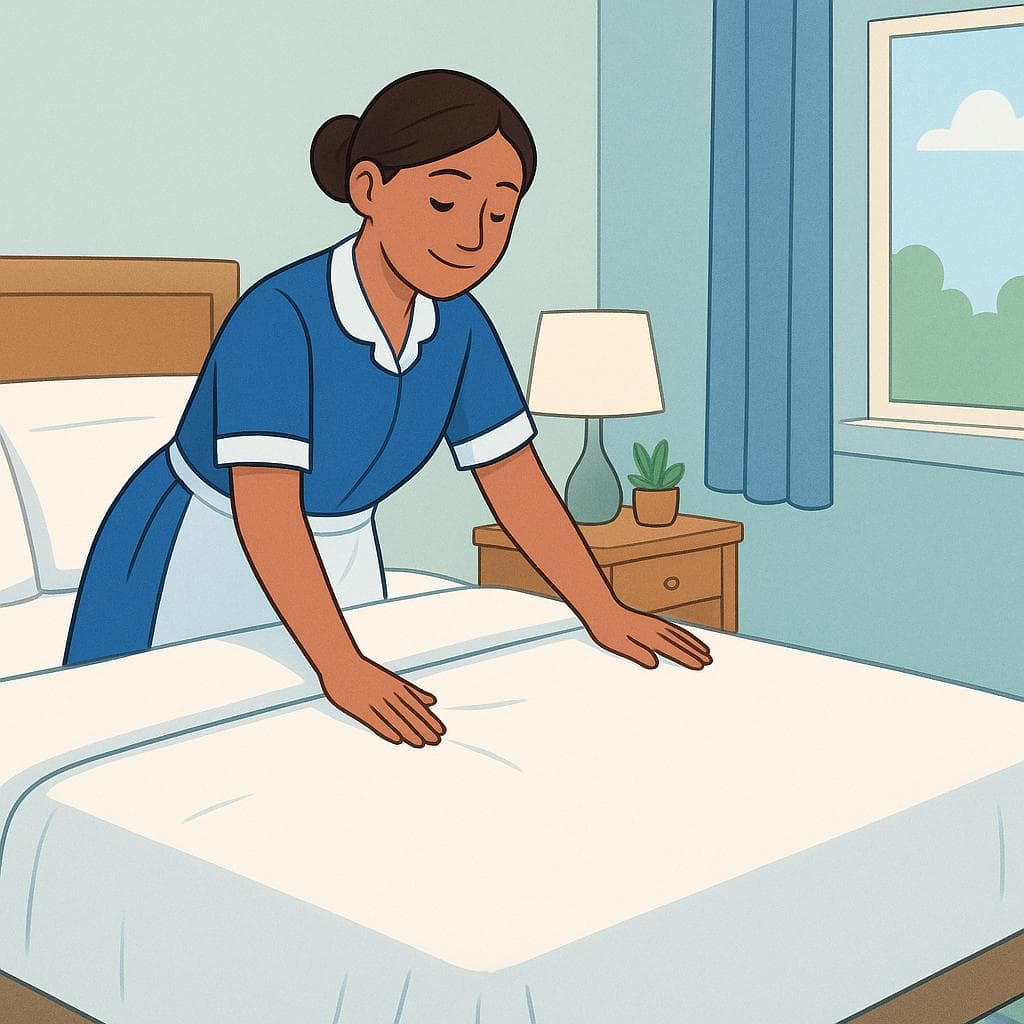
chambermaid
Also: housekeeper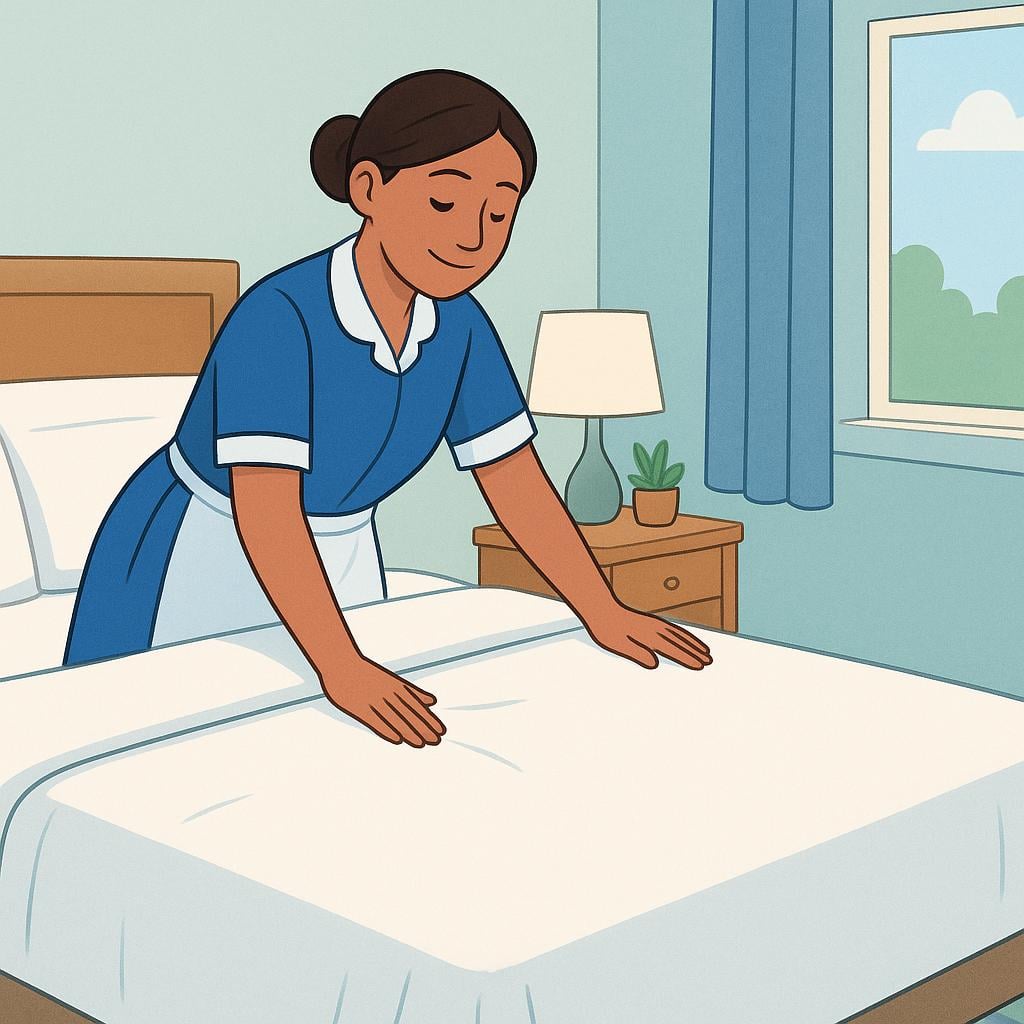
📝 In Action
La camarera del hotel dejó toallas limpias en la habitación.
B1The chambermaid left clean towels in the room.
Por favor, avise a la camarera que ya puede limpiar mi cuarto.
B2Please inform the housekeeper that she can clean my room now.
Translate to Spanish
✏️ Quick Practice
Quick Quiz: camarera
Question 1 of 2
If you are dining in a restaurant, which person is the 'camarera'?
📚 More Resources
👥 Word Family▼
📚 Etymology▼
The word comes from 'cámara,' meaning 'chamber' or 'room.' A 'camarera' was originally someone who attended to a noble person's private rooms. Over time, the meaning extended to anyone who serves in a public room or establishment, like a restaurant.
First recorded: Medieval Spanish (similar forms appeared around the 13th century)
Cognates (Related words)
💡 Master Spanish
Take your Spanish to the next level. Read 200+ illustrated and narrated Spanish stories tailored to your level with the Inklingo app!
Frequently Asked Questions
Is 'camarera' used everywhere in the Spanish-speaking world?
It is the standard term in Spain. In many parts of Latin America, especially Mexico and Central America, 'mesera' (derived from 'mesa,' meaning table) is often preferred, but 'camarera' is still understood.
How is 'camarera' related to the word 'cámara'?
'Cámara' means 'room' or 'chamber.' A 'camarera' is historically a person who works in a room (a chambermaid or attendant). The job title reflects this origin of attending to private or public spaces.