champagne
“champagne” means “champagne” in Spanish (sparkling wine from France).
champagne
Also: sparkling wine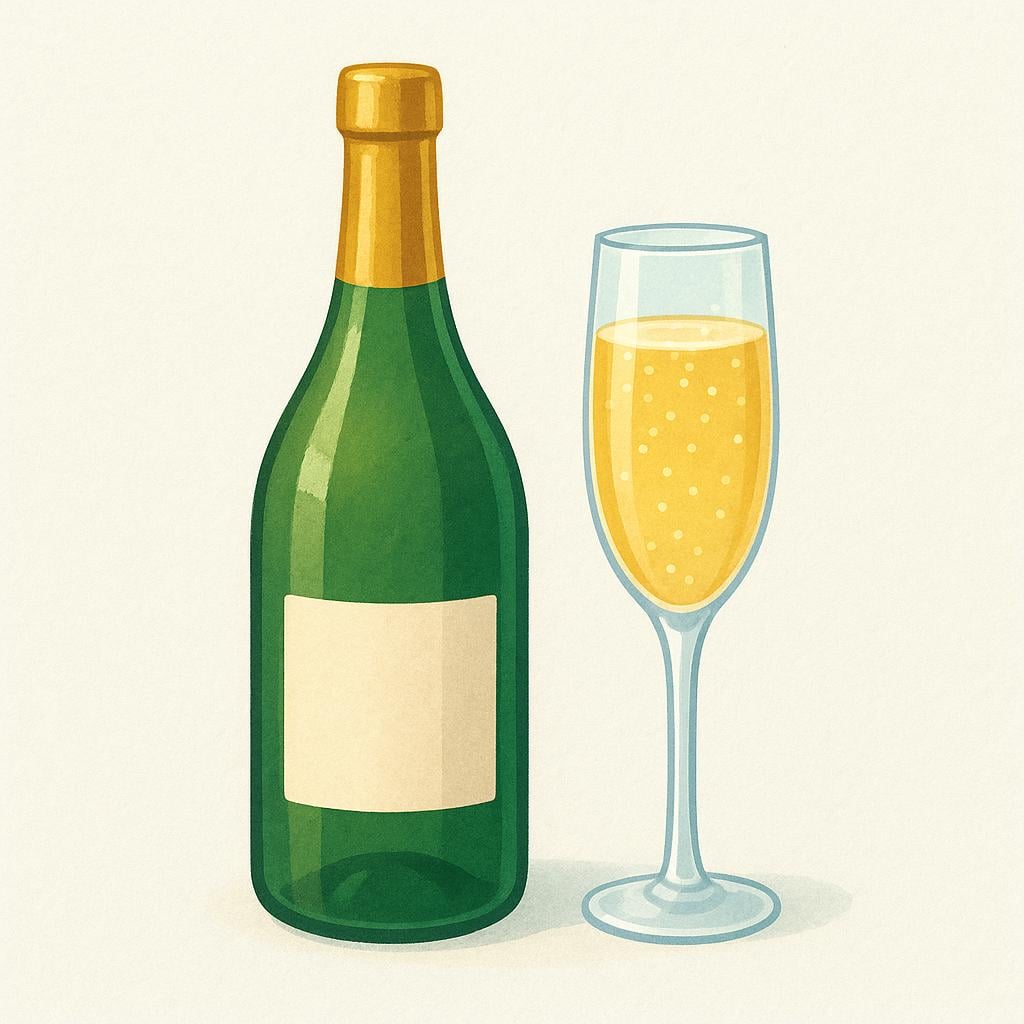
📝 In Action
Brindamos con champagne por el año nuevo.
A2We toasted with champagne for the new year.
Prefiero el champagne muy frío.
A1I prefer champagne very cold.
La botella de champagne está en la mesa.
A1The bottle of champagne is on the table.
Translate to Spanish
✏️ Quick Practice
Quick Quiz: champagne
Question 1 of 1
Which of these is the most common way to say 'a glass of champagne'?
📚 More Resources
👥 Word Family▼
🎵 Rhymes▼
📚 Etymology▼
Borrowed directly from the French 'champagne', named after the Champagne region in France where the wine is produced.
First recorded: 19th century
Cognates (Related words)
💡 Master Spanish
Take your Spanish to the next level. Read 200+ illustrated and narrated Spanish stories tailored to your level with the Inklingo app!
Frequently Asked Questions
Is 'champagne' different from 'champán'?
They refer to the same thing. 'Champagne' is the original French spelling often used on labels, while 'champán' is the phonetic Spanish spelling recommended by language academies.
Is it 'el' or 'la' champagne?
If you use the spelling 'champagne' or 'champán', it is masculine (el). If you use the version 'champaña', it is feminine (la).