chance
“chance” means “opportunity” in Spanish. It has 2 different meanings depending on context:

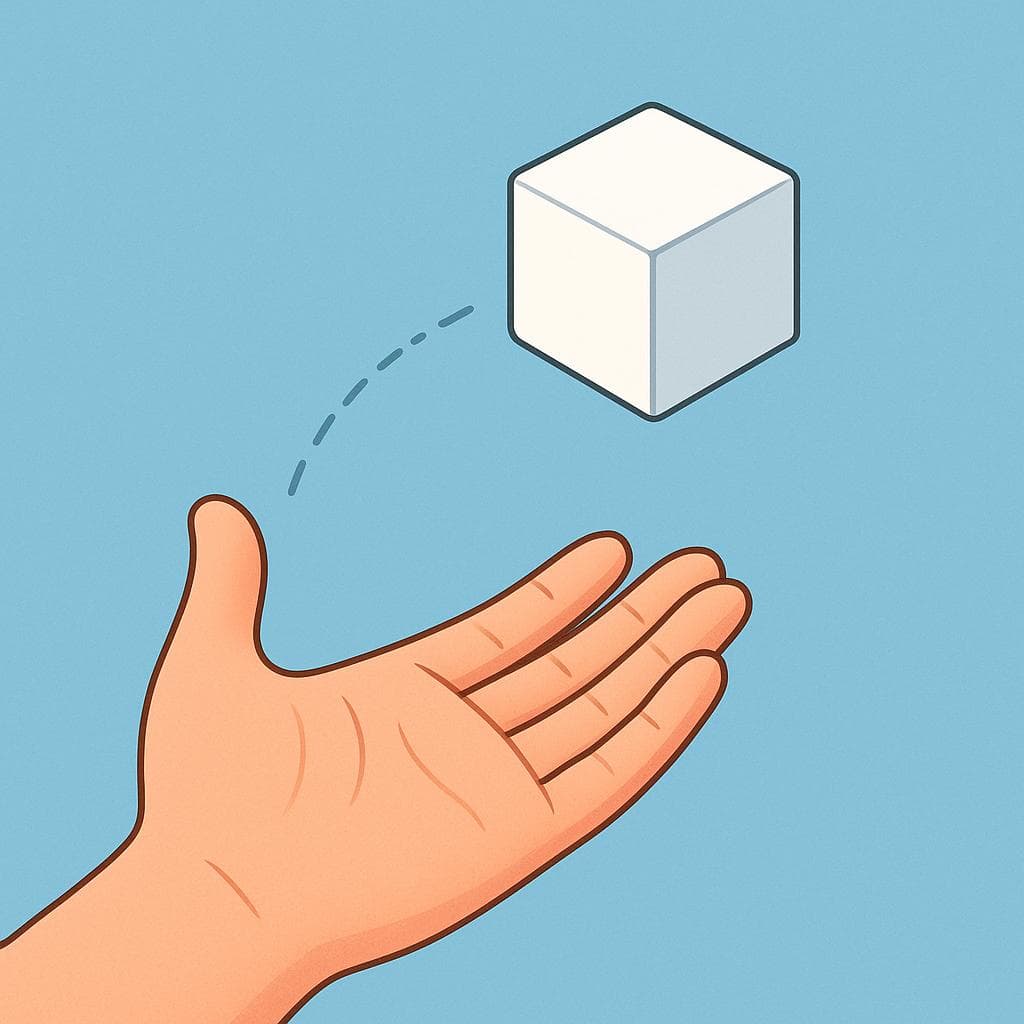
opportunity
Also: shot, turn
📝 In Action
Solo necesito un chance para demostrar mi valor.
A2I just need one chance to prove my worth.
Si me das un chance, puedo arreglarlo.
A2If you give me a shot, I can fix it.
Llegué tarde y perdí el chance de verla.
B1I arrived late and missed the opportunity to see her.
probability
Also: possibility, risk
📝 In Action
No hay chance de que el tren llegue a tiempo con esta nevada.
B1There is no possibility that the train will arrive on time with this snowfall.
¿Qué chance tenemos de que nos den el trabajo?
B2What probability do we have of getting the job?
Translate to Spanish
✏️ Quick Practice
Quick Quiz: chance
Question 1 of 1
Which sentence correctly uses 'chance' to mean 'a try' or 'a shot'?
📚 More Resources
👥 Word Family▼
📚 Etymology▼
This word is a direct borrowing (a loanword) from the English word 'chance,' which itself comes from Old French. It was adopted into Spanish, especially in regions with heavy English contact, and retained its original meaning of 'opportunity' or 'luck.'
First recorded: Mid-20th century (in common Spanish usage)
Cognates (Related words)
💡 Master Spanish
Take your Spanish to the next level. Read 200+ illustrated and narrated Spanish stories tailored to your level with the Inklingo app!
Frequently Asked Questions
Is 'chance' the same as 'oportunidad'?
They are synonyms, meaning 'opportunity,' but 'oportunidad' is the traditional Spanish word and is used everywhere. 'Chance' is a modern borrowing, often considered more informal, and is much more common in Latin America than in Spain.
Does 'chance' have a verb form?
No. Although it comes from a noun that can be used as a verb in English, in Spanish 'chance' is only a noun. To express the idea of 'to take a chance,' you would use verbs like 'arriesgarse' (to risk oneself) or 'intentar' (to try).