compre
“compre” means “buy” in Spanish (as a formal command or a subjunctive form).
buy
Also: purchase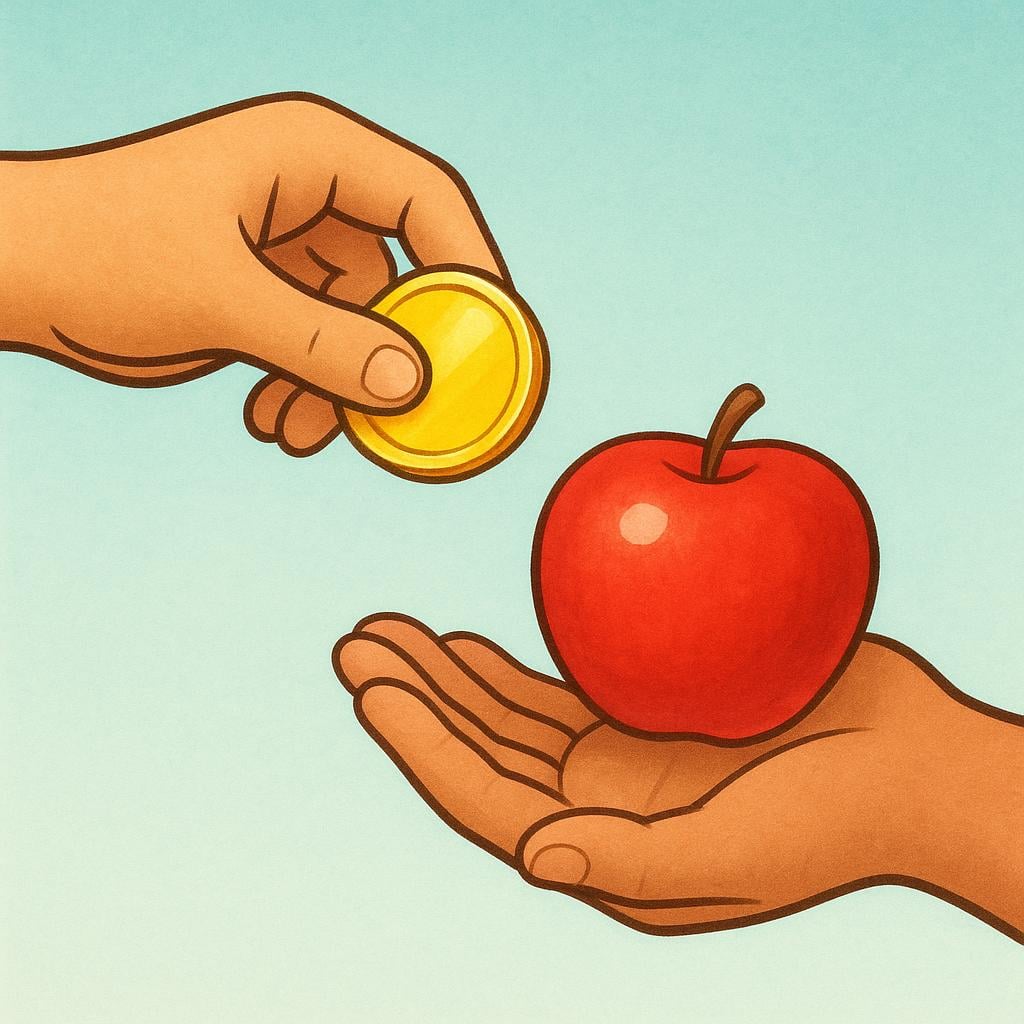
📝 In Action
Por favor, señor, **compre** el billete antes de subir al tren.
A1Please, sir, **buy** the ticket before getting on the train.
Mi madre quiere que yo **compre** más vegetales.
A2My mother wants me **to buy** more vegetables.
No creo que Juan **compre** esa casa tan vieja.
B1I don't think Juan **will buy** that old house.
Indicative
Present
Imperfect
Preterite
Subjunctive
Present Subjunctive
Imperfect Subjunctive
✏️ Quick Practice
Quick Quiz: compre
Question 1 of 2
Which sentence uses 'compre' correctly as a formal command?
📚 More Resources
👥 Word Family▼
🎵 Rhymes▼
📚 Etymology▼
The word comes from the Latin verb *comparāre*, which originally meant 'to prepare' or 'to procure.' Over time, it was influenced by the Latin verb *emere* (to buy) and came to mean specifically 'to acquire in exchange for money.'
First recorded: Around the 13th century in Spanish texts.
Cognates (Related words)
💡 Master Spanish
Take your Spanish to the next level. Read 200+ illustrated and narrated Spanish stories tailored to your level with the Inklingo app!
Frequently Asked Questions
What is the difference between 'compra' and 'compre'?
'Compra' has two main uses: it means 'he/she/it buys' (simple present tense) OR it is the informal command ('Tú, buy!'). 'Compre' also has two main uses: it is the formal command ('Usted, buy!') OR it is the special verb form (subjunctive) used for wishes, doubts, or recommendations for 'yo', 'él/ella', and 'usted'.
Why does 'compre' look like the 'yo' form and the 'usted' form?
In Spanish, the formal commands and the special verb forms (subjunctive) often share the exact same shape. This means 'yo compre' (that I buy) and 'usted compre' (that you formally buy) are identical. Context always makes the meaning clear.