costillas
“costillas” means “ribs” in Spanish. It has 2 different meanings depending on context:
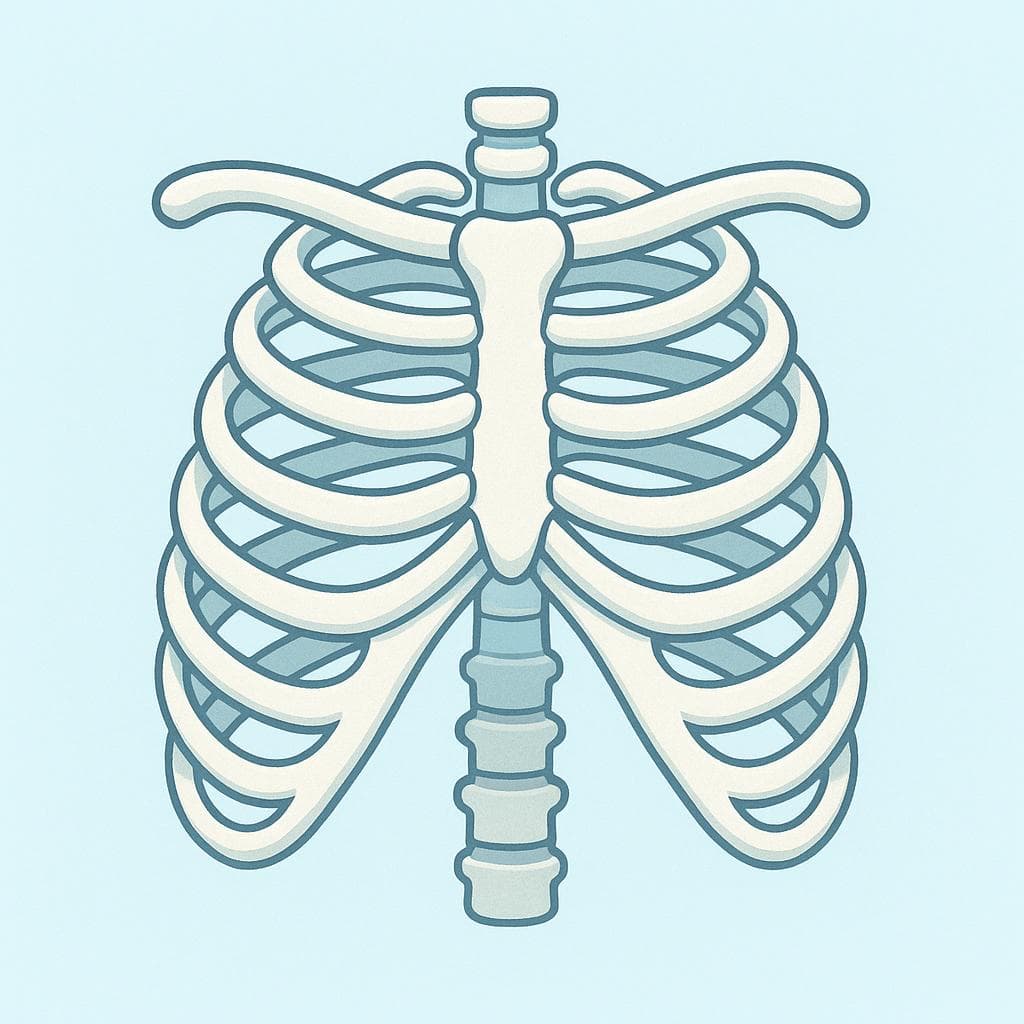

ribs

📝 In Action
El doctor dijo que solo tengo una costilla fisurada, no rota.
B1The doctor said I only have a cracked rib, not a broken one.
Las costillas protegen los órganos vitales como el corazón y los pulmones.
A2The ribs protect vital organs like the heart and the lungs.
Word Connections
ribsAlso: spare ribs

📝 In Action
Pedimos unas costillas de cerdo con salsa barbacoa.
A2We ordered some pork ribs with barbecue sauce.
Estas costillas a la parrilla están tan tiernas que se caen del hueso.
B1These grilled ribs are so tender they fall off the bone.
Word Connections
Translate to Spanish
Words that translate to "costillas" in Spanish:
✏️ Quick Practice
Quick Quiz: costillas
Question 1 of 1
Which sentence uses 'costillas' to refer to food?
📚 More Resources
👥 Word Family
📚 Etymology
The word comes from the Latin *costa*, meaning 'rib' or 'side.' This root is also related to the English word 'coast' (the side or edge of the land next to the sea).
First recorded: Around the 13th century in its current form.
Cognates (Related words)
💡 Master Spanish
Take your Spanish to the next level. Read 200+ illustrated and narrated Spanish stories tailored to your level with the Inklingo app!
Frequently Asked Questions
Is 'costilla' always feminine?
Yes, 'costilla' is a feminine noun, so you always use feminine articles and adjectives with it (e.g., 'una costilla rota,' 'las costillas grandes').
What is the difference between 'costillas' and 'costado'?
'Costillas' are the actual bones (ribs). 'Costado' means the general 'side' of the body or an object, referring to the area, not the specific bones.