creció
“creció” means “grew (up)” in Spanish. It has 2 different meanings depending on context:
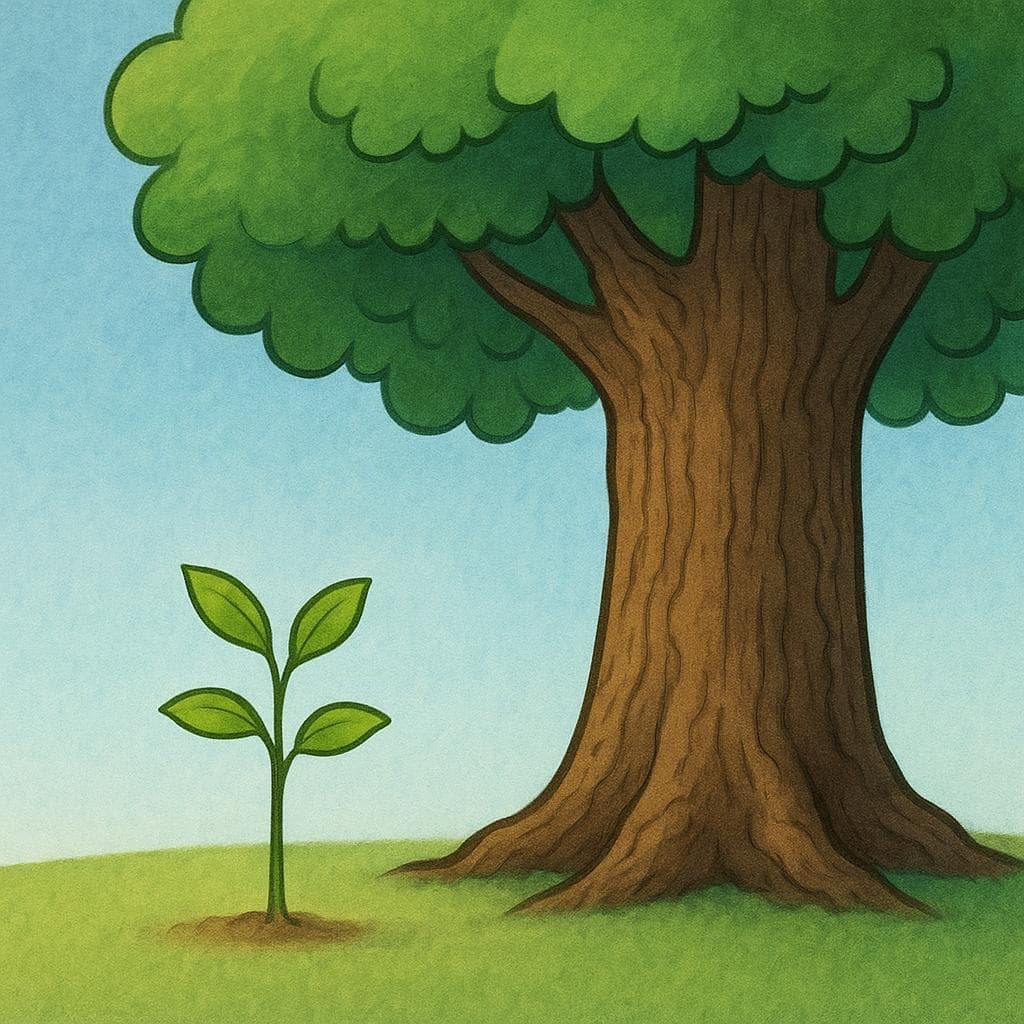

grew (up), got bigger
Also: developed
📝 In Action
Mi hijo creció mucho este verano. Ahora es más alto que yo.
A2My son grew a lot this summer. Now he is taller than me.
La planta creció rápidamente bajo el sol.
A2The plant grew quickly under the sun.
¿Dónde creció tu abuela?
A2Where did your grandmother grow up?
increased, expanded
Also: intensified, developed
📝 In Action
La deuda nacional creció un 10% el año pasado.
B1The national debt increased by 10% last year.
Su influencia en la empresa creció después de la fusión.
B2His influence in the company expanded after the merger.
El rumor creció hasta convertirse en noticia de primera plana.
C1The rumor grew until it became front-page news.
🔄 Conjugations
indicative
present
imperfect
preterite
subjunctive
present
imperfect
Translate to Spanish
✏️ Quick Practice
Quick Quiz: creció
Question 1 of 1
Which sentence correctly uses 'creció' to mean 'increased in quantity'?
📚 More Resources
👥 Word Family▼
🎵 Rhymes▼
📚 Etymology▼
Comes from the Latin verb *crescere*, meaning 'to spring forth, arise, grow, increase.' It shares roots with the English word 'increase.'
First recorded: Old Spanish (10th-13th century)
Cognates (Related words)
💡 Master Spanish
Take your Spanish to the next level. Read 200+ illustrated and narrated Spanish stories tailored to your level with the Inklingo app!
Frequently Asked Questions
Why does 'creció' have an accent mark?
The accent on the 'o' in 'creció' is crucial! It tells you that the action happened in the simple past (preterite tense) and that the stress falls on the last syllable. This is standard for almost all regular Spanish verbs ending in -ar, -er, and -ir in the third-person simple past.
When should I use 'creció' versus 'crecía'?
'Creció' (simple past) is for a completed action: 'La compañía creció 5% el martes' (The company grew 5% on Tuesday). 'Crecía' (imperfect past) is for ongoing, habitual, or descriptive actions in the past: 'Cuando era joven, crecía muy rápido' (When I was young, I was growing very fast).