Inklingo

cuentos

/KWEHN-tohs/

stories

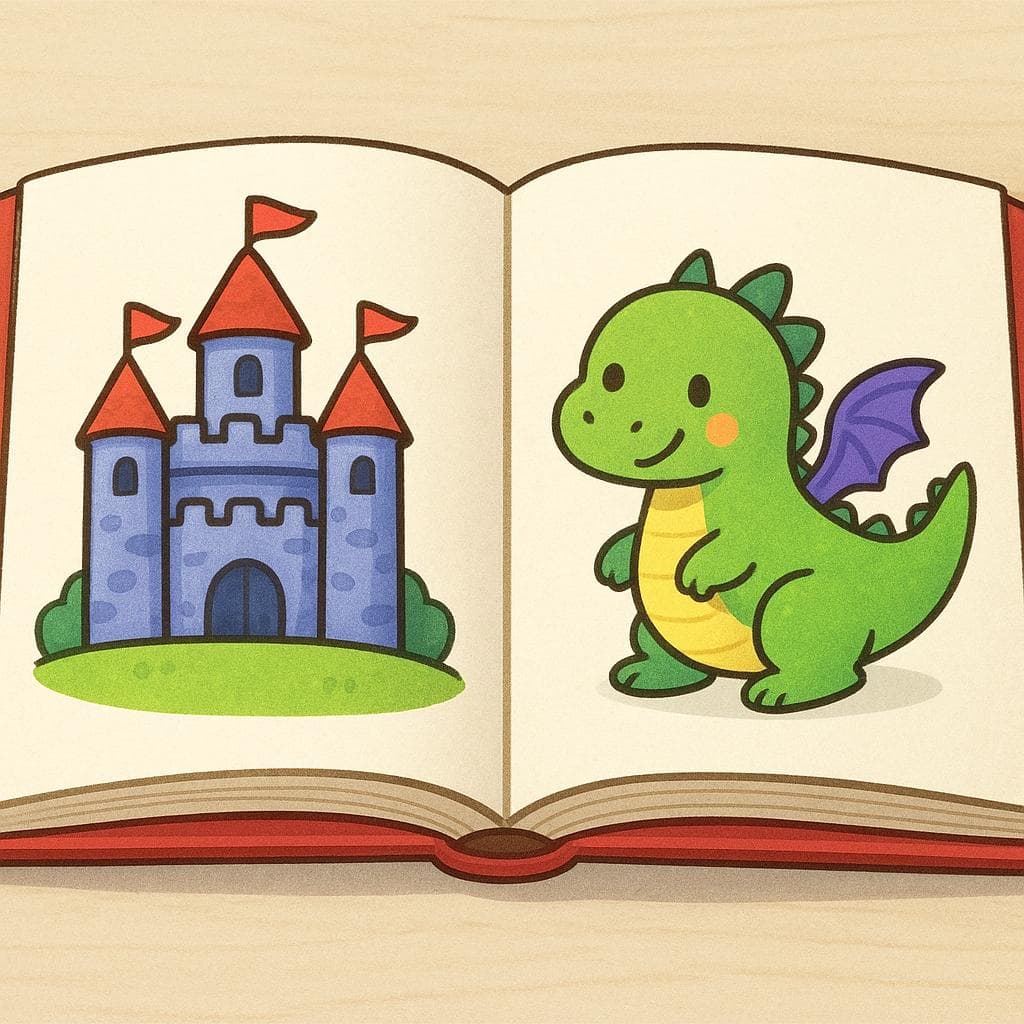
A colorful, open storybook resting on a surface, showing simple illustrations of a castle and a friendly dragon emerging from the pages.

As a noun, cuentos means stories or short narratives.

cuentos(noun)

mA1

stories

?

short narratives or fiction

,

tales

?

legends or folklore

Also:

narratives

?

general term for recounts

📝 In Action

Mi abuela siempre nos leía cuentos antes de dormir.

A1

My grandmother always read us stories before bed.

Hay muchos cuentos populares sobre dragones en esta región.

A2

There are many popular tales about dragons in this region.

Word Connections

Synonyms

  • relatos (accounts, stories)
  • narraciones (narrations)

Common Collocations

  • cuentos de hadasfairy tales
  • libro de cuentosstory book

💡 Grammar Points

Masculine Plural

Since the singular noun 'cuento' ends in -o, it is masculine. The plural 'cuentos' is used with masculine plural articles like 'los' or adjectives like 'muchos'.

A simplified person standing innocently, but clumsily hiding a large, obviously bright red, awkward object behind their back to represent a lie.

When used as a noun, cuentos can also informally mean lies or falsehoods.

cuentos(noun)

mB1

lies

?

falsehoods, untruths

,

excuses

?

unbelievable explanations

Also:

nonsense

?

ridiculous talk

📝 In Action

No me vengas con cuentos; sé que no estudiaste.

B1

Don't come to me with excuses; I know you didn't study.

Todo lo que dice son cuentos para llamar la atención.

B2

Everything he says is lies/nonsense just to get attention.

Word Connections

Synonyms

Antonyms

Common Collocations

  • dejarse de cuentosto stop the nonsense
  • vivir del cuentoto live by scrounging/scamming

Idioms & Expressions

  • cuento chinoa tall tale, a ridiculous lie

💡 Grammar Points

Idiomatic Use

When used in the sense of 'lies' or 'excuses,' 'cuentos' almost always appears in negative or skeptical contexts, often with verbs like 'venir' (come) or 'dejar' (stop).

❌ Common Pitfalls

Literal Translation Error

Mistake: "Translating '¡Qué cuentos!' as 'What stories!' when the speaker means 'What nonsense!'"

Correction: In these contexts, think 'lies' or 'excuses,' not literary works.

Two stylized figures sitting facing each other. One figure has an animated expression and is gesturing while speaking to the second figure, who is listening quietly.

The verb form cuentas (which sounds like 'cuentos' in some contexts) means 'you tell' or 'you count'.

cuentos(verb)

A1irregular (stem-changing o>ue) ar

you tell

?

present tense, informal 'you'

,

you count

?

present tense, informal 'you'

📝 In Action

Si cuentas hasta diez, te sentirás mejor.

A1

If you count to ten, you will feel better.

Tú cuentas la historia de una forma muy divertida.

A1

You tell the story in a very funny way.

Word Connections

Synonyms

  • narrar (to narrate)
  • calcular (to calculate)

💡 Grammar Points

Stem-Changing Verb

The verb 'contar' changes its vowel from 'o' to 'ue' in most present tense forms (like 'cuentas'), but not in the 'nosotros' or 'vosotros' forms ('contamos', 'contáis').

⭐ Usage Tips

Two Main Meanings

Remember that 'contar' means both 'to count' (numbers) and 'to tell' (a story). Context will always make the meaning clear.

🔄 Conjugations

indicative

present

él/ella/ustedcuenta
yocuento
cuentas
ellos/ellas/ustedescuentan
nosotroscontamos
vosotroscontáis

imperfect

él/ella/ustedcontaba
yocontaba
contabas
ellos/ellas/ustedescontaban
nosotroscontábamos
vosotroscontabais

preterite

él/ella/ustedcontó
yoconté
contaste
ellos/ellas/ustedescontaron
nosotroscontamos
vosotroscontasteis

subjunctive

present

él/ella/ustedcuente
yocuente
cuentes
ellos/ellas/ustedescuenten
nosotroscontemos
vosotroscontéis

imperfect

él/ella/ustedcontara
yocontara
contaras
ellos/ellas/ustedescontaran
nosotroscontáramos
vosotroscontarais

✏️ Quick Practice

💡 Quick Quiz: cuentos

Question 1 of 2

Which of these sentences uses 'cuentos' to mean 'lies or excuses'?

📚 More Resources

Word Family

cuento(story, tale) - noun
contar(to count, to tell) - verb

Frequently Asked Questions

Is 'cuentos' always plural, or can I use 'cuento'?

Yes, you can use the singular 'cuento' (A story, a single lie). 'Cuentos' is simply the plural form, meaning 'stories' or 'multiple lies/excuses.' The verb form 'cuentas' is used when speaking to one person informally ('Tú').

How do I know if 'cuentos' means 'stories' or 'excuses'?

Context is key. If it is preceded by verbs like 'leer' (read) or 'escribir' (write), it means stories. If it's used with verbs like 'venir con' (come with) or 'dejarse de' (stop), it means excuses or nonsense.