ducha
“ducha” means “shower” in Spanish. It has 2 different meanings depending on context:
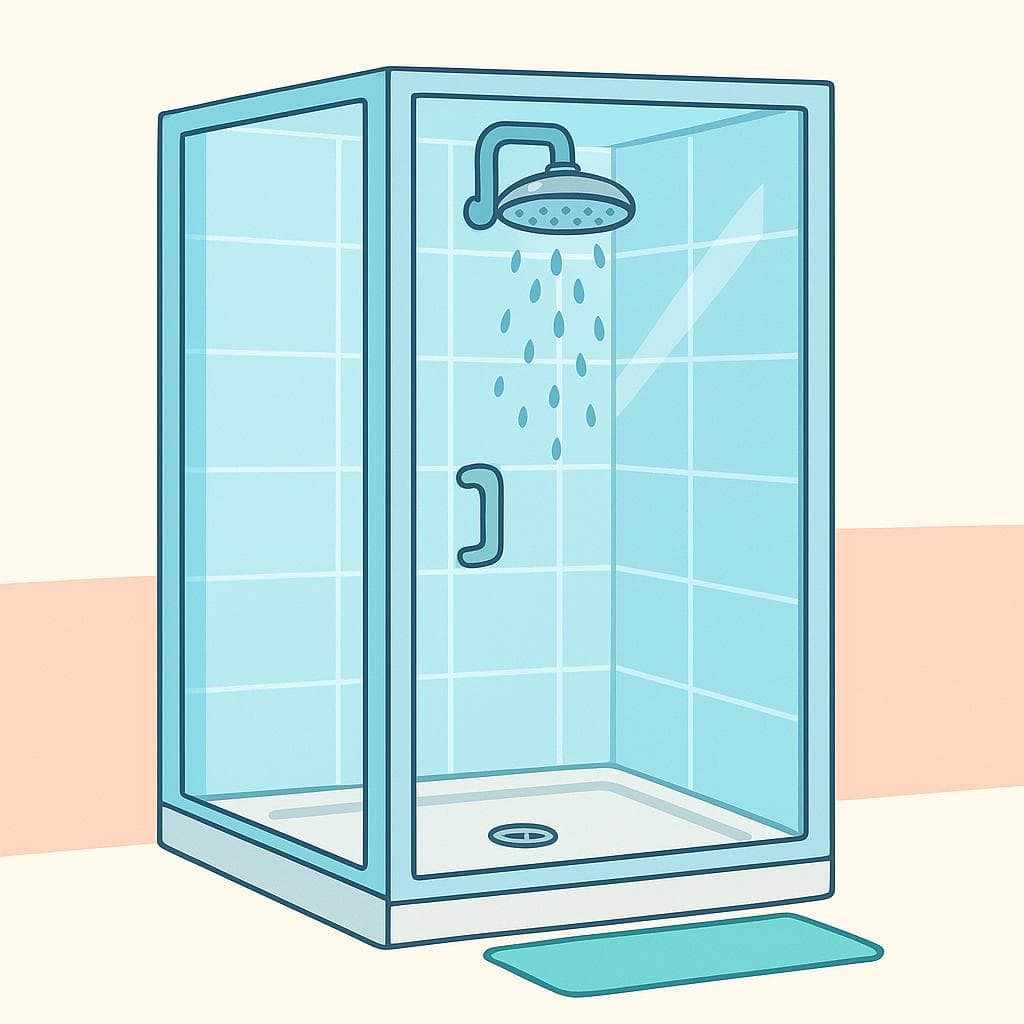

showerAlso: shower room

📝 In Action
La ducha de mi casa tiene muy poca presión.
A1The shower in my house has very low pressure.
Necesitamos arreglar la puerta de la ducha; no cierra bien.
A2We need to fix the shower door; it doesn't close well.
Word Connections
showerAlso: bath

📝 In Action
Me voy a dar una ducha antes de salir.
A1I'm going to take a shower before going out.
Después del gimnasio, siempre necesito una ducha fría.
A2After the gym, I always need a cold shower.
Word Connections
Vocabulary Collections
Translate to Spanish
Words that translate to "ducha" in Spanish:
✏️ Quick Practice
Quick Quiz: ducha
Question 1 of 2
Which sentence correctly uses 'ducha' to mean the *action* of washing?
📚 More Resources
👥 Word Family
🎵 Rhymes
📚 Etymology
Comes from the French word 'douche,' which itself originated from the Italian word 'doccia' (meaning 'conduit' or 'pipe'), referring to the way the water is channeled.
First recorded: 19th century (in its modern sense)
Cognates (Related words)
💡 Master Spanish
Take your Spanish to the next level. Read 200+ illustrated and narrated Spanish stories tailored to your level with the Inklingo app!
Frequently Asked Questions
What is the difference between 'tomar una ducha' and 'ducharse'?
They mean the same thing ('to take a shower') and are interchangeable in most situations. 'Ducharse' is a single verb, while 'tomar una ducha' uses the noun 'ducha' with the verb 'tomar'. Both are equally common.