encontrarle
“encontrarle” means “to find (something) for him/her/you (formal)” in Spanish. It has 2 different meanings depending on context:


to find (something) for him/her/you (formal)Also: to locate (something) for him/her

📝 In Action
Necesitas encontrarle un buen regalo de cumpleaños.
A2You need to find him a good birthday present.
Fui al mercado para encontrarte las fresas más frescas.
B1I went to the market to find the freshest strawberries for you (formal).
Espero poder encontrarte el camino de vuelta a casa.
B1I hope I can find the way back home for her/him.
Word Connections
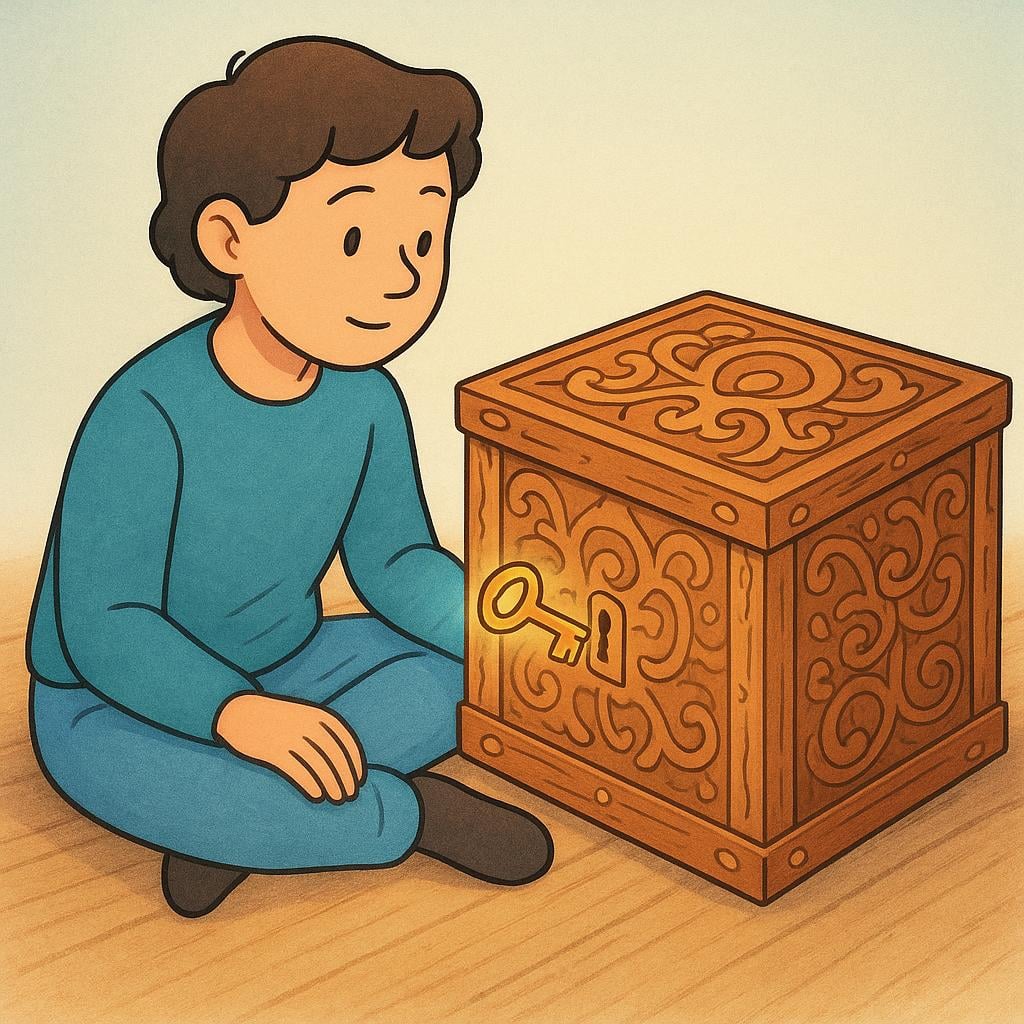
to find the sense/key to itAlso: to grasp the meaning
📝 In Action
No logramos encontrarte la gracia al chiste.
B2We couldn't manage to find the humor/point of the joke.
Después de tanto leer, por fin pude encontrarte el sentido a la filosofía.
C1After reading so much, I was finally able to find the meaning in the philosophy.
Word Connections
Indicative
Present
Preterite
Imperfect
Subjunctive
Present Subjunctive
Imperfect Subjunctive
✏️ Quick Practice
Quick Quiz: encontrarle
Question 1 of 1
Which sentence correctly uses 'encontrarle' in the sense of finding the solution or key?
📚 More Resources
👥 Word Family
📚 Etymology
The verb 'encontrar' comes from the Latin 'in' (in) and 'contra' (against/opposite). It originally meant 'to meet' or 'to run into' someone, but evolved to mean 'to find' something sought after. The attached 'le' is the Latin dative pronoun meaning 'to him/her'.
First recorded: Around the 13th century (as 'encontrar')
Cognates (Related words)
💡 Master Spanish
Take your Spanish to the next level. Read 200+ illustrated and narrated Spanish stories tailored to your level with the Inklingo app!
Frequently Asked Questions
When should I use 'encontrarle' instead of 'encontrarlo'?
You use 'encontrarle' when the person (him/her/you formal) is the *recipient* of the finding, meaning the finding is 'for' them: 'Voy a encontrarte un regalo' (I'm going to find a gift *for* him/her). You use 'encontrarlo' when the thing being found *is* him/it: 'Voy a encontrarlo' (I'm going to find him/it).
Can I separate 'encontrar' and 'le'?
Yes, but only if you place the pronoun immediately before the conjugated verb that controls the infinitive. For example, 'Necesito encontrarte un trabajo' can also be 'Le necesito encontrar un trabajo.' But they cannot be separated like 'encontrar le' in two words.