establo
“establo” means “stable” in Spanish (a building specifically for horses or livestock).
stable
Also: barn, stall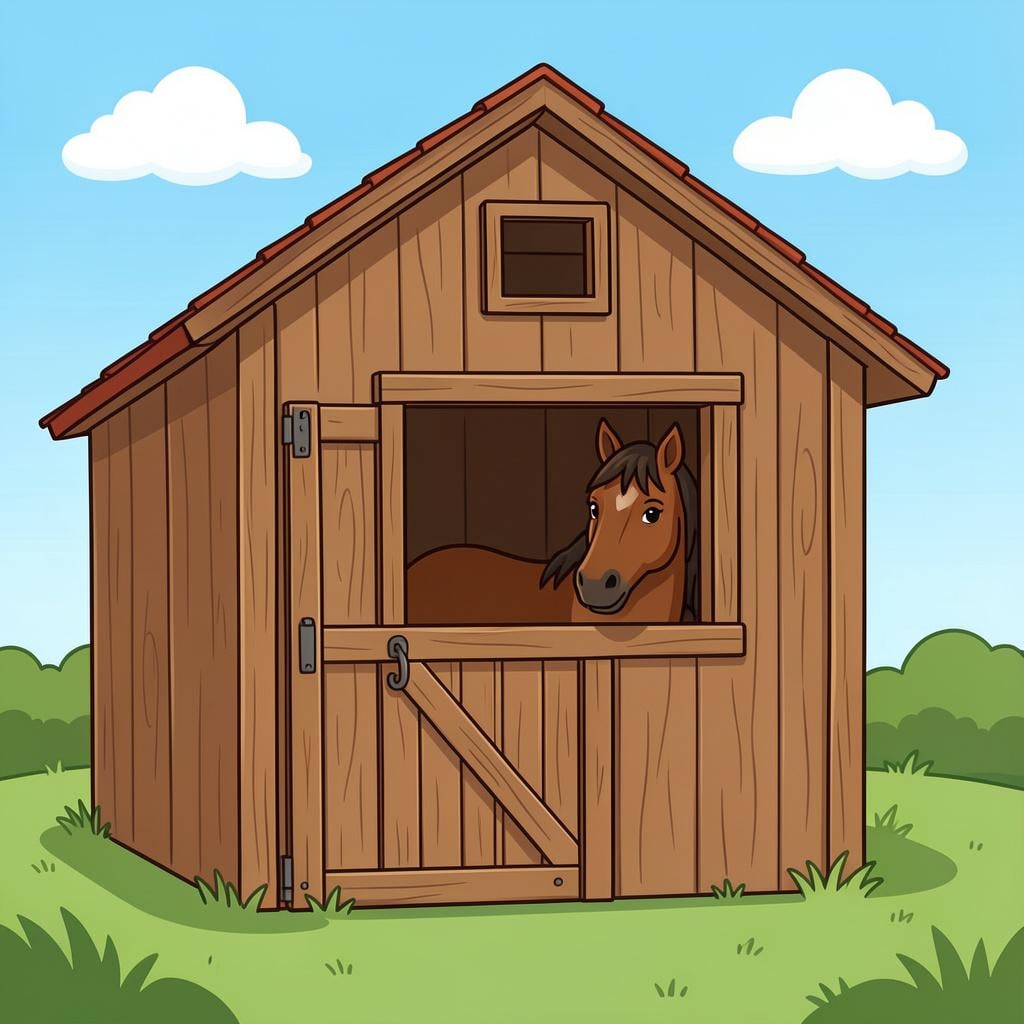
📝 In Action
El granjero lleva las vacas al establo por la noche.
A1The farmer takes the cows to the stable at night.
Huele a paja fresca en el establo.
A2It smells like fresh straw in the stable.
Limpiaron el establo antes de que llegaran los caballos nuevos.
B1They cleaned the barn before the new horses arrived.
Vocabulary Collections
Translate to Spanish
✏️ Quick Practice
Quick Quiz: establo
Question 1 of 2
Which animal would you most likely find in an 'establo'?
📚 More Resources
👥 Word Family▼
📚 Etymology▼
From the Latin word 'stabulum', which meant a standing place or a place to stay. This comes from the verb 'stare', meaning 'to stand'.
First recorded: 13th century
Cognates (Related words)
💡 Master Spanish
Take your Spanish to the next level. Read 200+ illustrated and narrated Spanish stories tailored to your level with the Inklingo app!
Frequently Asked Questions
Is 'establo' only for horses?
No, while it is very commonly used for horses, it also refers to buildings for cows, mules, and other farm livestock.
What is the difference between 'establo' and 'granero'?
An 'establo' is primarily for housing animals, whereas a 'granero' (granary/barn) is primarily used for storing grain or hay, though in English 'barn' can cover both.