generaciones
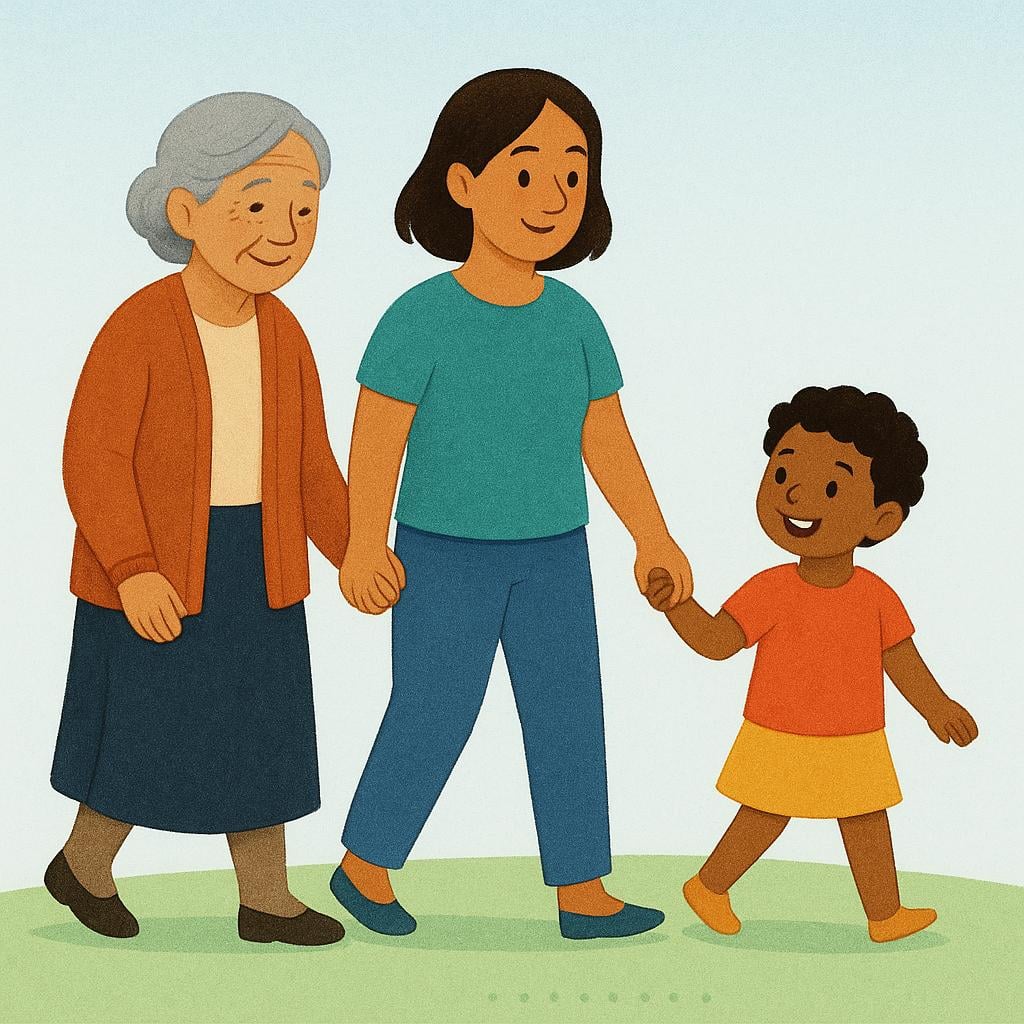
“generaciones” means “generations” in Spanish (groups of people born in the same era).
generationsAlso: cohorts
📝 In Action
Las nuevas generaciones están más conectadas globalmente.
A2The new generations are more globally connected.
Este secreto familiar se ha transmitido por tres generaciones.
B1This family secret has been passed down through three generations.
Es importante que las futuras generaciones cuiden el planeta.
B2It is important that future generations take care of the planet.
Word Connections
Translate to Spanish
Words that translate to "generaciones" in Spanish:
✏️ Quick Practice
Quick Quiz: generaciones
Question 1 of 1
Which sentence correctly uses 'generaciones'?
📚 More Resources
👥 Word Family
📚 Etymology
Comes from the Latin word *generatio*, which means 'the act of begetting' or 'producing.' It is directly related to the verb 'generar' (to generate or create).
First recorded: 13th century
Cognates (Related words)
💡 Master Spanish
Take your Spanish to the next level. Read 200+ illustrated and narrated Spanish stories tailored to your level with the Inklingo app!
Frequently Asked Questions
Why is 'generaciones' feminine, even though it refers to groups of people?
In Spanish, the gender of a noun is often determined by its ending, not the people it describes. Since the singular form 'generación' ends in -ción, it is automatically feminine, just like 'nación' (nation) or 'información' (information).