globo
“globo” means “balloon” in Spanish. It has 2 different meanings depending on context:

balloonAlso: party balloon

📝 In Action
El niño soltó el globo y voló hacia el cielo.
A1The boy let go of the balloon and it flew toward the sky.
Compramos veinte globos rojos para la fiesta de cumpleaños.
A1We bought twenty red balloons for the birthday party.
¡Cuidado! Si pinchas el globo, explotará.
A2Be careful! If you prick the balloon, it will pop.
Word Connections
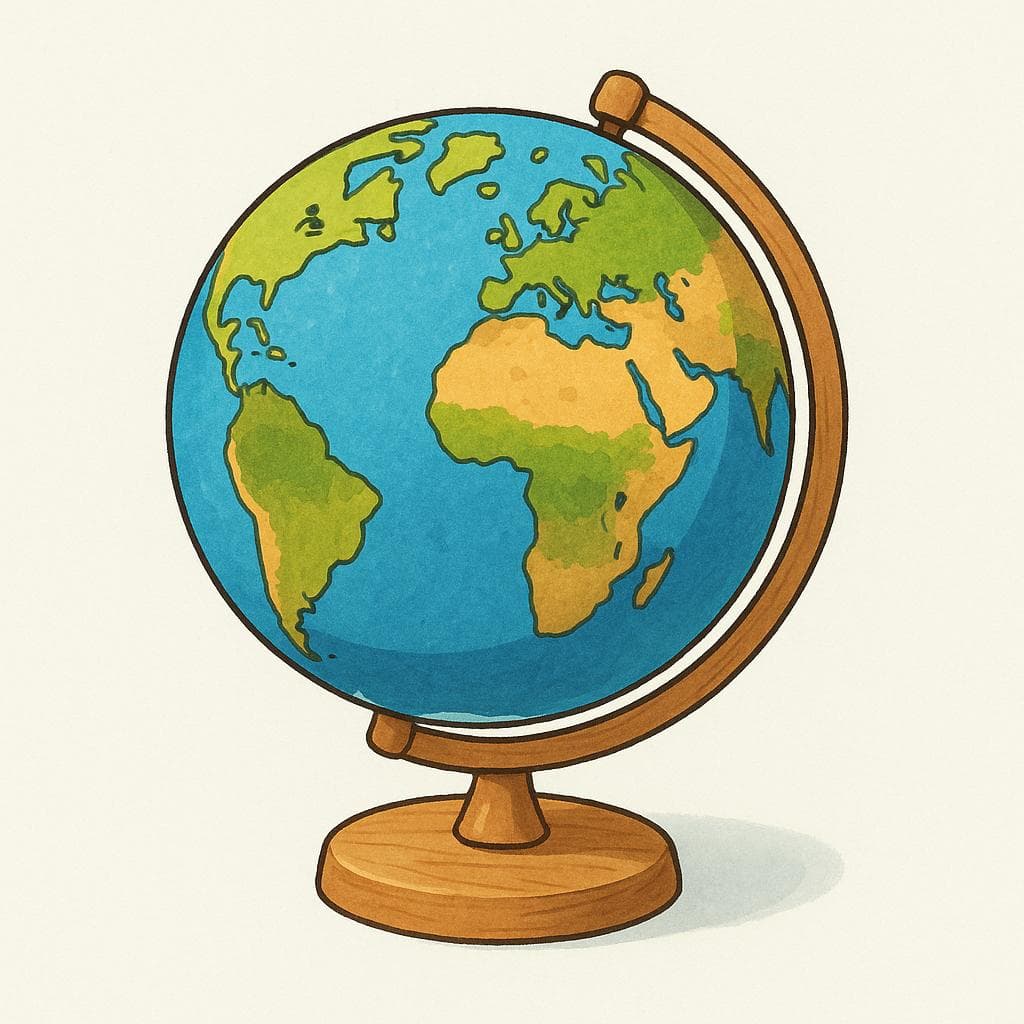
globeAlso: sphere

📝 In Action
El profesor señaló Asia en el globo terráqueo.
B1The professor pointed to Asia on the terrestrial globe.
Navegaron alrededor del globo durante tres años.
B2They sailed around the globe (the world) for three years.
El globo ocular es la parte principal del ojo.
B2The eyeball is the main part of the eye.
Word Connections
Translate to Spanish
Words that translate to "globo" in Spanish:
🗣️ Practice in a Tongue Twister
✏️ Quick Practice
Quick Quiz: globo
Question 1 of 2
¿Cuál de estas oraciones usa 'globo' para referirse a un modelo geográfico?
📚 More Resources
👥 Word Family
📚 Etymology
Comes from the Latin word 'globus', which means 'ball' or 'sphere'. The meaning has remained very close to the original concept of a round mass or object.
First recorded: Medieval Latin
Cognates (Related words)
💡 Master Spanish
Take your Spanish to the next level. Read 200+ illustrated and narrated Spanish stories tailored to your level with the Inklingo app!
Frequently Asked Questions
Is 'globo' ever used to mean the entire planet Earth?
Yes, but usually in the longer phrase 'el globo terráqueo' (the terrestrial globe) or sometimes just 'el globo' in a formal or literary context, meaning 'the world' or 'the sphere of the Earth'.
How do I specify a 'hot air balloon'?
The full term is 'globo aerostático'. While sometimes people shorten it to 'globo' if the context is clear (like at a festival), using the full phrase is the safest way to avoid confusion with a small party balloon.