granjero
“granjero” means “farmer” in Spanish (person who works on a farm).
farmer, rancher
Also: husbandman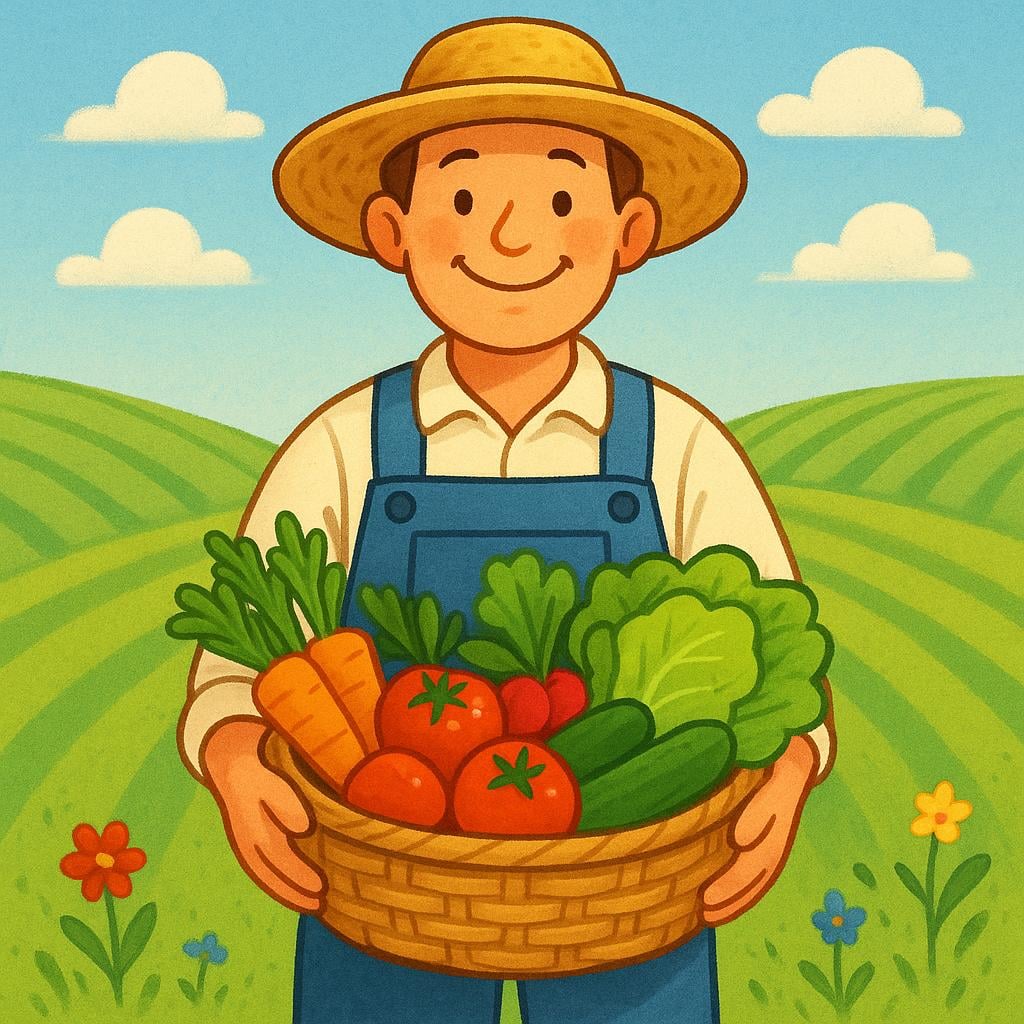
📝 In Action
El granjero se levantó al amanecer para ordeñar las vacas.
A1The farmer got up at dawn to milk the cows.
Mi tío es granjero y cultiva principalmente trigo y cebada.
A2My uncle is a farmer and mainly grows wheat and barley.
Los granjeros de la región se reunieron para discutir el precio del mercado.
B1The ranchers (or farmers) of the region met to discuss the market price.
Translate to Spanish
✏️ Quick Practice
Quick Quiz: granjero
Question 1 of 1
If you visit a 'granja' (farm), whom would you expect to meet?
📚 More Resources
👥 Word Family▼
📚 Etymology▼
The word comes from the noun 'granja' (farm or grange), which itself has roots in ancient Germanic languages, combined with the common Spanish suffix '-ero', which is used to indicate a profession or a person associated with that thing.
First recorded: Mid-15th century
Cognates (Related words)
💡 Master Spanish
Take your Spanish to the next level. Read 200+ illustrated and narrated Spanish stories tailored to your level with the Inklingo app!
Frequently Asked Questions
How do I say 'dairy farmer'?
You can combine 'granjero' with the word for dairy/milk: 'granjero lechero'.
Is 'granjero' the same as 'campesino'?
Not exactly. 'Granjero' specifically means someone who owns or runs the farm/ranch. 'Campesino' is a broader term for a rural worker or peasant, often focusing more on the labor than the ownership.