hablarle
“hablarle” means “to speak to him/her/you (formal)” in Spanish (Addressing a person).
to speak to him/her/you (formal)
Also: to talk to him/her/you (formal)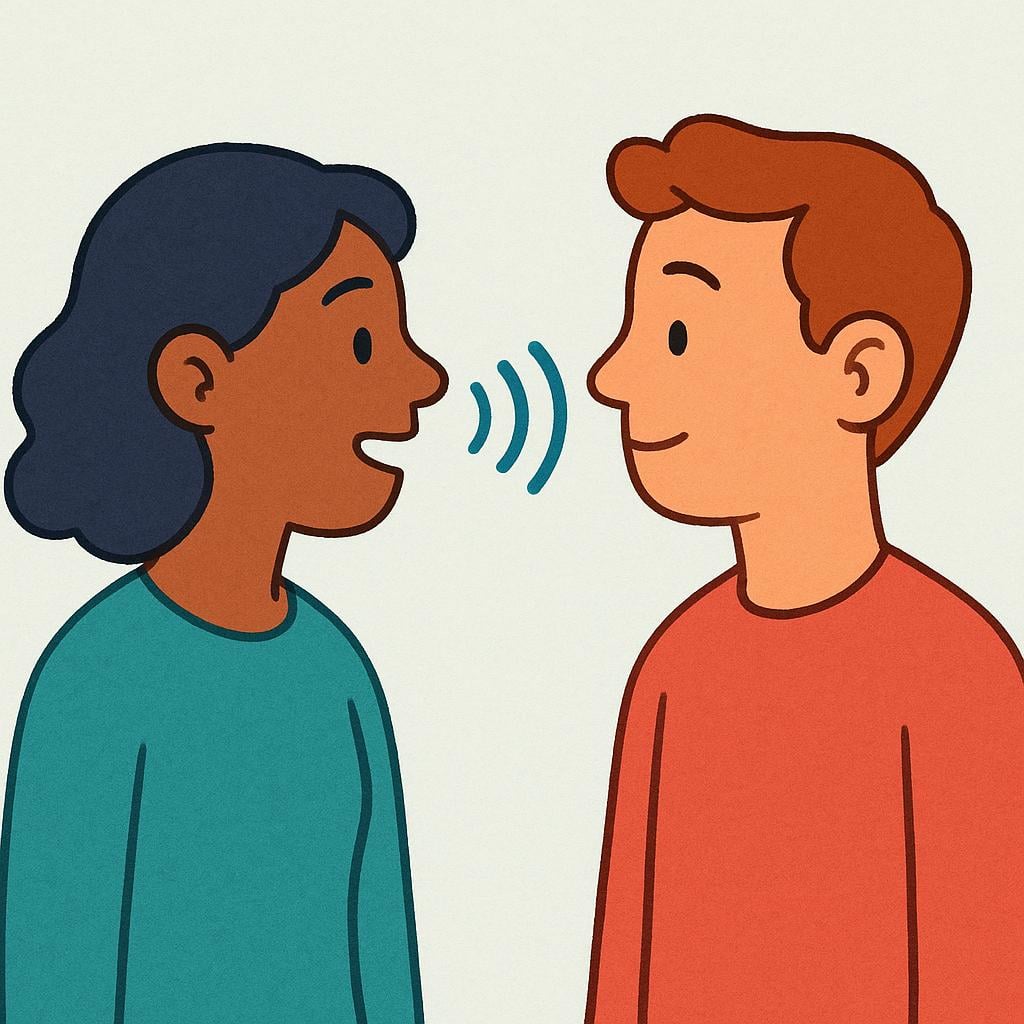
📝 In Action
Quiero hablarle de un problema que tengo.
A1I want to speak to him/her/you about a problem I have.
Es difícil hablarle cuando está enojado.
A2It is difficult to talk to him/her when he/she is angry.
Si no le hablas, nunca sabrá lo que sientes.
B1If you don't speak to him/her, he/she will never know what you feel.
Indicative
Present
Imperfect
Preterite
Subjunctive
Present Subjunctive
Imperfect Subjunctive
✏️ Quick Practice
Quick Quiz: hablarle
Question 1 of 1
Which sentence correctly uses the attached pronoun form of 'hablarle'?
📚 More Resources
👥 Word Family▼
🎵 Rhymes▼
📚 Etymology▼
The verb 'hablar' comes from the Latin word *fabulari*, meaning 'to converse' or 'to tell stories.' The pronoun 'le' comes from the Latin word *illi*, meaning 'to him/her,' showing the direction of the action.
First recorded: Both elements have been used in Spanish since the earliest documented Romance languages.
Cognates (Related words)
💡 Master Spanish
Take your Spanish to the next level. Read 200+ illustrated and narrated Spanish stories tailored to your level with the Inklingo app!
Frequently Asked Questions
Why does 'hablarle' combine two words into one?
In Spanish, when you use an infinitive (the base form of the verb), the pronouns that tell you who receives the action (like 'le') can be 'stuck' onto the end of the verb, making a single word. This is a common and natural way to speak.
If I am speaking to multiple people, should I use 'hablarles'?
Yes, 'hablarles' is the correct form to use when you are speaking 'to them' (plural). However, in many parts of Spain and Latin America, 'hablarle' is sometimes used even when speaking to a group, although 'hablarles' is technically more correct.