lavar
“lavar” means “to wash” in Spanish. It has 2 different meanings depending on context:


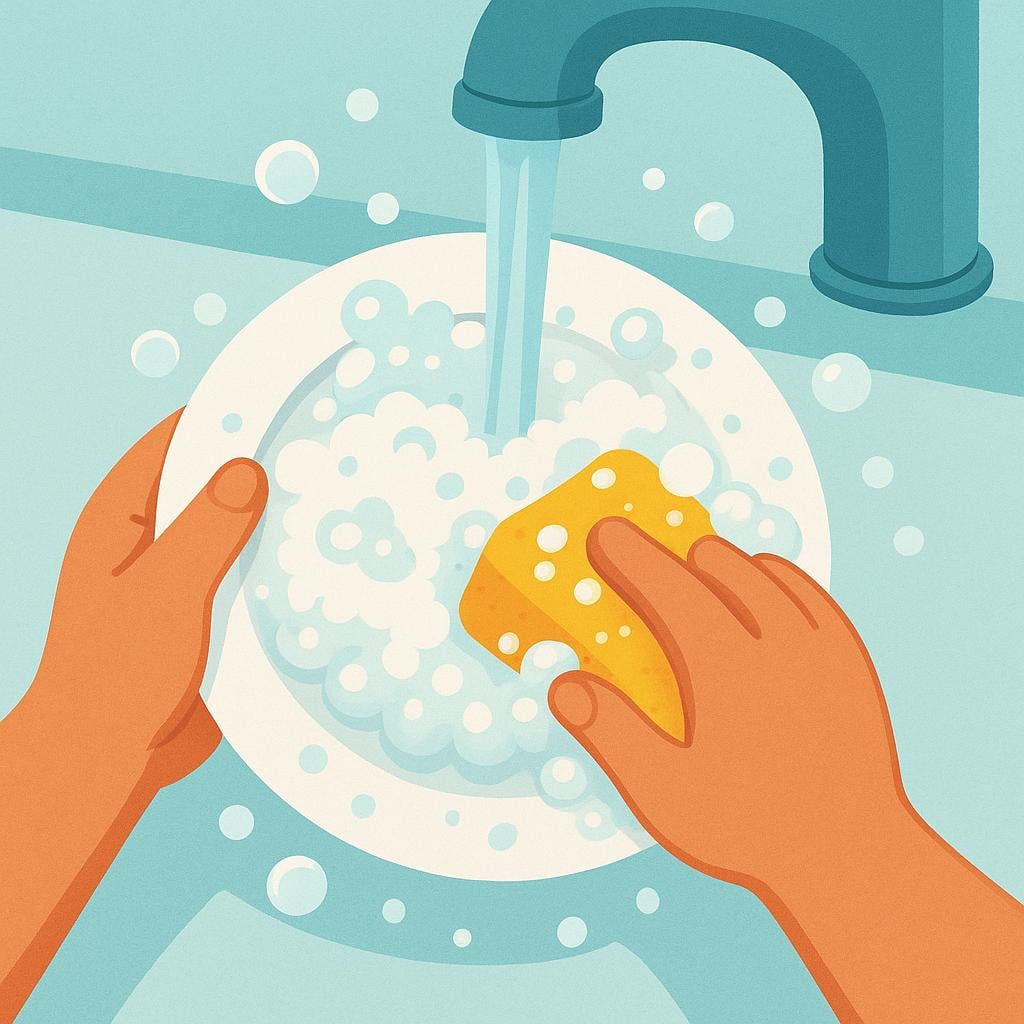
to washAlso: to clean
📝 In Action
Necesito lavar el coche antes del viaje.
A1I need to wash the car before the trip.
Ella lava la ropa todos los sábados por la mañana.
A1She washes the clothes every Saturday morning.
Estamos lavando las verduras para la cena.
A2We are washing the vegetables for dinner.
Word Connections
to launderAlso: to whitewash

📝 In Action
El cártel utilizó negocios legítimos para lavar sus ganancias.
C1The cartel used legitimate businesses to launder their profits.
El director intentó lavar la imagen de la empresa después del escándalo.
C2The director tried to whitewash the company's image after the scandal.
Word Connections
Indicative
Present
Imperfect
Preterite
Subjunctive
Present Subjunctive
Imperfect Subjunctive
🔀 Commonly Confused With
Translate to Spanish
Words that translate to "lavar" in Spanish:
✏️ Quick Practice
Quick Quiz: lavar
Question 1 of 1
Which sentence correctly uses the reflexive form of 'lavar' (lavarse)?
📚 More Resources
👥 Word Family
📚 Etymology
The word comes directly from the Latin verb *lavāre*, which simply meant 'to wash' or 'to bathe.' It has kept its original meaning very consistently throughout history.
First recorded: Old Spanish records (c. 10th-11th century)
Cognates (Related words)
💡 Master Spanish
Take your Spanish to the next level. Read 200+ illustrated and narrated Spanish stories tailored to your level with the Inklingo app!
Frequently Asked Questions
What is the difference between 'lavar' and 'limpiar'?
'Lavar' specifically means to clean using water, often with soap or detergent (like washing clothes or dishes). 'Limpiar' is the general word for cleaning, which can include dry cleaning methods like dusting or sweeping.
How do I say 'I wash my hair' in Spanish?
You must use the reflexive form: 'Yo me lavo el pelo.' Remember the 'me' shows that you are doing the action to yourself, and you use 'el' (the) instead of 'mi' (my) for body parts.