limón
“limón” means “lemon” in Spanish. It has 3 different meanings depending on context:



lemon
Also: lime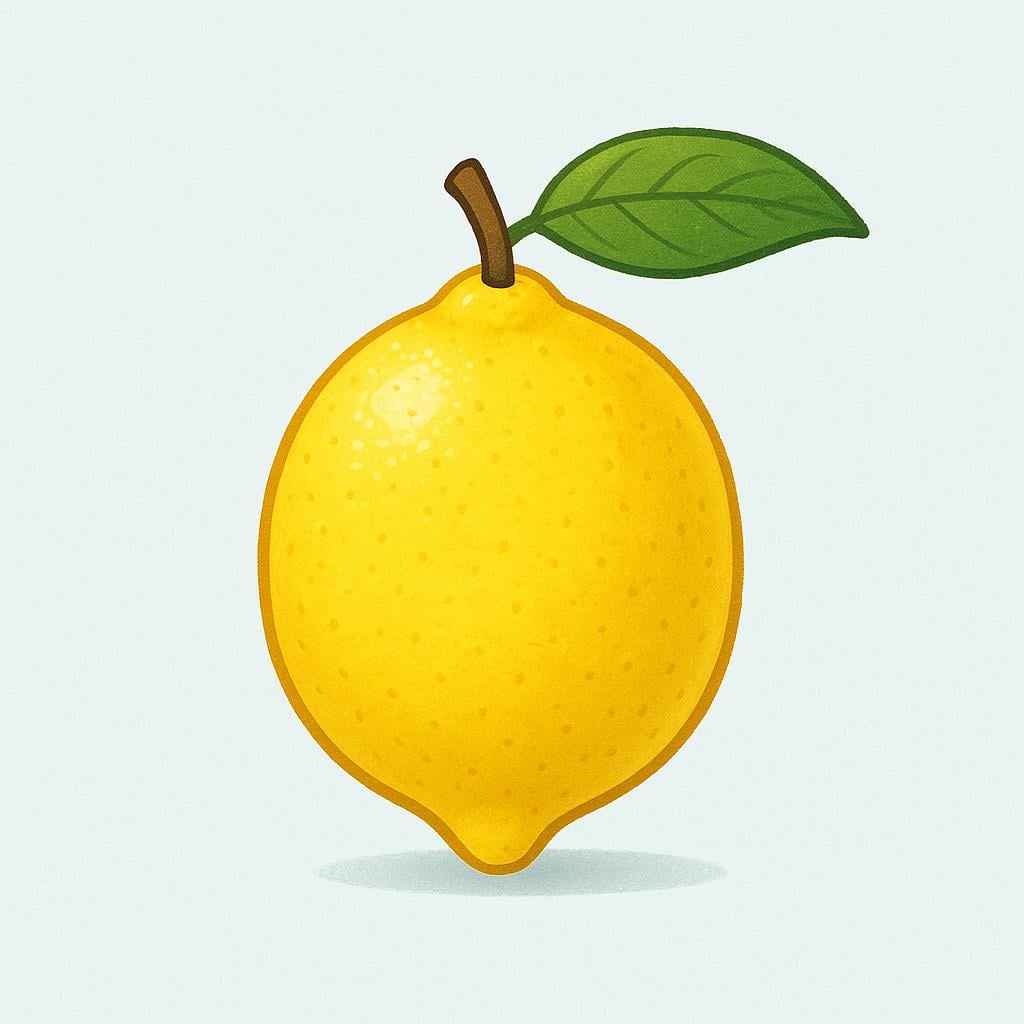
📝 In Action
Necesito un limón para hacer la limonada.
A1I need a lemon to make the lemonade.
Puse una rodaja de limón en mi vaso de agua.
A1I put a slice of lemon in my glass of water.
lemon

📝 In Action
Pintamos la cocina de color limón.
A2We painted the kitchen lemon yellow.
Ese vestido limón te queda muy bien.
B1That lemon dress looks very good on you.
lemon
Also: flop
📝 In Action
Compré un coche usado y resultó ser un limón; se daña cada semana.
B2I bought a used car and it turned out to be a lemon; it breaks down every week.
✏️ Quick Practice
Quick Quiz: limón
Question 1 of 2
Which translation is most likely correct in Spain?
📚 More Resources
👥 Word Family▼
🎵 Rhymes▼
📚 Etymology▼
The word 'limón' traveled into Spanish from Arabic ('līmūn'), which itself borrowed the word from Persian. This shows how trade routes brought this popular fruit to Europe centuries ago.
First recorded: 13th century
Cognates (Related words)
💡 Master Spanish
Take your Spanish to the next level. Read 200+ illustrated and narrated Spanish stories tailored to your level with the Inklingo app!
Frequently Asked Questions
How do I know if 'limón' means lemon or lime?
It depends heavily on where you are! In Spain, it's yellow lemon. In Mexico, it's green lime. If you are unsure, you can clarify by saying 'limón amarillo' (yellow lemon) or 'limón verde' (green lime).
Does 'limón' change for plural?
Yes. To make it plural, you add '-es', making it 'limones'. (e.g., 'tres limones').