láser
“láser” means “laser” in Spanish (focused beam of light).
laser
Also: laser beam, laser pointer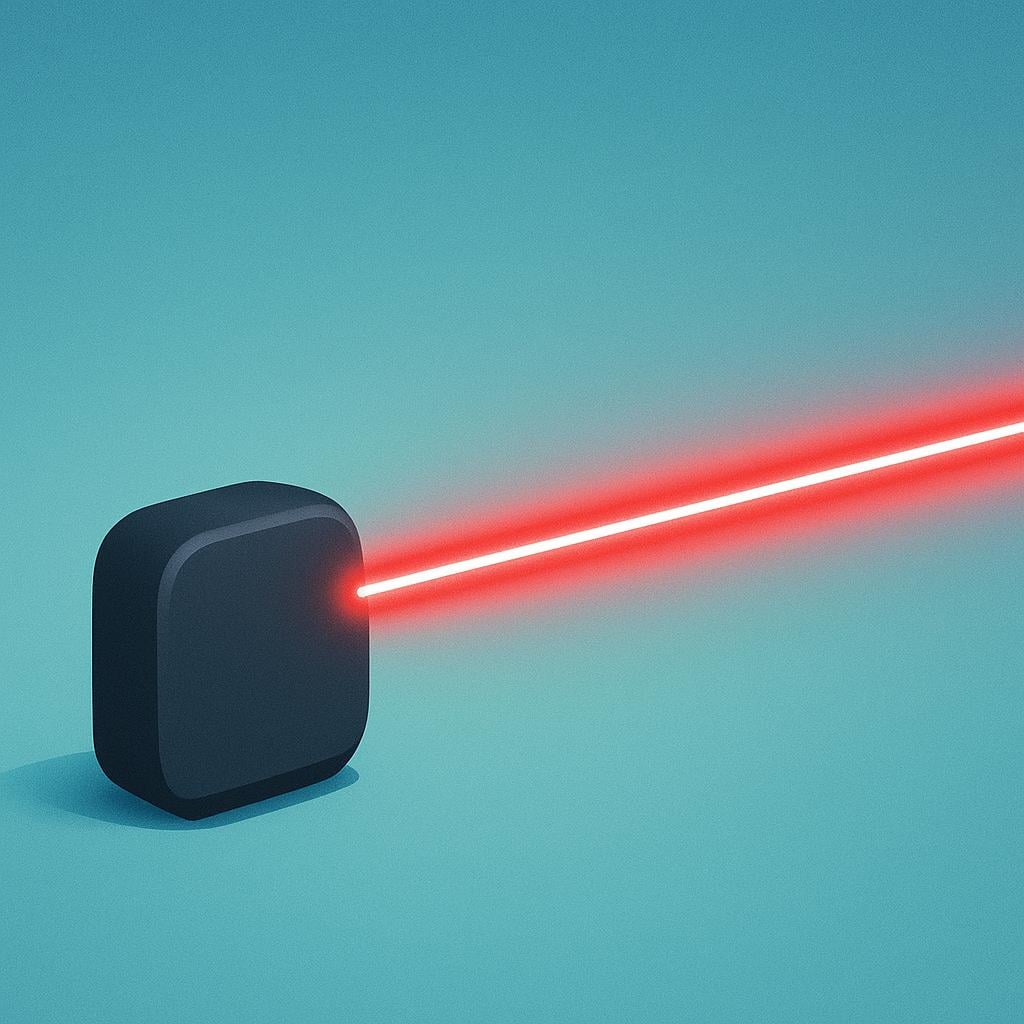
📝 In Action
El cirujano usó un láser para hacer el corte preciso.
B1The surgeon used a laser to make the precise cut.
Necesitas un lector de láser para escanear el código de barras.
A2You need a laser reader to scan the barcode.
Compramos un puntero láser para las presentaciones.
A2We bought a laser pointer for the presentations.
Translate to Spanish
✏️ Quick Practice
Quick Quiz: láser
Question 1 of 2
¿Cuál es la función principal de un 'puntero láser'?
📚 More Resources
👥 Word Family▼
🎵 Rhymes▼
📚 Etymology▼
This word is a direct loanword from English, where it originated as an acronym. It stands for L.A.S.E.R. (Light Amplification by Stimulated Emission of Radiation). Spanish adopted the sound and spelling, adding the necessary accent mark to follow Spanish pronunciation rules.
First recorded: Mid-20th century
Cognates (Related words)
💡 Master Spanish
Take your Spanish to the next level. Read 200+ illustrated and narrated Spanish stories tailored to your level with the Inklingo app!
Frequently Asked Questions
¿Por qué 'láser' lleva tilde (acento) en español?
Spanish words that end in 'r' usually have the stress on the last syllable (like 'comer'). Since the stress in 'láser' falls on the first syllable ('LÁ-ser'), we must add an accent mark (tilde) over the 'á' to show the correct pronunciation.
¿Es 'láser' una palabra masculina o femenina?
'Láser' is always masculine. You should use the masculine article 'el' (el láser) or the indefinite article 'un' (un láser).