líneas
“líneas” means “lines” in Spanish. It has 4 different meanings depending on context:



lines, strokesAlso: rows, markings

📝 In Action
El niño dibujó muchas líneas rectas en el papel.
A1The child drew many straight lines on the paper.
Las líneas de la carretera están borrosas por la lluvia.
A2The road markings are blurry due to the rain.
Necesito leer estas líneas antes de firmar.
B1I need to read these lines (of text) before signing.
Word Connections
linesAlso: channels

📝 In Action
Las líneas telefónicas están caídas por la tormenta.
B1The phone lines are down because of the storm.
Tenemos que abrir nuevas líneas de comunicación con el cliente.
C1We have to open new channels of communication with the client.
Hay demasiadas personas usando las líneas de internet a la vez.
B2There are too many people using the internet lines at once.
Word Connections
queue, rowsAlso: formations

📝 In Action
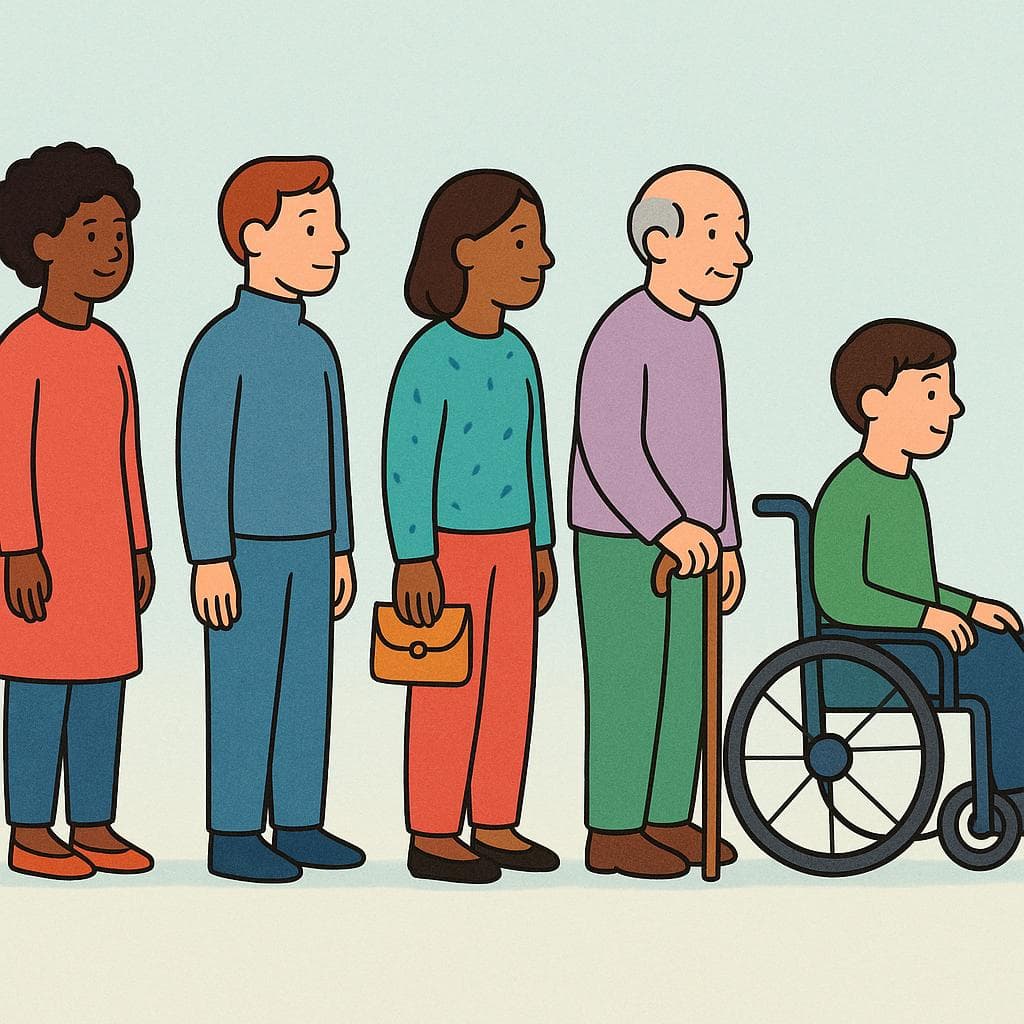
Había largas líneas para comprar las entradas del concierto.
A2There were long lines (queues) to buy the concert tickets.
Los soldados mantuvieron sus líneas durante el ejercicio.
B2The soldiers maintained their formations during the exercise.
Word Connections
guidelines, policiesAlso: scope, tenets

📝 In Action
El director estableció las líneas generales del proyecto.
B2The director established the general guidelines of the project.
Debemos seguir las líneas de acción que nos dio el comité.
C1We must follow the policies (lines of action) that the committee gave us.
Word Connections
Translate to Spanish
Words that translate to "líneas" in Spanish:
✏️ Quick Practice
Quick Quiz: líneas
Question 1 of 2
Which translation of 'líneas' fits best in the sentence: 'El banco ofrece nuevas ______ de crédito.'
📚 More Resources
👥 Word Family
🎵 Rhymes
📚 Etymology
Comes from the Latin word *linea*, which originally referred to a 'linen thread' or 'plumb line,' and later evolved to mean any straight mark or boundary.
First recorded: Around the 13th century in Spanish.
Cognates (Related words)
💡 Master Spanish
Take your Spanish to the next level. Read 200+ illustrated and narrated Spanish stories tailored to your level with the Inklingo app!
Frequently Asked Questions
Why is 'líneas' often used instead of the singular 'línea'?
The plural form is common when describing systems, networks, or general directions, such as 'líneas aéreas' (airlines), 'líneas de teléfono' (phone network), or 'líneas generales' (general guidelines), because these concepts usually involve multiple connections or principles.