maestra
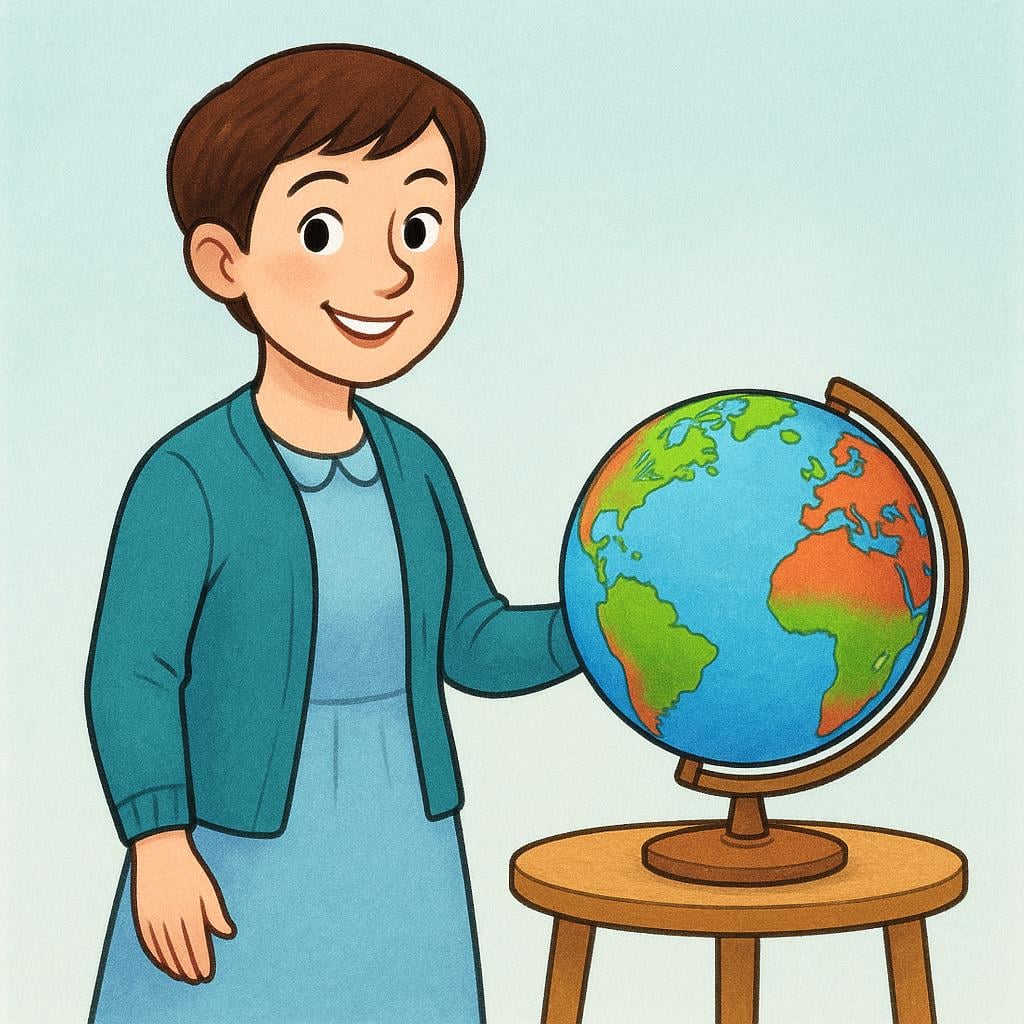
“maestra” means “teacher” in Spanish. It has 2 different meanings depending on context:


teacher, schoolteacherAlso: tutor
📝 In Action
La maestra de español nos enseñó una canción nueva.
A1The Spanish teacher taught us a new song.
¿Conoces a la maestra Elena? Es muy paciente.
A2Do you know the teacher Elena? She is very patient.
Mi hermana quiere ser maestra de preescolar.
B1My sister wants to be a preschool teacher.
Word Connections
master craftswoman, forewomanAlso: expert

📝 In Action
Es una maestra en el arte de la cerámica tradicional.
B2She is a master in the art of traditional ceramics.
La maestra albañil supervisó la construcción del muro.
C1The forewoman mason supervised the construction of the wall.
Word Connections
Translate to Spanish
Words that translate to "maestra" in Spanish:
✏️ Quick Practice
Quick Quiz: maestra
Question 1 of 2
Which sentence correctly uses 'maestra' in the sense of a skilled expert?
📚 More Resources
👥 Word Family
📚 Etymology
Comes directly from the Latin word *magistra*, which is the feminine form of *magister*, meaning 'master,' 'chief,' or 'director.' It has always been connected to authority and expertise.
First recorded: Medieval Spanish (around the 13th century)
Cognates (Related words)
💡 Master Spanish
Take your Spanish to the next level. Read 200+ illustrated and narrated Spanish stories tailored to your level with the Inklingo app!
Frequently Asked Questions
What is the difference between 'maestra' and 'profesora'?
'Maestra' usually refers to a teacher in primary school (elementary school) or preschool. 'Profesora' is generally used for teachers in secondary school (high school) or university, or sometimes used as a more formal term for any teacher.
Can I use 'maestra' if the person doesn't teach in a school?
Yes! The word is often used figuratively or professionally to mean 'master' or 'expert.' For example, a 'maestra de ceremonias' is the MC, or a woman who is highly skilled at weaving might be called a 'maestra tejedora' (master weaver).