maquillaje
“maquillaje” means “makeup” in Spanish. It has 2 different meanings depending on context:
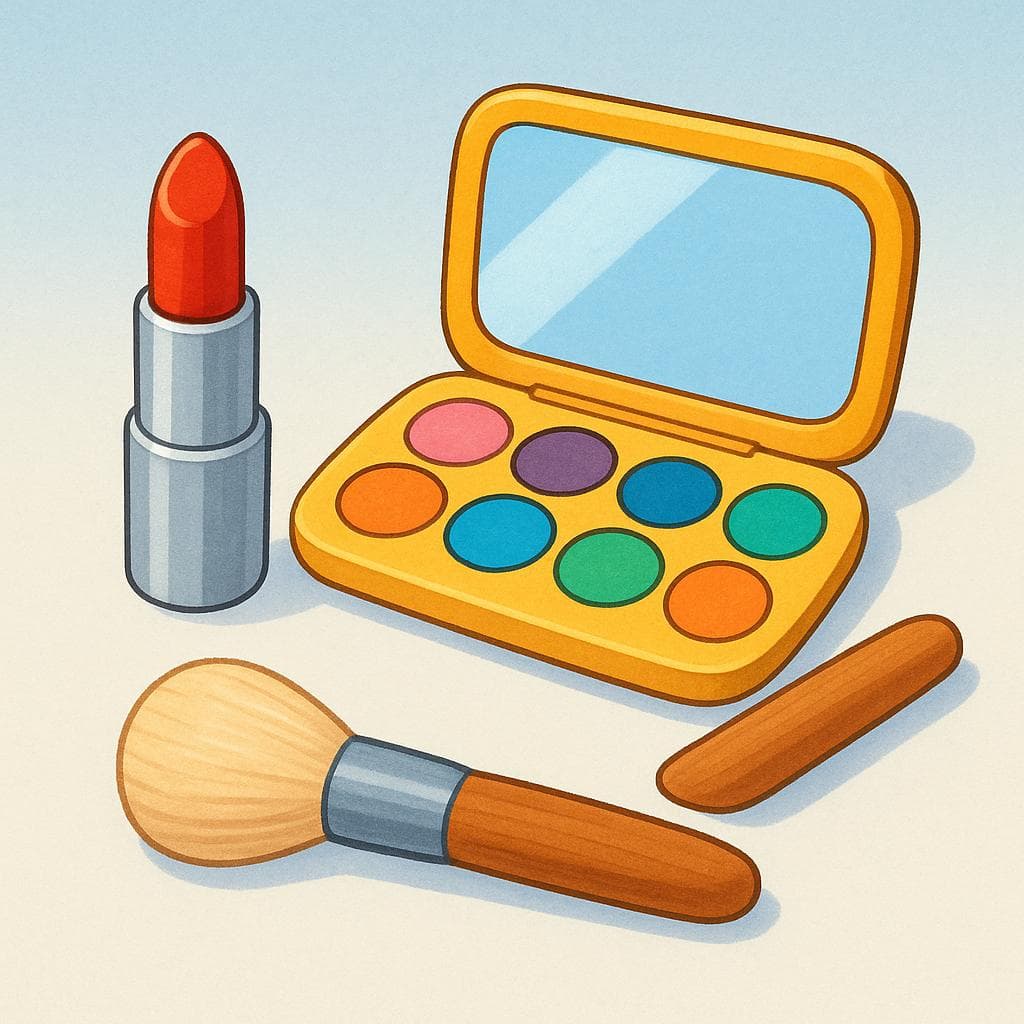
makeup, cosmetics
Also: face paint
📝 In Action
Ella olvidó su estuche de maquillaje en casa.
A1She forgot her makeup bag at home.
Prefiero usar maquillaje natural, casi invisible.
A2I prefer to use natural, almost invisible makeup.
Antes de salir, se puso un poco de maquillaje.
A1Before leaving, she put on a little bit of makeup.
cover-up, disguise
Also: window dressing
📝 In Action
El informe financiero era solo un maquillaje de la situación real de la empresa.
B2The financial report was merely a cover-up of the company's real situation.
Los políticos intentaron hacer un maquillaje a las cifras de desempleo.
C1The politicians tried to disguise the unemployment figures.
Translate to Spanish
Words that translate to "maquillaje" in Spanish:
cosmetics→cover-up→disguise→face paint→makeup→window dressing→✏️ Quick Practice
Quick Quiz: maquillaje
Question 1 of 2
Which sentence correctly uses the word 'maquillaje' as a masculine noun?
📚 More Resources
👥 Word Family▼
📚 Etymology▼
This word comes from the French verb *maquiller*, which originally meant 'to disguise' or 'to prepare a set for a show or theater.' This origin explains both the beauty meaning and the figurative meaning of 'cover-up' or 'disguise.'
First recorded: Mid-20th century (in Spanish)
Cognates (Related words)
💡 Master Spanish
Take your Spanish to the next level. Read 200+ illustrated and narrated Spanish stories tailored to your level with the Inklingo app!
Frequently Asked Questions
What is the difference between 'maquillaje' and 'maquillarse'?
'Maquillaje' (masculine noun) is the product itself (the makeup). 'Maquillarse' (a reflexive verb) is the action of putting the makeup on your own face. You *use* 'el maquillaje' when you 'te maquillas'.
Why is 'maquillaje' masculine if it relates to beauty?
Spanish noun genders don't always follow logic! While many words ending in -a are feminine, and many ending in -e are masculine, 'maquillaje' is one you simply have to memorize as masculine ('el maquillaje').