matarle
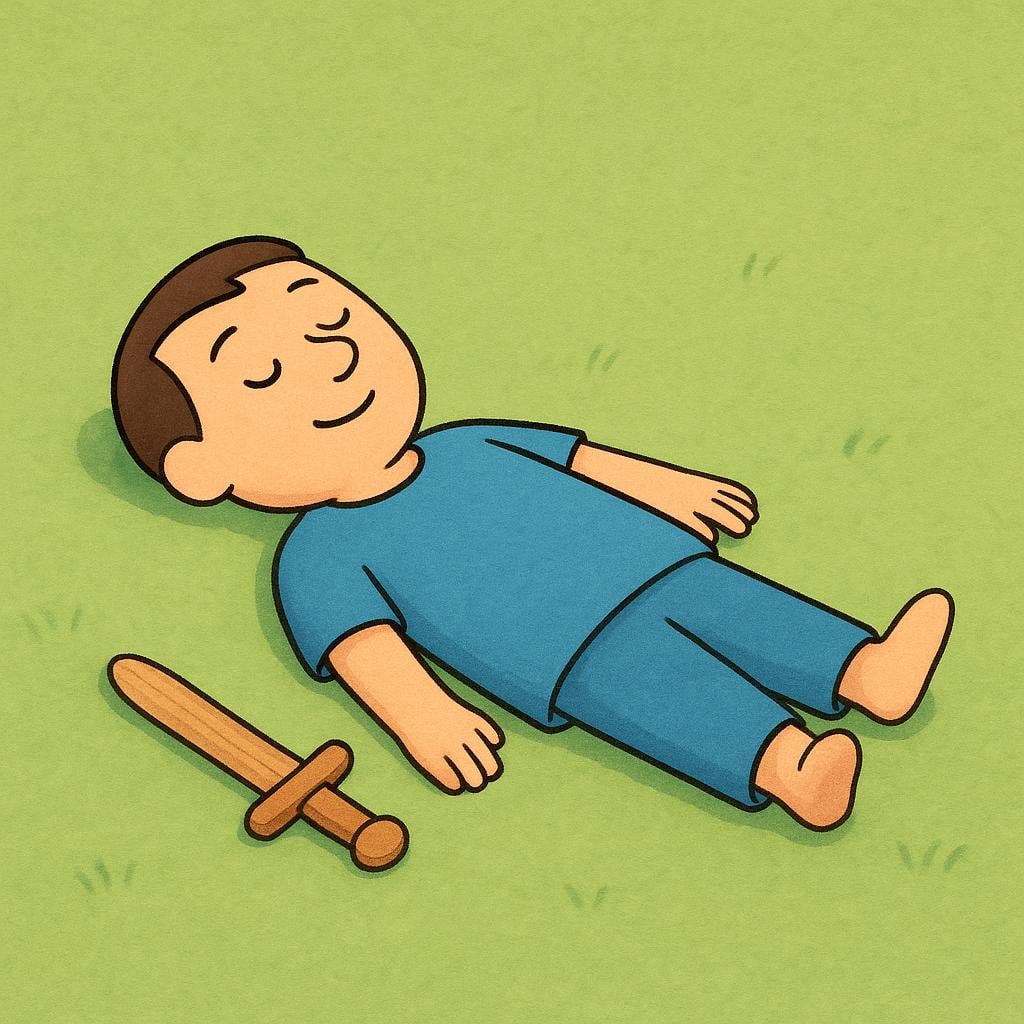
“matarle” means “to kill him” in Spanish. It has 2 different meanings depending on context:


to kill him, to kill her, to kill you (formal)Also: to end his life
📝 In Action
No pudieron matarle, solo lo hirieron gravemente.
B1They couldn't kill him; they only wounded him seriously.
Decidió matarle antes de que él pudiera escapar.
A2She decided to kill him before he could escape.
Word Connections
to bore him stiff, to exhaust himAlso: to kill him (with laughter/boredom)

📝 In Action
Esa reunión interminable va a matarle de aburrimiento.
B2That endless meeting is going to bore him to death.
El trabajo extra va a matarle si no toma un descanso.
B2The extra work is going to exhaust him if he doesn't take a break.
Word Connections
Subjunctive
Imperfect Subjunctive
Present Subjunctive
Indicative
Preterite
Imperfect
Present
✏️ Quick Practice
Quick Quiz: matarle
Question 1 of 1
Which sentence uses 'matarle' in its figurative sense?
📚 More Resources
👥 Word Family
🎵 Rhymes
📚 Etymology
The base verb 'matar' comes from the Latin 'mactāre', which originally meant 'to sacrifice' or 'to honor with a sacrifice,' but later evolved to mean 'to kill' in Spanish. The 'le' is the descendant of the Latin object pronoun 'illi'.
First recorded: Base verb 'matar' attested in Spanish since the 13th century.
Cognates (Related words)
💡 Master Spanish
Take your Spanish to the next level. Read 200+ illustrated and narrated Spanish stories tailored to your level with the Inklingo app!
Frequently Asked Questions
Why is the pronoun 'le' attached to the end of 'matar'?
When using a Spanish verb in its base form (the infinitive, like 'matar'), you have the choice to attach the object pronoun ('le') directly to the end, forming a single word like 'matarle'. This is a very common and correct way to structure the sentence.
Does 'matarle' always mean 'to kill him'?
Not always. While the literal meaning is 'to kill him/her/you formal,' Spanish frequently uses 'matar' to exaggerate extreme feelings, like 'matarle de aburrimiento' (to bore him to death) or 'matarle de risa' (to make him die laughing).