mate
“mate” means “mate (traditional South American drink)” in Spanish. It has 3 different meanings depending on context:
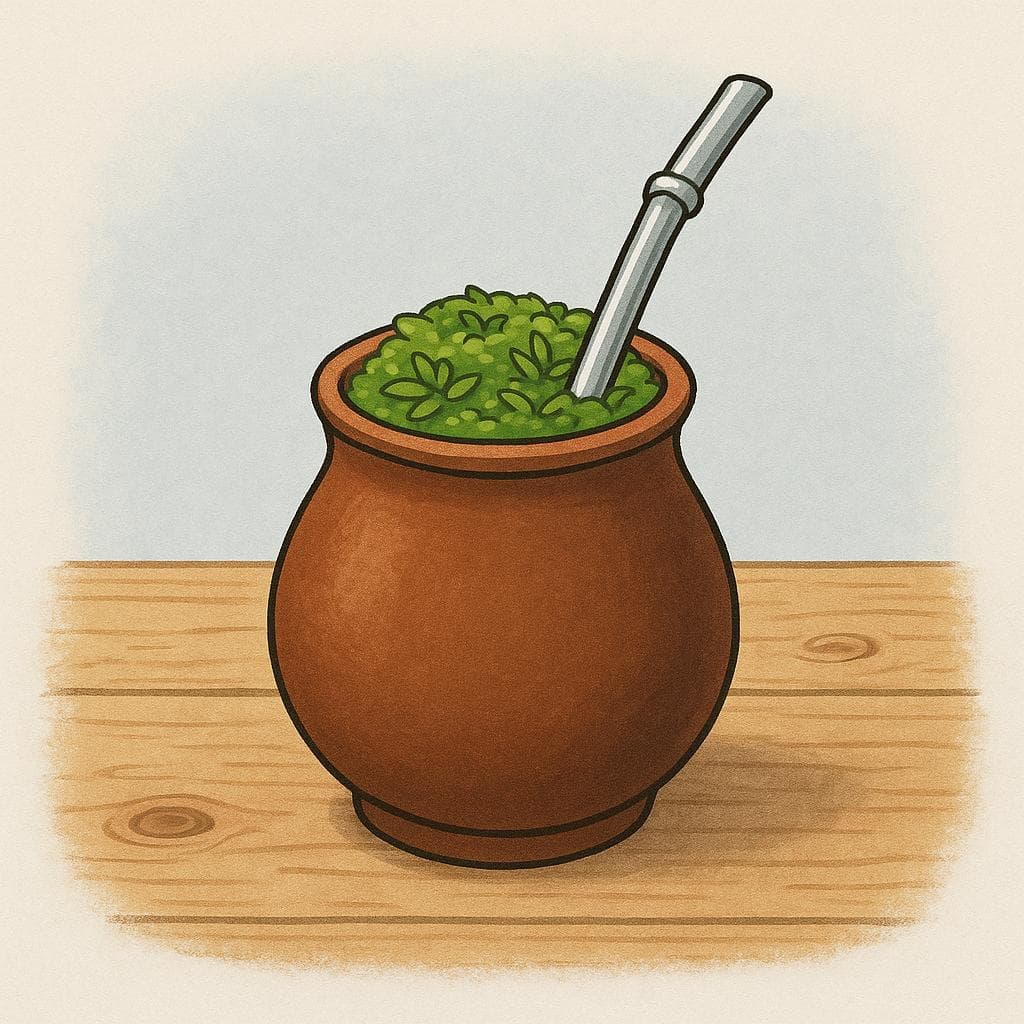

mate (traditional South American drink)
Also: gourd (container for the drink)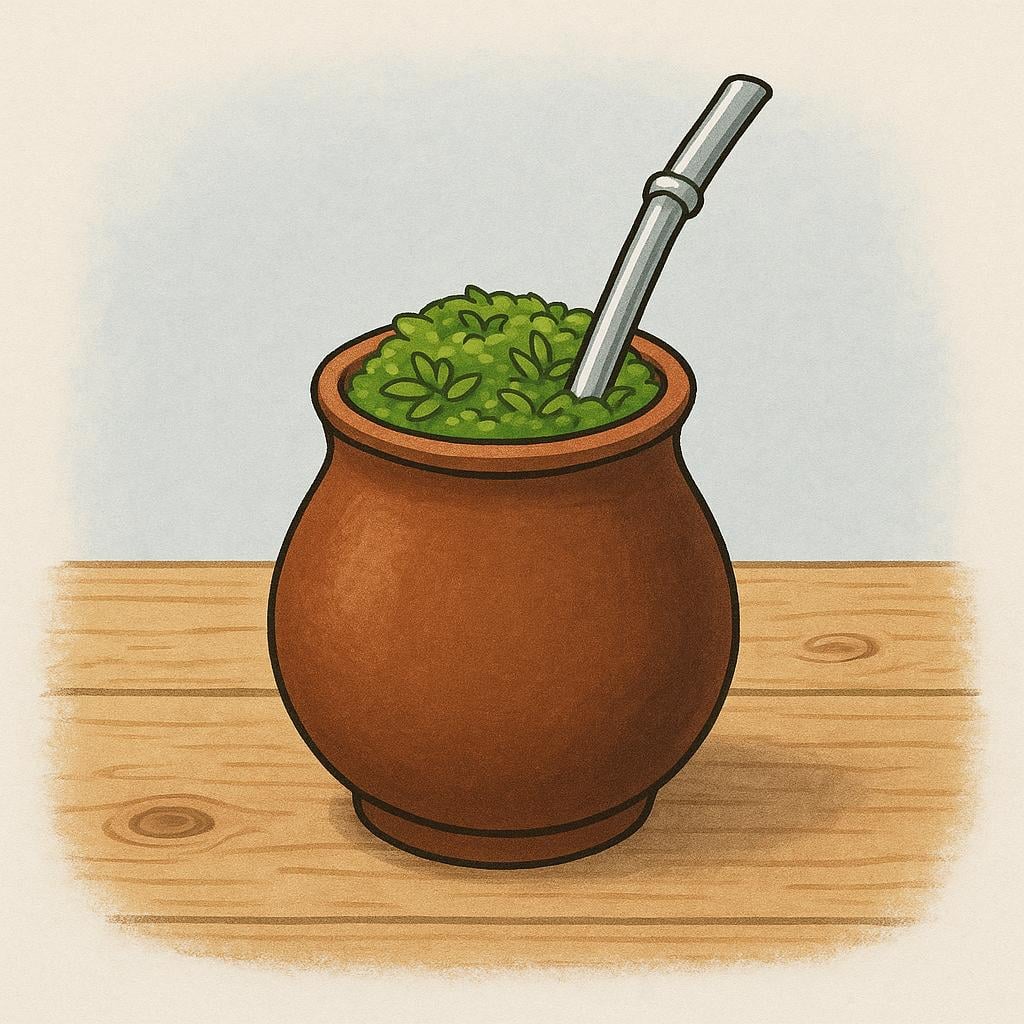
📝 In Action
En Argentina, es costumbre compartir un mate entre amigos.
A2In Argentina, it is customary to share a mate among friends.
Necesito calentar agua para el mate antes de irme.
A1I need to heat water for the mate before leaving.
checkmate
Also: dead end
📝 In Action
Hice un movimiento brillante y le di mate en solo cuatro jugadas.
B1I made a brilliant move and checkmated him in only four moves.
Si acepta esa condición, es un mate para la empresa.
B2If he accepts that condition, it's a dead end (checkmate) for the company.
matte
Also: dull, flat
📝 In Action
Prefiero la pintura mate para las paredes de la sala.
B2I prefer the matte paint for the living room walls.
Su piel tenía un tono mate y uniforme.
C1Her skin had a dull (matte) and even tone.
Translate to Spanish
✏️ Quick Practice
Quick Quiz: mate
Question 1 of 2
Which meaning of 'mate' is usually associated with a social gathering in Buenos Aires?
📚 More Resources
👥 Word Family▼
📚 Etymology▼
The word 'mate' is actually three different words that sound the same! 1. The drink ('mate') comes from the Quechua word 'mati', meaning 'gourd' or 'container'. 2. 'Checkmate' ('mate') comes from the Persian phrase 'shāh māt' via Arabic, meaning 'the king is helpless/dead'. 3. The adjective 'matte' probably comes from the French word 'mat' (dull).
First recorded: 16th century (for the drink)
Cognates (Related words)
💡 Master Spanish
Take your Spanish to the next level. Read 200+ illustrated and narrated Spanish stories tailored to your level with the Inklingo app!
Frequently Asked Questions
Is 'mate' masculine or feminine?
'Mate' is always a masculine noun ('el mate') when referring to the drink or checkmate. When used as an adjective (meaning 'matte'), it changes to match the noun it describes.
Is 'mate' common everywhere in the Spanish-speaking world?
No. The meaning referring to the drink is very common in the Southern Cone (Argentina, Uruguay, etc.) but is rarely used in Spain or Mexico, where the word might only be recognized in the context of chess or describing a dull finish.