moscas
“moscas” means “flies” in Spanish. It has 3 different meanings depending on context:
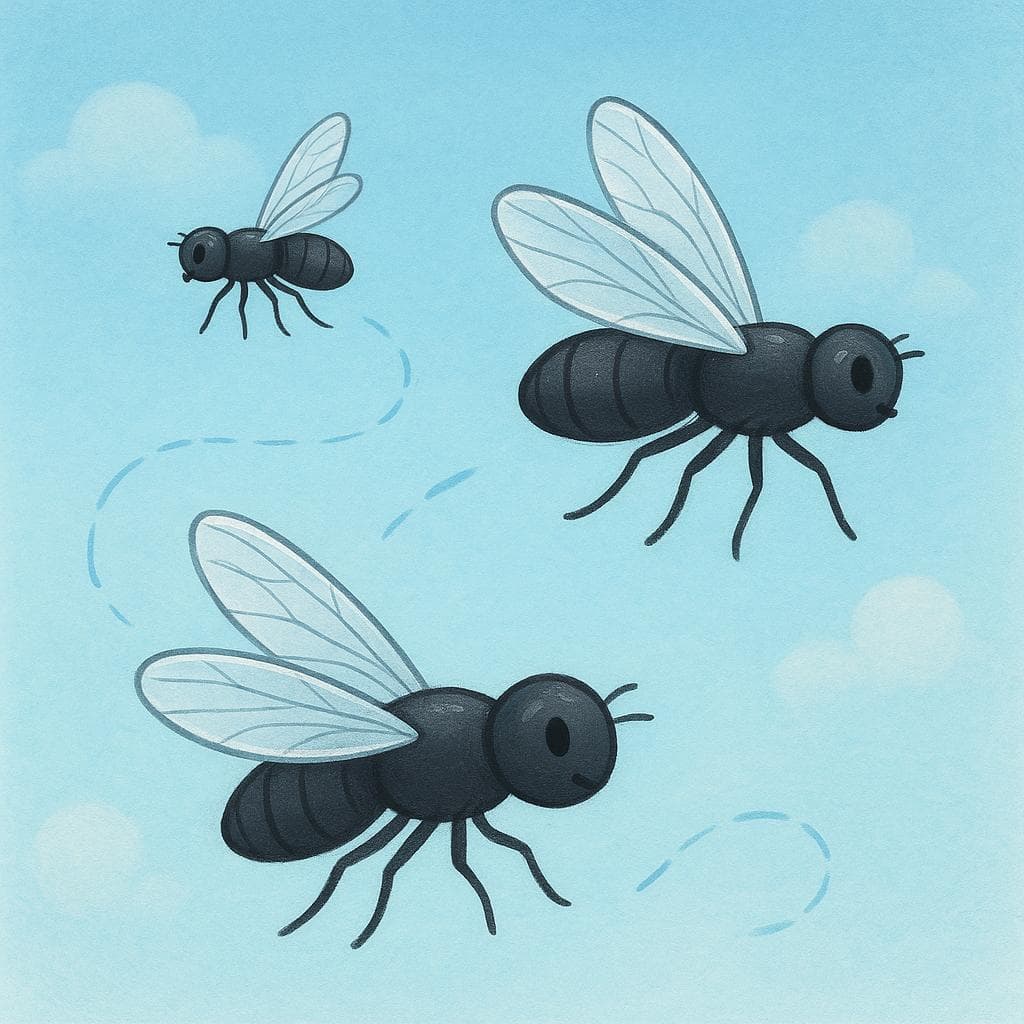


fliesAlso: houseflies

📝 In Action
Hay demasiadas moscas en la cocina.
A1There are too many flies in the kitchen.
Las moscas son atraídas por la fruta madura.
A2Flies are attracted by ripe fruit.
Word Connections
just in caseAlso: suspicion

📝 In Action
Lleva un paraguas, por si las moscas.
B1Take an umbrella, just in case (literally: 'for if the flies').
Parece que tiene la mosca detrás de la oreja con ese negocio.
B2It seems he is suspicious about that deal (literally: 'he has the fly behind his ear').

you annoyAlso: you suspect

📝 In Action
Si tú le moscas con ese tono, no va a ayudarte.
C1If you annoy him with that tone, he's not going to help you.
Word Connections
Subjunctive
Imperfect Subjunctive
Present Subjunctive
Indicative
Imperfect
Present
Preterite
Translate to Spanish
Words that translate to "moscas" in Spanish:
✏️ Quick Practice
Quick Quiz: moscas
Question 1 of 2
Which English phrase best captures the meaning of 'Llevo un mapa por si las moscas'?
📚 More Resources
👥 Word Family
🎵 Rhymes
📚 Etymology
The word comes directly from the Latin word *musca*, which also meant 'fly.' Its meaning has been stable for centuries, referring to the common insect.
First recorded: Pre-10th century (derived from Vulgar Latin)
Cognates (Related words)
💡 Master Spanish
Take your Spanish to the next level. Read 200+ illustrated and narrated Spanish stories tailored to your level with the Inklingo app!
Frequently Asked Questions
Why does 'por si las moscas' mean 'just in case'?
The exact origin is debated, but it likely comes from the idea of taking precautions against small, annoying things (like flies) that might ruin something, or perhaps the need to cover food 'in case the flies' land on it. It's a colorful way to express caution.
Is 'moscas' ever used to mean money?
Yes, in some very informal, regional Spanish (especially Spain), 'mosca' in the singular can be slang for money, but this is less common than the insect meaning. You will hear 'moscas' used in the phrase 'estar sin blanca' (to be broke), where 'moscas' is implied as money.