Inklingo
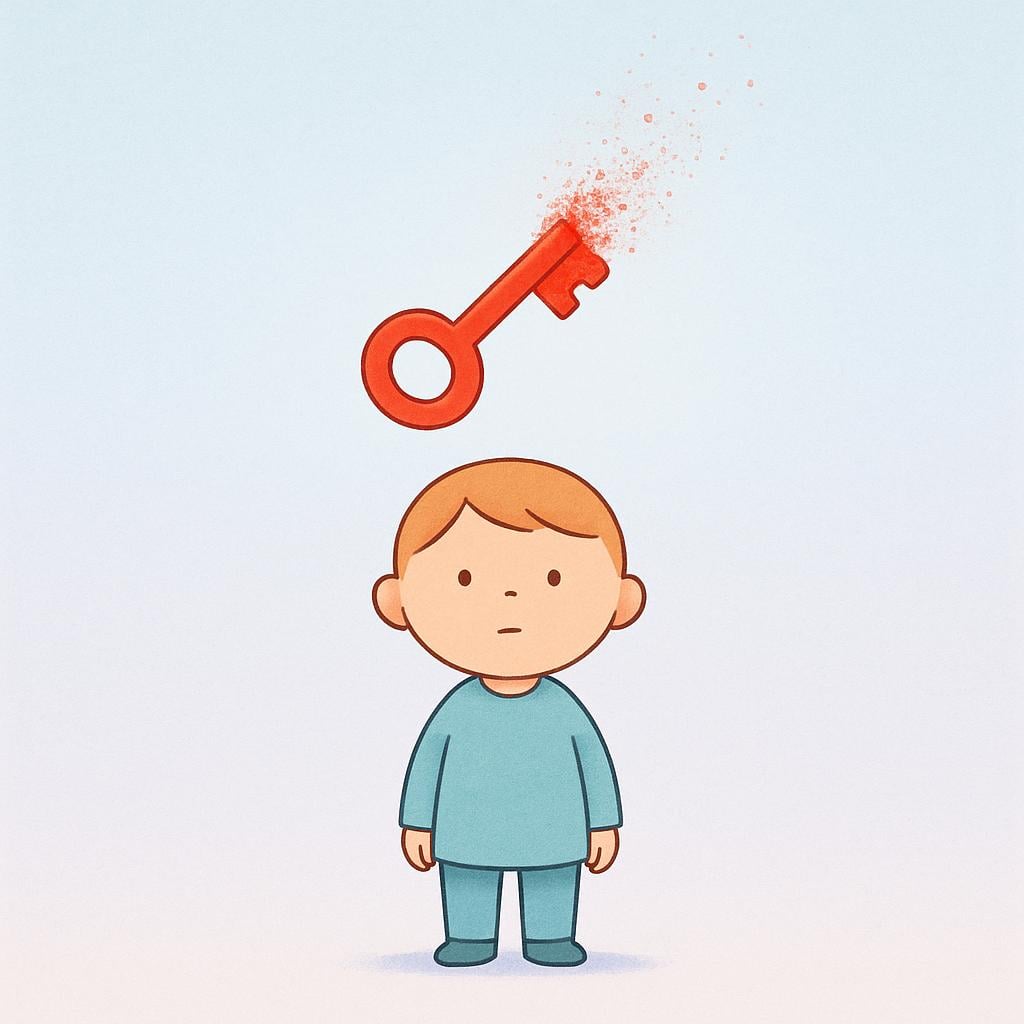
A small, simplified character (a person) stands with a confused expression. Above their head, a brightly colored object, like a red key, is visibly dissolving into thin white smoke, symbolizing a lost memory.

olvide

ohl-VEE-deh

VerbA2regular ar
I forget?present subjunctive form (expressing wish/doubt),you forget?present subjunctive form (formal, expressing wish/doubt),don't forget?formal negative command
Also:he/she forgets?present subjunctive form

Quick Reference

infinitiveolvidar
gerundolvidando
past Participleolvidado

📝 In Action

Espero que no olvide la llave.

A2

I hope that he/she doesn't forget the key.

No olvide firmar el documento, por favor.

B1

Please, don't forget to sign the document. (Formal command to 'usted')

Si yo olvide el código, ¿qué hago?

B2

If I forget the code, what do I do? (Using 'olvide' as the 'yo' subjunctive form, often after 'si' for future uncertainty)

Word Connections

Synonyms

  • desmemoriar (to lose memory (less common))
  • pasar por alto (to overlook)

Antonyms

  • recordar (to remember)
  • acordarse (to recall)

Common Collocations

  • que no se olvideso that it is not forgotten
  • olvide el pasadoforget the past

Idioms & Expressions

  • olvidar lo aprendidoto unlearn something

💡 Grammar Points

The 'Special Wish' Form

'Olvide' is a special verb form (the present subjunctive) used when you express wishes, emotions, doubts, or suggestions about actions that aren't certain yet. You often see it after phrases like 'Espero que...' (I hope that...).

Formal Negative Command

When you want to give a polite, formal command telling someone ('usted') NOT to forget, you use 'No olvide.' The negative command always uses this special verb form.

❌ Common Pitfalls

Mixing Command Forms

Mistake: "No olvida la contraseña. (Using the indicative 'olvida' for a formal command)"

Correction: No olvide la contraseña. (The formal negative command must use the 'olvide' form.)

Forgetting the 'Que'

Mistake: "Quiero olvide mi cumpleaños."

Correction: Quiero que olvide mi cumpleaños. (If the subject changes—'I want that he/she forgets'—you must use 'que' and the special verb form.)

⭐ Usage Tips

The 'E' Sound Pattern

For regular -AR verbs like olvidar, the special forms (subjunctive and formal commands) switch the 'A' ending to an 'E'. Remember: AR verbs take E forms (olvidE), and ER/IR verbs take A forms (comA).

🔄 Conjugations

indicative

present

él/ella/ustedolvida
yoolvido
olvidas
ellos/ellas/ustedesolvidan
nosotrosolvidamos
vosotrosolvidáis

imperfect

él/ella/ustedolvidaba
yoolvidaba
olvidabas
ellos/ellas/ustedesolvidaban
nosotrosolvidábamos
vosotrosolvidabais

preterite

él/ella/ustedolvidó
yoolvidé
olvidaste
ellos/ellas/ustedesolvidaron
nosotrosolvidamos
vosotrosolvidasteis

subjunctive

present

él/ella/ustedolvide
yoolvide
olvides
ellos/ellas/ustedesolviden
nosotrosolvidemos
vosotrosolvidéis

imperfect

él/ella/ustedolvidara/olvidase
yoolvidara/olvidase
olvidaras/olvidases
ellos/ellas/ustedesolvidaran/olvidasen
nosotrosolvidáramos/olvidásemos
vosotrosolvidarais/olvidaseis

✏️ Quick Practice

💡 Quick Quiz: olvide

Question 1 of 2

Which sentence correctly uses 'olvide' as a formal command?

📚 More Resources

Word Family

olvidado(forgotten) - adjective

Frequently Asked Questions

Is 'olvide' the same as 'olvido'?

No. 'Olvide' is a special verb form used for wishes, doubts, or formal commands (like 'I hope I forget' or 'Don't forget, sir'). 'Olvido' means 'I forget' as a simple statement of fact in the regular present tense.

How do I use 'olvidar' reflexively (olvidarse)?

When you use the reflexive form ('olvidarse de algo'), it means you forgot something *by accident* or *unintentionally*. For example: 'Me olvidé de la reunión' (I forgot the meeting).