Inklingo

olviden

/ohl-VEE-dehn/

forget

Two individuals release wispy pink clouds from their hands, symbolizing the act of intentionally forgetting or letting go of a memory.

This image illustrates "olviden" as a polite, plural command meaning 'forget' (addressed to 'ustedes').

olviden(Verb)

A2regular ar

forget

?

as a polite, plural command (addressed to 'ustedes')

Also:

do not forget

?

as a negative command

,

leave behind

?

figurative command

📝 In Action

Por favor, olviden lo que acabo de decir.

A2

Please, forget what I just said.

No olviden sus llaves cuando salgan.

A2

Don't forget your keys when you leave.

Olviden ese mal momento y sigan adelante.

B1

Forget that bad moment and move forward.

Word Connections

Synonyms

  • ignoren (ignore (command))
  • perdonen (forgive (command))

Antonyms

  • recuerden (remember (command))
  • retengan (retain (command))

Common Collocations

  • olviden el pasadoforget the past
  • olviden sus problemasforget your problems

💡 Grammar Points

The Formal Plural Command

"Olviden" is the polite way to tell a group of people ('ustedes') to forget something. It uses the same verb form as the 'ellos/ellas' Present Subjunctive.

Negative Commands are Easy

For negative commands (telling people not to do something), you just add 'no' in front: 'No olviden' (Don't forget).

❌ Common Pitfalls

Mixing up Formal and Informal

Mistake: "Using 'olvidáis' in Latin America or formal settings."

Correction: 'Olviden' is the standard plural command across Latin America and the polite command in Spain. 'Olvidad' is only used in Spain for informal commands.

⭐ Usage Tips

Using 'se' for Self-Correction

If you forget something yourself, use the reflexive form: 'Se me olvidó la cartera' (I forgot my wallet, literally 'the wallet forgot itself to me'). 'Olviden' is used only when commanding others.

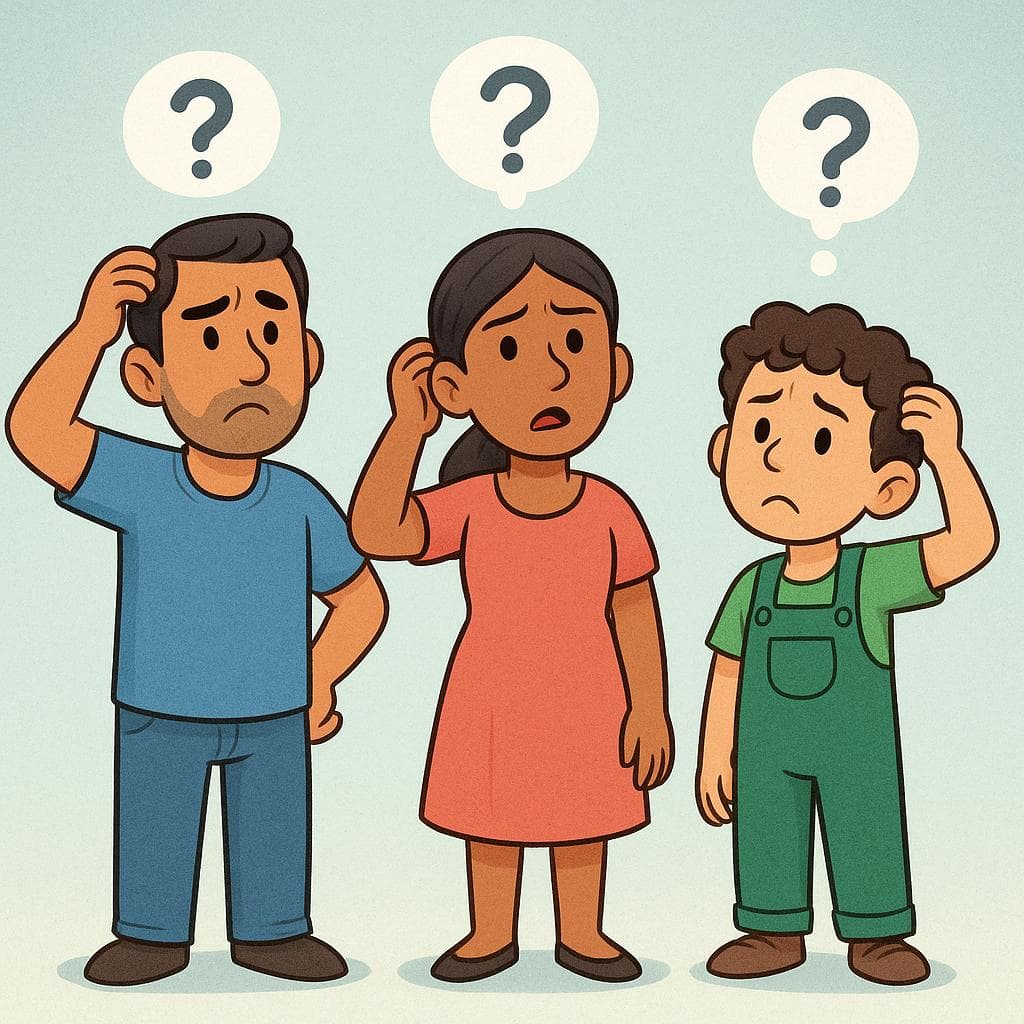
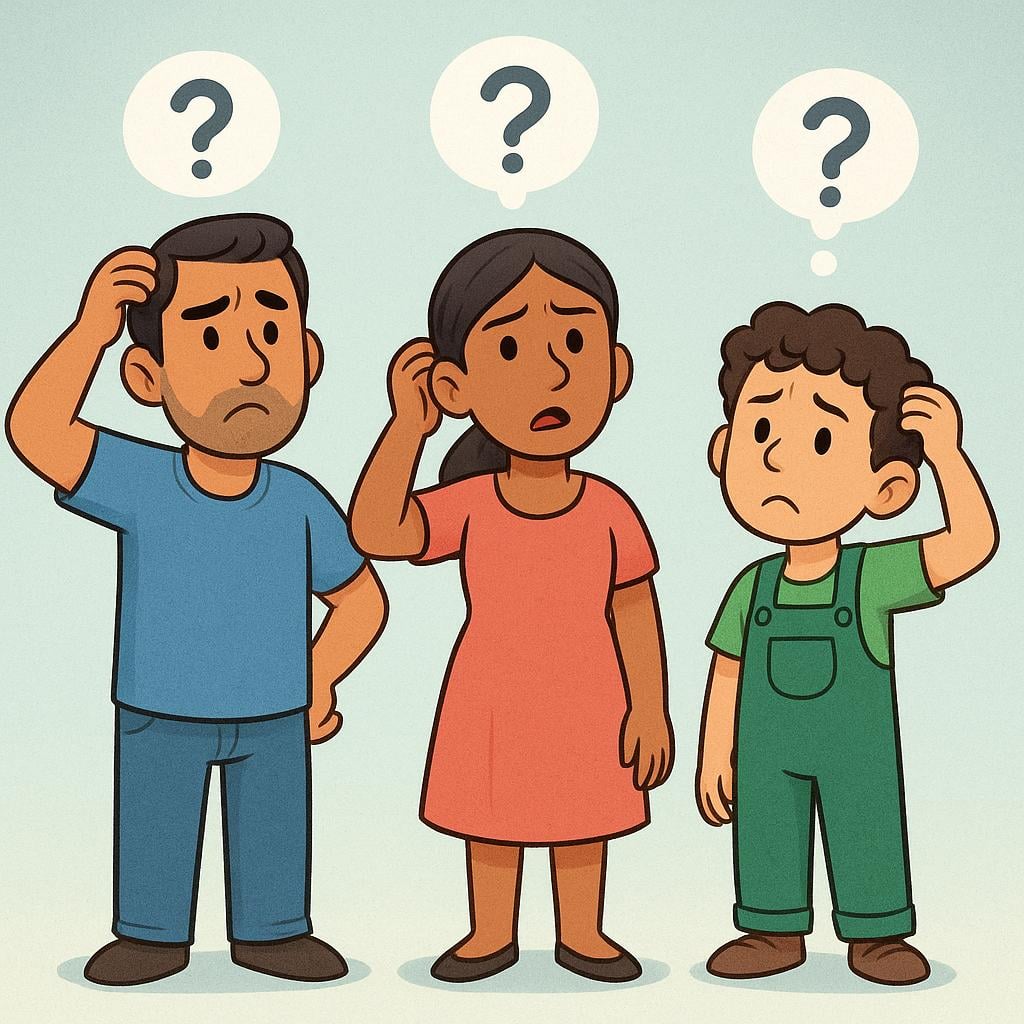
Three people (a man, a woman, and a child) scratching their heads with puzzled expressions, suggesting they have collectively forgotten something.

Representing the subjunctive form, this image shows the concept of '(that) they forget,' used in wishes or subordinate clauses.

olviden(Verb)

B1regular ar

(that) they forget

?

used in a wish or subordinate clause

Also:

(that) you (formal plural) forget
?

used after verbs of influence

📝 In Action

Espero que ellos olviden el incidente rápidamente.

B1

I hope that they forget the incident quickly.

Dudo que ustedes olviden esta lección.

B2

I doubt that you (formal plural) forget this lesson.

Mi jefe quiere que olviden los detalles menores.

B1

My boss wants them to forget the minor details.

💡 Grammar Points

The Subjunctive Mood

This form is used in the special 'subjunctive mood' when the action of forgetting is uncertain, desired, or tied to strong emotion, usually after a verb like 'hope,' 'doubt,' or 'want.'

Trigger Phrases

Look for trigger phrases like 'Espero que' (I hope that), 'Dudo que' (I doubt that), or 'Quiero que' (I want that) followed by 'olviden' when the subject is 'they' or 'ustedes'.

❌ Common Pitfalls

Using the Wrong Mood

Mistake: "Saying 'Espero que ellos olvidan' (using the indicative verb form)."

Correction: When expressing hope or desire, Spanish requires the subjunctive form: 'Espero que ellos olviden.'

🔄 Conjugations

indicative

imperfect

él/ella/ustedolvidaba
olvidabas
vosotrosolvidabais
yoolvidaba
ellos/ellas/ustedesolvidaban
nosotrosolvidábamos

present

él/ella/ustedolvida
olvidas
vosotrosolvidáis
yoolvido
ellos/ellas/ustedesolvidan
nosotrosolvidamos

preterite

él/ella/ustedolvidó
olvidaste
vosotrosolvidasteis
yoolvidé
ellos/ellas/ustedesolvidaron
nosotrosolvidamos

subjunctive

imperfect

él/ella/ustedolvidara
olvidaras
vosotrosolvidarais
yoolvidara
ellos/ellas/ustedesolvidaran
nosotrosolvidáramos

present

él/ella/ustedolvide
olvides
vosotrosolvidéis
yoolvide
ellos/ellas/ustedesolviden
nosotrosolvidemos

✏️ Quick Practice

💡 Quick Quiz: olviden

Question 1 of 1

Which sentence uses 'olviden' as a direct command?

📚 More Resources

Word Family

Frequently Asked Questions

How do I know if 'olviden' is a command or a subjunctive clause?

If 'olviden' starts a sentence or follows a comma/pause, it is usually a command ('Forget!'). If it follows 'que' and a verb expressing doubt, emotion, or desire (e.g., 'Espero que...'), it is the subjunctive form.

What is the difference between 'olviden' and 'olvidad'?

'Olviden' is the formal plural command (used for 'ustedes'—the polite 'you all'). 'Olvidad' is the informal plural command used only in Spain (for 'vosotros').