paredes
“paredes” means “walls” in Spanish. It has 2 different meanings depending on context:


walls
Also: partition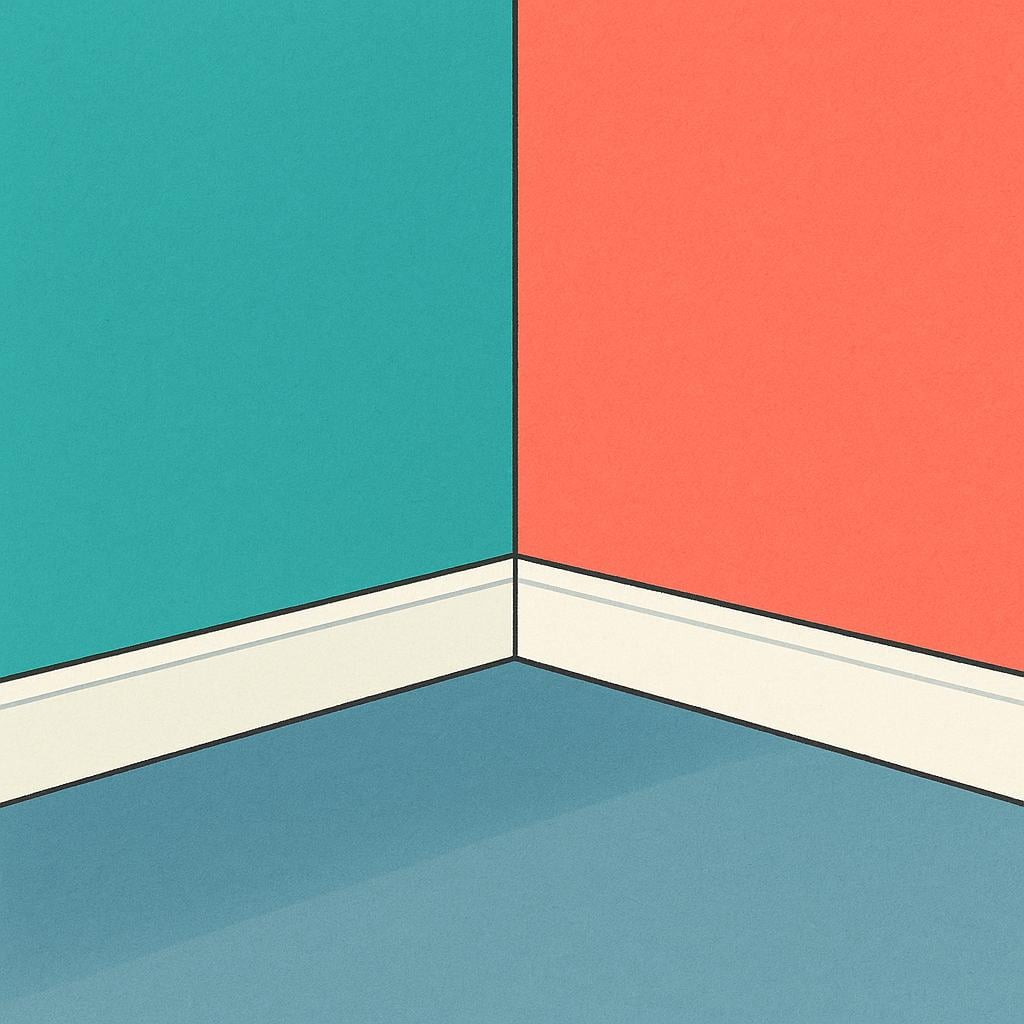
📝 In Action
Las paredes de mi sala son de color azul claro.
A1The walls of my living room are light blue.
Necesitamos colgar los cuadros en estas paredes.
A2We need to hang the pictures on these walls.
Escuchamos la música a través de las paredes.
B1We heard the music through the walls.
walls
Also: barriers
📝 In Action
Las paredes del estómago se inflaman con la gastritis.
B2The walls of the stomach become inflamed with gastritis.
Sentí que las paredes de la cueva se cerraban a mi alrededor.
B2I felt the walls of the cave closing in around me.
Ella levantó paredes invisibles para proteger su corazón.
C1She put up invisible walls to protect her heart.
Translate to Spanish
✏️ Quick Practice
Quick Quiz: paredes
Question 1 of 2
Which sentence correctly uses 'paredes' to refer to the structure of a house?
📚 More Resources
👥 Word Family▼
📚 Etymology▼
The word comes directly from the Latin word *paries*, which meant 'wall' or 'division' in a building. It has been used in Spanish since the early days of the language to describe the upright sides of a room.
First recorded: 10th century
Cognates (Related words)
💡 Master Spanish
Take your Spanish to the next level. Read 200+ illustrated and narrated Spanish stories tailored to your level with the Inklingo app!
Frequently Asked Questions
Why is 'pared' (the singular form) feminine if it ends in 'd' and not 'a'?
Most Spanish nouns ending in -d, -z, or -ión are feminine, and 'pared' follows this pattern. While many nouns ending in -o are masculine and -a are feminine, there are exceptions, and this is one of the most common ones you'll encounter.
What is the difference between 'paredes' and 'muros'?
'Paredes' usually refers to the internal or relatively thin walls of a room or house. 'Muros' refers to something thicker, more structural, or external, like a defensive wall or the foundation of a building.